Anjouan casino licences for UK players: the offshore stamp, the gap it leaves, and the arithmetic behind it
 Available in GB
An Anjouan licence is not a Gambling Commission licence. In Great Britain, only a Commission operating licence lets a casino lawfully accept a player’s deposit; an Anjouan licence, by itself, is the kind of authorisation that points only to the company running the site. The distinction sounds bureaucratic until a withdrawal stalls, a self-exclusion does not stick, or a dispute has nowhere to land — at which point the difference is the whole story.
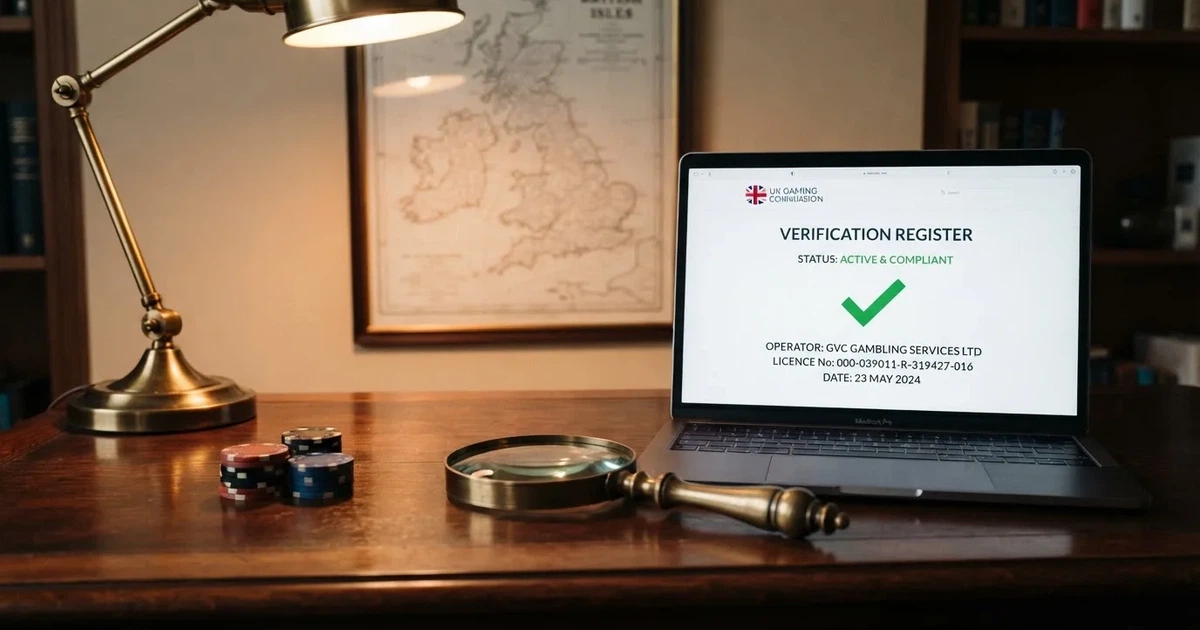
Current as of 23 September 2026, the Gambling Commission’s public register of gambling businesses.
Table of Contents
- What an Anjouan licence actually is
- What a Gambling Commission licence actually is
- The protection gap, in plain terms
- What “2026” looks like under the two regimes
- The responsible-gaming shelf: what a Commission licence guarantees
- The ten Gambling Commission-licensed operators reviewed
- The protection shelf in practice
- Payments and what the licence changes
- The licence as a marketing claim
- The arithmetic that decides the comparison
- The tax picture
- Where the Anjouan comparison lands
- Frequently asked questions
What an Anjouan licence actually is
Anjouan is the easternmost island of the Comoros archipelago, in the south-western Indian Ocean. The Anjouan Offshore Finance Authority was established in 2002 to promote the island as an offshore financial centre and tax haven. Within that framework, Anjouan Gaming, styled the “Internet Gaming Regulatory Authority”, issues separate B2C and B2B internet gaming licences. The brand sits inside a tax-haven administrative structure, not inside a consumer-protection regime designed for British depositors.

The Central Bank of Comoros stated in 2014 that no licence had been delivered for offshore financial activities on Anjouan and that it does not recognise licences issued by the Anjouan Offshore Finance Authority. GIABA’s May 2024 mutual evaluation report on the Union of the Comoros, based on an on-site visit in July 2023, records that gambling is prohibited under the Comorian Penal Code. The same authority that issues internet gaming licences operates in a jurisdiction where gambling is, on paper, banned.
For a player sitting in London or Manchester, that is the licence being relied on. It authorises the operator to run an online casino from Anjouan. It does not authorise the operator to take UK deposits, and it does not put the player inside any UK protection framework.
The “Internet Gaming Regulatory Authority” framing
Anjouan Gaming positions itself as a regulator in the conventional sense — licensing, oversight, complaint handling. None of those functions map onto UK expectations. There is no equivalent of the Gambling Commission’s LCCP or social responsibility code. There is no GB-style dispute resolution service the player can route a complaint through. The licence gets the site online; the rest is the operator’s own policy, and the player’s own risk.

What a Gambling Commission licence actually is
The Gambling Act 2005, which received royal assent on 7 April 2005, established the Gambling Commission as the regulator for Great Britain. Its statutory objectives are preventing crime, ensuring fairness, and protecting children and vulnerable people. Before the Gambling (Licensing and Advertising) Act 2014, operators licensed in the European Economic Area, Gibraltar, or “white-listed” jurisdictions such as Alderney, the Isle of Man, Tasmania and Antigua and Barbuda could serve Great Britain customers without a Commission licence. That regime ended on 1 December 2014.
Under the Gambling (Licensing and Advertising) Act 2014, any remote gambling operator transacting with or advertising to consumers in Great Britain must hold a Commission operating licence, regardless of where the operator is based, and pay 15% point-of-consumption tax on gross gambling yield from GB customers. The law is plain about what an offshore stamp is worth: nothing, on its own, for the UK player.
Section 33 of the Gambling Act 2005 makes it an offence to provide remote gambling facilities to people in Great Britain without a Commission licence. The Commission can disrupt illegal sites — cease-and-desist notices, search-engine delisting, payment and hosting referrals — but it has no ISP-blocking power. No penalty is aimed at the player; the player who deposits at an unlicensed site loses protection, not money, but loses it permanently for that account.
What the public register tells a player
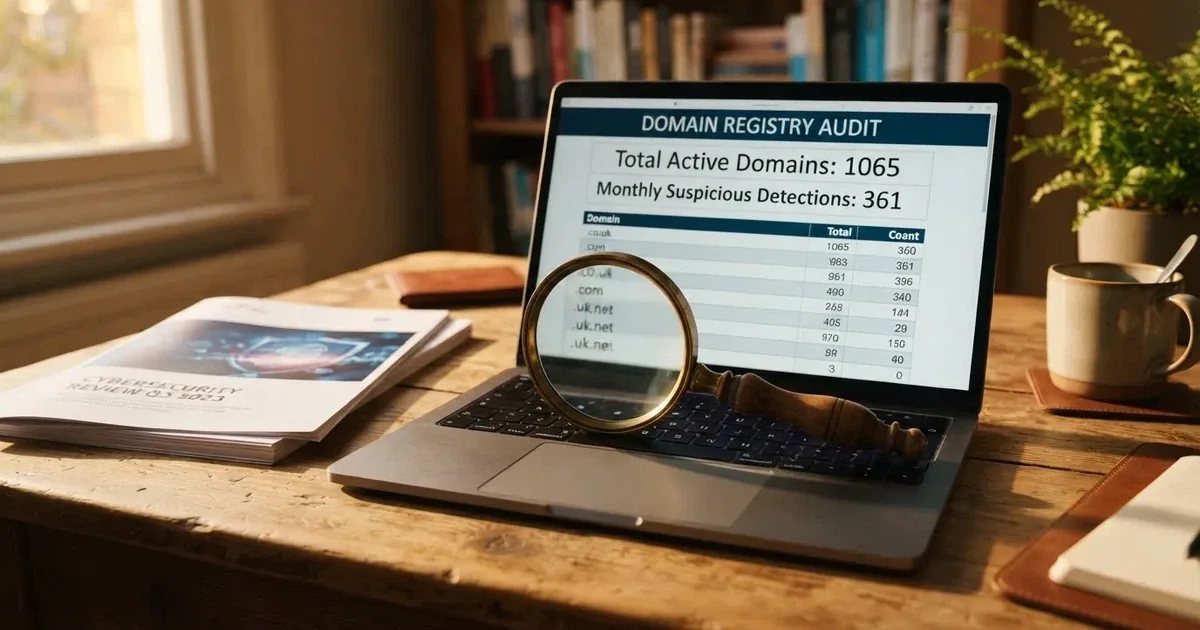
The Commission’s public register is the test. As of 18 September 2026, it listed 139 businesses holding an active remote casino operating licence, and its domain list recorded 1065 active and 361 white-label entries. A white-label site trades under another company’s licence; a brand name on a domain is not the same as a licence in the operating company’s name. A remote casino licence number has the form account-R-number-suffix, where the leading six digits repeat the licence holder’s account number and the “R” marks a remote (online) licence. The structure is auditable in seconds, on the Commission’s own register.
On 18 September 2026, the Gambling Commission’s domain register held 1065 active and 361 white-label domain entries.
The protection gap, in plain terms
An Anjouan-licensed site is not required to do any of the following:
- enrol the player in GAMSTOP, the national online self-exclusion scheme;
- apply the £5 (25+) or £2 (18-24) maximum stake per game cycle on online slots;
- cap wagering requirements on bonuses at 10x;
- run the financial vulnerability checks the Commission prescribes;
- route disputes to an approved alternative dispute resolution service.
Each of these is a condition of a Commission operating licence, not a generic standard of online gambling. An Anjouan site can offer stricter terms than these. It can offer weaker ones. The licence does not require either; the player reads the terms page.
Identity and the first deposit
At a Commission-licensed site, name, address and date of birth are verified before the first deposit or any play, and have been since 7 May 2019. Anonymous play is not possible. At an Anjouan-licensed site the equivalent checks are a function of the operator’s onboarding flow and the payment provider’s KYC, not of the licence. A site that runs on an Anjouan authorisation is not bound by the Commission’s verification rules.
Bonuses and the 10x cap
Since 19 December 2025, wagering requirements on bonuses at Commission-licensed sites have been capped at 10x, and mixed-product bonuses — bet on sport, get casino spins — are banned. A bonus is the area where the protection gap is sharpest, because the cap is what stops a £10 welcome bonus from carrying a turnover requirement that swallows the deposit. At an Anjouan site, that ceiling does not apply.
Self-exclusion
GAMSTOP, the national online self-exclusion scheme, is a mandatory condition of every online licence since 31 March 2020. A self-exclusion runs for six months, one year, or five years, and cannot be cancelled early. A player who has signed up to GAMSTOP and then opens an account at an Anjouan-licensed site has, in practical terms, walked out of the protection they registered for. The site is not required to check.
Disputes
A complaint at a Commission-licensed site goes to an approved ADR provider, with the Commission as the backstop. An Anjouan-licensed site has no Commission complaints route. The site may offer its own dispute process; the player has no GB-side mechanism if the site refuses a withdrawal.
What “2026” looks like under the two regimes
The arithmetic of a bonus is where the licence choice shows up most clearly. The Commission’s 10x cap is the bound a UK bonus must sit under; an Anjouan-licensed bonus has no equivalent ceiling. A worked band is the cleanest way to make this concrete.
Take a £100 bonus at the cap. Required turnover is £100 × 10 = £1,000. On a typical slot at a £1 stake per spin, that is 1,000 spins. At a 2.5-second minimum spin interval — the Commission’s since 31 October 2021 — 1,000 spins is 2,500 seconds, or roughly 42 minutes. The cap pushes the bonus toward something a player can clear in a single sitting rather than over days of grinding.
Take the same £100 bonus with a 35x wagering requirement, the kind of figure that appeared across the offshore market before December 2025. Required turnover is £100 × 35 = £3,500. At a £1 stake, 3,500 spins. At the same 2.5-second interval, 8,750 seconds, or about 2 hours 25 minutes. Take the same bonus at 50x: turnover is £5,000, spins 5,000, time roughly 3 hours 28 minutes. The bonus has not changed; the multiplier has, and the multiplier is the difference between finishing a session with the bonus cleared and finishing with a deposit-sized balance tied up in further requirements.
The band, then, is 42 minutes at the 10x cap, rising to several hours at the multiples that an offshore licence can carry. The shorter figure is what a Commission licence imposes; the longer figures are what an offshore licence permits. A player choosing an Anjouan-licensed site is choosing to be on the long side of that band, with no UK-side mechanism to challenge the multiple.
The expected loss under the same assumptions, using a 96% RTP slot as the working baseline, is turnover × (1 − RTP). At 10x on £100, expected loss is £1,000 × 0.04 = £40. At 35x, £140. At 50x, £200. The bonus is the same in headline terms; the cost scales with the multiplier, and the multiplier is exactly what the licence cap controls.
The responsible-gaming shelf: what a Commission licence guarantees
Every Commission-licensed online operator must take part in GAMSTOP, must run the financial vulnerability checks the LCCP sets, must apply the stake and wagering caps, and must route disputes to an ADR. The responsible-gaming shelf is not a list of best-practice suggestions — it is a list of licence conditions. An Anjouan-licensed site is outside that list.
The financial vulnerability check
Since 28 February 2025, financial vulnerability checks run at £150 net deposits in a rolling 30 days, using public data only. The wider financial risk assessments the Commission announced are not yet in force. The point of the check is to catch a player whose circumstances have changed before the deposit escalates; an offshore site is not required to run it.
Reality checks and time-out
Auto-play is banned, a slot spin may not be faster than 2.5 seconds, and losses disguised as wins are banned — all since 31 October 2021. These are operator-level obligations, enforced by the licence. An Anjouan site can comply; it does not have to. The default is whatever the site chooses to put on its terms page.
Help, and where it sits
GamCare runs the National Gambling Helpline; GambleAware funds treatment and education. Both are UK-side services, available to any player, including a player at an offshore site. The point is not that the help lines shut their doors — they do not. The point is that the help line is the backstop, not the front line, and the front line is the protection a licence imposes. An Anjouan-licensed player who needs help finds it through GamCare; an Anjouan-licensed player who needs to enforce a withdrawal finds nothing of the kind.
The ten Gambling Commission-licensed operators reviewed
The brands below sit on the Commission’s public register as of 18 September 2026, each against an active or white-label licence account. This is the register’s view of the market; it is not a recommendation, and it carries no bonus terms. Several brands share one licensee — never present them as independent operators. Every GB-licensed online operator must take part in GAMSTOP.
| Brand | Licence holder and GB remote casino licence | Domain status on the register | Subject support |
|---|---|---|---|
| Paddy Power | PPB Games Limited (account 39411); 039411-R-319335-010 | Active domain | — |
| Unibet | Platinum Gaming Limited (account 45322); 045322-R-324275-019 | Active domain | — |
| Sky Vegas | Bonne Terre Gaming Limited (account 65519); 065519-R-339675-002 | Active domain | — |
| kwiff | Eaton Gate Gaming Limited (account 44448); 044448-R-323408-017 | Active domain | — |
| bet365 | Hillside (UK Gaming) ENC (account 55149); 055149-R-331499-004 | Active domain | — |
| MrQ | Tek Fox Ltd (account 60629); 060629-R-337532-004 | Active domain | — |
| Midnite | Dribble Media Limited (account 42647); 042647-R-321653-022 | Active domain | — |
| Virgin Games | Gamesys Operations Limited (account 38905); 038905-R-319430-022 | White-label domain | — |
| BetVictor | BV Gaming Limited (account 39576); 039576-R-319370-028 | Active domain | — |
| Grosvenor Casinos | Rank Interactive (Gibraltar) Limited (account 57924); 057924-R-334666-005 | Active domain | — |
As of 18 September 2026, the Gambling Commission’s public register listed 139 businesses holding an active remote casino operating licence.
The “subject support” column is empty across the board: the register’s listing of these brands is about GB remote casino operating licences, not about Anjouan or any other offshore authorisation. None of the ten carries an Anjouan stamp as its primary licence, and none needs to, because each holds a Commission licence that authorises it to take GB customers directly. The table’s purpose is to make the comparison visible — the column where an Anjouan licence would sit, if it were relevant, is the column that confirms it is not.
What the licence numbers say
Every licence number in the table follows the account-R-number-suffix form. The leading six digits repeat the account number on the register, so 039411 is the account for PPB Games Limited, 045322 for Platinum Gaming Limited, and so on. A reader who wants to verify a brand can paste the number into the Commission’s register and confirm the licence is active, the domain is listed, and the operating company matches. That audit takes about a minute. An Anjouan licence has no equivalent public audit a UK player can run from a single register.
What the domain status tells a reader
The register’s domain list records each website against the licence account that runs it, with a status of Active, Inactive, or White Label. A white-label site trades under another company’s licence — Virgin Games, in the table, is a white-label domain of Gamesys Operations Limited. The licence is Gamesys’s, the brand is Virgin’s, and the player who signs up is in Gamesys’s regulated environment under a Virgin-branded front. It is the closest thing on the register to a holding structure; it is not the same as an offshore licence.
What the Anjouan comparison actually costs
Set side by side, the contrast is structural rather than incidental. A Commission licence gives a player GAMSTOP, the financial vulnerability checks, the £5/£2 stake caps, the 10x wagering cap, an ADR route, and a Commission backstop. An Anjouan licence gives a player the site the operator chooses to run. The two columns are not a wash; they are a difference in kind. A player who values any of those protections and chooses an Anjouan-licensed site has traded them away knowingly.
The protection shelf in practice
A player reading this far has the framework. The questions that follow are the ones a comparison page has to answer in plain terms: who is this licence for, who is it not for, and what does the choice look like once the welcome bonus is gone.
Who an Anjouan licence suits
An Anjouan-licensed site suits a player who has weighed the protection gap and decided it does not apply to them — a player confident they will not need GAMSTOP, confident they will not hit the £150 financial-vulnerability threshold, confident they can read a 50x wagering requirement and walk away from it. That player exists. The licence is not a scam; it is an offshore authorisation of a different kind, and the comparison is not between one good licence and one bad one, but between a Commission framework with its specific protections and an offshore framework without them.
Who it does not suit
It does not suit a player who has self-excluded via GAMSTOP and is looking for a way back in — the Anjouan site will not enforce the exclusion. It does not suit a player who plans to chase a bonus without reading the wagering multiple — there is no 10x ceiling to lean against. It does not suit a player whose dispute resolution plan is “the regulator will sort it” — the regulator in question does not have jurisdiction. The list is not exhaustive. It is the list of readers for whom the offshore stamp is the wrong answer.
The honest middle
Most readers sit between the two extremes. A player who has not self-excluded, who plays within a set budget, who reads the terms, who understands the ADR absence — that player can play at an Anjouan-licensed site without mishap, the way a player can drive on the wrong side of the road on a private track. The licence does not protect them, but it does not harm them either, as long as they read what they are signing up for. The harm is concentrated in the moments when the protection would have mattered — a self-excluded player, a bonus with a 70x multiple, a withdrawal dispute with no backstop.
Payments and what the licence changes
The register of payment methods at an Anjouan-licensed site is the operator’s own policy, subject to the payment provider’s own KYC. A few of the methods that recur on offshore sites have their own UK-side footprint worth knowing.
Apple Pay is developed and operated by Apple Inc. and launched on 20 October 2014, initially supporting only US-issued payment cards, with UK-issued cards supported from 14 July 2015. Card data is protected through tokenization, replacing the actual card number with a device-specific tokenised Device Primary Account Number and generating a dynamic security code for each transaction. Apple Pay in-store payments use near-field communication (NFC). Apple states that a supported card from a participating card issuer is required, and that Apple Pay is not available in all markets. On an iPhone with Face ID, in-store purchases are authenticated by double-clicking the side button; on Touch ID models, by double-clicking the Home button.
AstroPay was founded in 2009 and is headquartered in Uruguay, operating as a global digital wallet offering online payments, virtual and physical debit cards, and peer-to-peer transfers. Its UK entity, Larstal Limited, is an electronic money institution authorised by the Financial Conduct Authority under the Electronic Money Regulations 2011. Its Isle of Man entity, AstroPay Global (IOM) Limited, is licensed by the Isle of Man Financial Services Authority for money transmission.
Neither of those payment methods changes the licence picture. Apple Pay routes the card; AstroPay routes the wallet. The licence the casino runs under is the licence the casino runs under, regardless of how the deposit arrives. A player at an Anjouan-licensed site depositing via Apple Pay is still at an Anjouan-licensed site, with the protection gap the licence carries.
Credit cards
Credit cards are banned for gambling since 14 April 2020, including credit cards routed through e-wallets. That is a Commission-side rule at a Commission-licensed site. An Anjouan-licensed site may accept credit cards or may not; the ban is not a feature of the licence. The Commission-side rule does not extend offshore, which is one of the ways an offshore site can advertise a deposit method that a UK-licensed site cannot.
The licence as a marketing claim
The phrase “licensed and regulated” recurs across offshore marketing. The licensing authority is Anjouan Gaming, the Internet Gaming Regulatory Authority. The regulation that licence carries is the regulation Anjouan Gaming chooses to apply. The player is buying the site on the operator’s terms, with the Anjouan stamp as a marker that the operator has paid for an offshore authorisation, not as a guarantee that any UK-side standard applies.
The Commission’s own disruption action against illegal sites — cease-and-desist notices, search-engine delisting, payment and hosting referrals — is what an unlicensed site faces. An Anjouan-licensed site is, in the Commission’s view, unlicensed for GB purposes; the offshore stamp does not move the site into a different category of GB legality. A player choosing an Anjouan-licensed site is choosing to be on the wrong side of that distinction.
The arithmetic that decides the comparison
The Commission 10x cap is the lever. Take any bonus amount and the cap gives a ceiling on required turnover; an offshore bonus has no ceiling. The comparison is not between two welcome offers; it is between a bounded offer and an unbounded one, with the bound set by where the licence is held.
For a £100 bonus at 10x, turnover is £1,000 and expected loss at 96% RTP is £40. At 35x, turnover is £3,500 and expected loss is £140. At 50x, turnover is £5,000 and expected loss is £200. The bonus is identical in headline value; the cost is the multiple. The 10x cap is what stops the offshore multiples from appearing at a Commission-licensed site. An Anjouan licence is exactly where the multiples can climb.
Stated as a band, the answer is: 42 minutes of play at the Commission’s 10x cap for a £100 bonus at £1 per spin, rising to several hours at the offshore multiples, with expected loss scaling from £40 to £200 across the same band. The arithmetic is statistical — an average over many spins under the assumptions stated, not a guaranteed outcome for any single player.
The tax picture
Players pay no tax on gambling winnings in the UK. Operators pay Remote Gaming Duty, raised from 21% to 40% from 1 April 2026 — a model figure, and any actual liability is a matter for HMRC. The tax on the operator is the Commission’s lever on the licensed market; an offshore operator does not pay it, and the player does not pay it either. The point is not that the offshore route is cheaper. It is that the offshore route is unregulated for the player’s purposes, and the cheaper-on-paper deposit is the visible part of a trade that includes the protections described above.
Where the Anjouan comparison lands
The Anjouan stamp is real, in the sense that Anjouan Gaming issues it. It is not a UK stamp, in the sense that the Commission does not recognise it. The player who values the UK protections — GAMSTOP, the financial vulnerability checks, the stake and wagering caps, the ADR route — should be on a Commission-licensed site, full stop. The player who has decided none of those protections applies to them, and who reads the terms, can play at an Anjouan-licensed site. The two are different products.
What the comparison is not: it is not a recommendation to play at any of the ten Commission-licensed brands listed above. The register is the register; it does not rank. The choice between a Commission-licensed site and an Anjouan-licensed site is the choice the page is about. The choice between one Commission-licensed site and another is a separate one, with its own ranking factors — bonus terms, game selection, payout speed — that this page does not enter into.
The verdict, then: for a UK player, an Anjouan licence is the offshore authorisation that covers what the Commission does not. It does not cover what the Commission does. The two cover different ground, and a player choosing one is choosing the ground they want to stand on. The arithmetic of a bonus is the cleanest illustration of the difference. The protection shelf is the broader one.
Frequently asked questions
What does an Anjouan gambling licence actually authorise?
It authorises the operator to run an online casino from Anjouan, under the Anjouan Offshore Finance Authority’s framework. It does not authorise the operator to take UK deposits. For a UK player, the licence is a marker of where the operator is based and what offshore rules apply, not a substitute for a Gambling Commission licence, which is what UK law requires for taking GB customers.
Are ID checks still carried out before a first deposit at an Anjouan-licensed site?
Identity checks at an Anjouan-licensed site are the operator’s onboarding policy and the payment provider’s KYC, not a function of the licence. At a Commission-licensed site, name, address and date of birth have been verified before the first deposit since 7 May 2019. An Anjouan-licensed site is not bound by that rule; whether it checks is what its terms say, not what the licence requires.
Does GAMSTOP self-exclusion apply at an Anjouan-licensed casino?
No. GAMSTOP is a mandatory condition of every Commission online licence, in force since 31 March 2020. An Anjouan-licensed casino is not a Commission licensee and is not required to enrol players or to check GAMSTOP. A player who has self-excluded via GAMSTOP and then opens an account at an Anjouan-licensed casino has, in practical terms, walked out of the protection they registered for, because the site is not required to enforce the exclusion.
Do the UK’s stake and wagering-requirement caps apply on an Anjouan licence?
No. The £5 (25+) and £2 (18-24) maximum stake per game cycle, and the 10x wagering-requirement cap, are conditions of a Commission operating licence. An Anjouan-licensed site is not bound by either. It may apply them voluntarily; it does not have to. A player at an offshore site can face a bonus with a 35x or 50x multiple, with no Commission-side mechanism to challenge it.
Can a UK player use a UK dispute-resolution service if an Anjouan-licensed site refuses a withdrawal?
No. The Commission-licensed route for unresolved disputes is an approved ADR provider, with the Commission as backstop. An Anjouan-licensed site has no GB-side complaints route. The site may offer its own dispute process; the player has no Commission-side mechanism if the site refuses a withdrawal. The protection is GB-side, the site is offshore, and the gap is the gap.
Is an Anjouan licence the same thing as a Gambling Commission licence?
No. They are different authorisations from different jurisdictions. A Gambling Commission licence is what the Gambling Act 2005 requires for taking GB customers, with the protections the Act sets out — GAMSTOP, stake and wagering caps, ADR, financial vulnerability checks. An Anjouan licence is the offshore stamp from the Anjouan Offshore Finance Authority’s Internet Gaming Regulatory Authority. The two are not interchangeable. For a UK player, only the Commission licence is the lawful one.
Created by the ”safecasinoguideuk” editorial team.