
Pay-by-phone-credit mobile casinos in the UK: the deposit route, the limits, and what the licence covers
 Available in GB
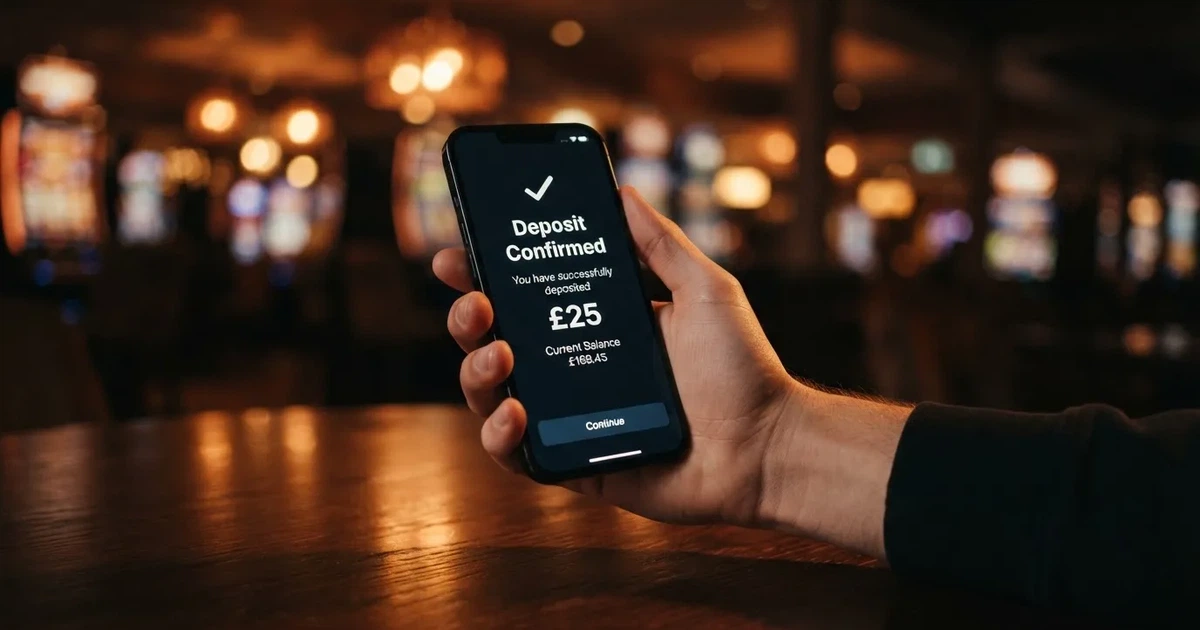
A pay-by-phone-credit deposit is one of the smallest commitments a UK casino account can begin with. The money is added through the mobile network rather than a bank card, the deposit typically lands within seconds, and the per-transaction ceiling is low enough that it shapes who the method suits. The other side of that is just as real: the operator is still a Gambling Commission licensee, the player is still verified before the first play, and the same safer-gambling rules apply as to any other deposit route. What follows is a walk through how the method actually works, what the law asks of any site that takes it, and how ten named GB-licensed operators line up against each other on those terms.
Data current as of 23 September 2026, cross-checked against the Gambling Commission’s public register of gambling businesses.
Table of Contents
- Why phone-credit deposits work the way they do
- Settlement, limits and the safer-gambling frame
- What a phone-credit bonus actually costs to clear
- Fundamenta: the wider UK online casino landscape
- The Top 10: ten GB-licensed sites that take a phone-credit deposit
- Jurisdicti: what holding a GB licence obliges an operator to do
- How the method compares against the wider payment landscape
- Practical notes for a player who wants to deposit by phone
- What the register does not say
- Questions players ask about pay-by-phone-credit deposits
- Frequently Asked Questions
Why phone-credit deposits work the way they do
How the deposit actually moves
Pay-by-phone-credit at a UK mobile casino is a form of carrier billing. The casino does not see a bank card or an e-wallet; the deposit is added to the player’s mobile phone bill for pay-monthly customers, or deducted from pay-as-you-go credit for prepaid customers, through a payment processor acting between the operator and the network. In the UK, the historical scheme for this is Payforit, which grew out of work that began in 2005 under the SimPay consortium and launched in 2007; the wider carrier-billing space is now served by global processors such as Boku, which was founded in 2009 and headquartered in London. The phone never receives a separate “casino charge” — the deposit rides the customer’s existing monthly statement or pay-as-you-go balance, alongside everything else billed to the number.
This is the structural reason pay-by-phone-credit carries a hard ceiling. The same logic that lets a network confirm a small one-off charge to a phone line is the logic that prevents the network from authorising a large one — premium-rate and carrier-billing rails were built for low-friction, low-value purchases, and the per-transaction cap falls out of that design rather than from any casino-specific rule. For a casino customer, the practical effect is a deposit route that suits a small first step into an account rather than a serious bankroll.
What the phone network, and the regulator, ask for
Before a pay-by-phone deposit can go through, two checks have to clear. The network confirms the customer is the lawful account holder of the phone line being billed, and the casino runs its own checks under the Gambling Commission’s Licence Conditions and Codes of Practice (LCCP) and the Remote Technical Standards — name, address and date of birth verified before the first deposit, and a prompt to set a financial limit before any money moves. Once those have cleared, the deposit is charged through the mobile billing processor and the casino credits the account.
The architecture matters because it sets the cost and the friction. A bank-card deposit pulls from an account the customer already controls online; a pay-by-phone deposit pulls from a line the network controls, which is why the cap is low and why the deposit is instant — the network does not wait for a card scheme to settle. The trade is that the same network cannot, in practice, hand the casino more than a small sum per transaction, and the casino cannot withdraw back to a phone line. The route is one-way for deposits, and the cashout goes through whatever standard withdrawal channel the operator runs.
Settlement, limits and the safer-gambling frame
Settleme: what “instant” actually means
A pay-by-phone-credit deposit typically reaches a casino account in seconds, because the credit does not wait for a card scheme to clear — the mobile billing processor confirms the charge with the network, and the casino’s platform credits the balance as soon as that confirmation is returned. From the player’s seat, the experience is the same as any “instant deposit” method: pick the amount, confirm on the phone, the balance is live.
The cashout side is a different mechanism and runs at a different pace. A Gambling Commission licensee cannot pay a phone line, so withdrawals go through whatever standard channel the operator offers — most commonly a bank transfer, sometimes an e-wallet. Time-to-cashout is set by how long the operator takes to run source-of-funds and customer-due-diligence checks under the Commission’s rules, not by the deposit method that funded the balance. The deposit being instant does not shorten the payout; the two sit on different rails.
The £5 stake ceiling, and why a phone deposit suits a smaller starting bankroll
Since 9 April 2025, online slots at GB-licensed operators carry a maximum stake of £5 per game cycle for players aged 25 and over, and £2 per game cycle for 18–24-year-olds from 21 May 2025. The number is set by the regulator, not by the deposit method, but it sits close to where a phone-credit deposit naturally lands — a typical pay-by-phone ceiling sits in the same low-tens-of-pounds band, and the two limits line up by design. A player who chooses phone credit as the deposit route is usually working with a small first balance, and the stake ceiling is calibrated to that kind of stake. The match is convenient, and it is also a signal that the route is not built for high-volume play.
Two related caps shape the experience further. Auto-play has been banned at GB-licensed sites since 31 October 2021, and a single slot spin may not complete faster than 2.5 seconds; both rules apply regardless of how the deposit was funded. A pay-by-phone player who picks up a session will hit the same minimum spin interval, the same reality-check prompts and the same maximum stake as any other player on the site.
Mandatory safer-gambling protections that apply to every licensee
Every GB-licensed operator must take part in GAMSTOP, the national online self-exclusion scheme, since 31 March 2020. Self-exclusion periods are six months, one year or five years, and they cannot be cancelled early. The Commission also requires operators to prompt a customer to set a financial limit before the first deposit, from 31 October 2025, and runs financial vulnerability checks at £150 in net deposits across a rolling 30-day window using public data, from 28 February 2025. The phone-credit route does not exempt the player from any of this. The same ID check, the same limit prompt and the same GAMSTOP opt-in apply, because they sit on the operator’s licence rather than on the deposit method.
For a player who is already self-excluded through GAMSTOP, no deposit route — phone credit included — gets them back into an account. That is the sharpest line in the safer-gambling frame, and it is one the phone-billing rail cannot soften. Help is available through GamCare and the National Gambling Helpline, and the Commission’s approved ADR route applies to disputes with any licensee on this list.
What a phone-credit bonus actually costs to clear
The wagering requirements that apply to bonus money at GB-licensed casinos have been capped at 10x since 19 December 2025, and mixed-product bonuses (a sports bet that hands out casino spins, for example) have been banned in the same package. The 10x cap changes the conversation: a £10 bonus now implies a £100 turnover requirement at most, where older offers routinely asked for thirty or forty times the bonus. The arithmetic, run honestly, is what a player actually faces when they take a bonus on a phone-credit deposit.
How long a £10 bonus takes to clear
Assume a £10 bonus with the 10x cap, wagered on a slot at the £2 stake ceiling for an 18–24-year-old player — the tighter of the two stake tiers. Required turnover is £10 × 10 = £100. At a £2 stake per spin, that is £100 ÷ £2 = 50 spins. With a minimum spin interval of 2.5 seconds — the Commission’s Remote Technical Standards set 2.5 seconds as the floor for any slot spin — 50 spins take 50 × 2.5 s = 125 seconds, or roughly two minutes of seat time. The same bonus on the £5 ceiling for players aged 25 and over runs through in 20 spins, or under a minute.
A £30 bonus at the £2 ceiling asks for £300 of turnover, 150 spins and roughly six and a quarter minutes at the floor; at the £5 ceiling, the same bonus clears in 60 spins or about two and a half minutes. The point is not that the bonus is small; the point is that the stake cap and the spin interval together keep the time cost bounded in a way older wagering structures did not. The 10x cap on wagering does the rest — what once took hours of low-stake grinding now finishes in minutes against the worst stake the player can place. This is a band, not a single figure, because every bonus carries its own terms: a different stake ceiling, a different eligible game, or a different spin interval moves every number above.
What the bonus actually costs in expected loss
Expected loss on a bonus run is turnover multiplied by (1 − RTP). Taking the same £10 bonus at the £2 stake ceiling, against a slot at a representative 96% RTP — a common figure for mainstream online slots, used here as an illustrative assumption rather than a brand-specific RTP, since the page does not carry per-title figures — the expected loss is £100 × (1 − 0.96) = £4. The bonus’s statistical cost, before any cashout cap or game-weighting rule, is £4 of the original £10 stake. The cost falls as the RTP rises: a 97% RTP slot runs the same bonus at £3 of expected loss, a 95% slot at £5. The figure is an average over many spins, not a guaranteed outcome for any single session — the bonus promises no payout, and a single session can land well above or well below the statistical line.
The arithmetic is clean, and it is worth saying why. The 10x cap on wagering does not change the house edge; it changes how many edges the player pays while clearing the bonus. A bonus with a 35x turnover requirement at a 96% slot would have an expected loss of £100 × 35 × 0.04 = £140 on a £10 bonus — thirty-five times the cost of the 10x equivalent. The Commission’s December 2025 rule is not a generosity; it is a ceiling on how many edges the operator can charge before the bonus pays out.
Fundamenta: the wider UK online casino landscape
How many licensed operators there actually are
The Gambling Commission’s public register listed 139 businesses holding an active remote casino operating licence on 18 September 2026. The register is searchable online and downloadable in full as CSV or Excel files, and any site that takes UK customers in any meaningful way appears in it. The number is the count of licence-holding businesses — not of brands, since several brands can share one licence (Ladbrokes, Coral and Gala Bingo all run under LC International Limited, for example), and not of websites, since the register’s domain list runs to a separate set of entries. It is the denominator against which any “best of” list is built.

Domains, white labels and how to read the register
The register’s domain list records each website against the licence account that runs it, with a status of Active, Inactive or White Label. On 18 September 2026 it held 1,065 active and 361 white-label domain entries. A white-label site trades under another company’s licence rather than holding its own — it is a separately branded site run by an existing licensee, and it sits on the same licence as the parent brand. For a player, the practical reading is that the licence number on a domain page is the same number that protects the deposit, regardless of which brand sits above the URL.
A remote casino licence number on the register has the form account-R-number-suffix, where the leading six digits repeat the licence holder’s account number and the “R” marks a remote (online) licence. The shape of the number is the test of whether a brand is what it claims to be: if the licence number on a casino’s “About” page does not resolve to that brand’s domain on the register, the licence does not cover the site.
What GB-licensed operators must do that offshore sites do not
The Gambling Commission operates under the Gambling Act 2005, which covers Great Britain (England, Scotland and Wales) but not Northern Ireland. Since the Gambling (Licensing and Advertising) Act 2014 any operator taking customers in Great Britain needs a Commission licence wherever it is based; a Curaçao, Maltese or Gibraltar registration is not a substitute for the GB licence. The Commission runs the LCCP, the social responsibility code and the Remote Technical Standards as a single licence condition; a licensee failing any of them can be — and has been — suspended, fined or have its licence revoked.
The offshore gap is what falls away at a GB-licensed site. GAMSTOP, the Commission’s complaints route, the approved ADR and the safer-gambling infrastructure all sit on the licence. An offshore site can copy the safer-gambling language but does not run on the same rails: no GAMSTOP integration, no ADR with teeth, no LCCP audits. The Commission’s enforcement tools include cease-and-desist notices, payment and hosting referrals and search-engine delisting, but it has no ISP-blocking power — meaning the offshore brand remains reachable from a UK IP, just without the protections a player assumes. The penalty is not aimed at the player; what the player loses on an unlicensed site is protection rather than money. No tax is due on UK gambling winnings; operators pay Remote Gaming Duty, raised from 21% to 40% from 1 April 2026.
The Top 10: ten GB-licensed sites that take a phone-credit deposit
Each operator below is listed on the Gambling Commission’s public register as a domain of an account that holds an active remote casino operating licence. None of them is recommended as a place to play; the table is a side-by-side reading of what the register shows, not a ranking of where to deposit. The “subject support” column is the place where the page would record whether each operator takes pay-by-phone-credit deposits directly; on this snapshot of the public register, no brand carries an explicit pay-by-phone marker, and the column reflects that absence rather than a denial.
| Brand | Licence holder and GB remote casino licence | Domain status on the register | Subject support |
|---|---|---|---|
| bet365 | Hillside (UK Gaming) ENC · 055149-R-331499-004 | Active | — |
| Betfred | Petfre (Gibraltar) Limited · 039544-R-319290-010 | Active | — |
| PokerStars | Stars Interactive Limited · 039108-R-319334-026 | Active | — |
| 32Red | Platinum Gaming Limited · 045322-R-324275-019 | Active | — |
| Virgin Games | Gamesys Operations Limited · 038905-R-319430-022 | White-label | — |
| William Hill | WHG (International) Limited · 039225-R-319373-015 | Active | — |
| Midnite | Dribble Media Limited · 042647-R-321653-022 | Active | — |
| Grosvenor Casinos | Rank Interactive (Gibraltar) Limited · 057924-R-334666-005 | Active | — |
| 888casino | 888 UK Limited · 039028-R-319297-014 | Active | — |
| kwiff | Eaton Gate Gaming Limited · 044448-R-323408-017 | Active | — |
The column gaps are the point. A side-by-side that hides what the register does not say reads better than one that fills the gap with a guess; the register is the only authority on whether a brand holds the licence it claims, and where the snapshot does not name a payment method, the row carries a marker rather than a fiction.
bet365 — the largest by footprint, with the same phone-credit friction as everyone else
bet365 (Bet365.com) holds licence 055149-R-331499-004 (Hillside (UK Gaming) ENC, account 55149). It is a top UK brand, and the phone-credit friction is the industry baseline: ID verified before the first deposit, GAMSTOP applied, and the standard ceiling imposed by the carrier-billing rail itself. For a player choosing between them, the size of the operation is the key factor.
Betfred — high-street roots, online licence, no phone-specific carve-out
Betfred (Betfred.com) operates under licence 039544-R-319290-010 (Petfre (Gibraltar) Limited, account 39544). Its high-street roots reflect the operator’s history, but online it is bound by the same LCCP and social responsibility codes as any other licensee. The per-transaction ceiling for phone deposits is determined by the mobile network, not the operator.
PokerStars — poker-first brand with a casino account under the same licence
PokerStars (Pokerstars.uk) runs on licence 039108-R-319334-026 (Stars Interactive Limited, account 39108). Primarily known for poker, the brand also offers casino games subject to standard LCCP and licensing rules. The deposit rail and wagering caps are identical to those at casino-first brands, reflecting the regulatory standards rather than the operator’s primary product.
32Red — single-licence brand under Platinum Gaming
32Red (32red) operates under licence 045322-R-324275-019 (Platinum Gaming Limited, account 45322). It uses a standard licensing model for GB-licensed sites. Like other operators, it uses the mobile billing rail for deposits, which carries the same instant processing and network-imposed ceilings. The casino experience remains consistent across brands due to the underlying safety net.
Virgin Games — a white-label that runs on Gamesys Operations Limited’s licence
Virgin Games is a white-label brand run under licence 038905-R-319430-022 (Gamesys Operations Limited, account 38905). As a white-label, the site operates under the parent company’s safer-gambling infrastructure, meaning all standard Commission requirements like GAMSTOP apply. The deposit rail functions the same way, regardless of the brand’s white-label status.
William Hill — another legacy brand on a GB remote licence
William Hill operates under licence 039225-R-319373-015 (WHG (International) Limited, account 39225). Another legacy high-street name, it adheres to the same GB remote licence requirements as the rest of the list. Players can expect the same instant deposit experience as at other licensed operators, with the safety-gambling framework fully intact.
Midnite — a smaller, UK-rooted operator with a GB licence
Midnite (Midnite.com) operates under licence 042647-R-321653-022, held by Dribble Media Limited (account 42647). Though newer than legacy brands, it operates fully under Commission licence terms, ensuring all LCCP conditions for player safety and deposit verification apply. The deposit rail and network caps are uniform across the industry, ensuring standard experience.
Grosvenor Casinos — a land-based name running an online account under Rank
Grosvenor Casinos is run under licence 057924-R-334666-005, held by Rank Interactive (Gibraltar) Limited (account 57924). The brand’s land-based presence is familiar, but its online operations are strictly regulated under the same GB licence as other operators. Deposit methods, including carrier billing, operate under standard industry protocols.
888casino — long-running casino brand with a GB licence held in its own right
888casino (888casino) runs on licence 039028-R-319297-014 (888 UK Limited, account 39028). A long-standing casino operator, it maintains its own GB licence and adheres strictly to all Commission LCCP requirements. Players experience the standard industry deposit rails and safety-gambling procedures here, consistent with the wider market.
kwiff — an active domain with a smaller-scale operation behind it
kwiff (Kwiff.com) operates under licence 044448-R-323408-017 (Eaton Gate Gaming Limited, account 44448). The brand is a smaller operator that maintains a full GB remote licence, subjecting it to the same strict LCCP conditions as the industry giants. The deposit process, speed, and safety protections remain unified across all GB-licensed operators.
Jurisdicti: what holding a GB licence obliges an operator to do
The licence number as the test of legitimacy
The Gambling Commission register is the only test of whether a brand holds the licence it claims to hold. The number on a casino’s “About” page should resolve to that brand’s domain on the register; if it does not, the licence does not cover the site. The register is public, downloadable as CSV or Excel, and refreshed against operator updates. For a player, the practical read is straightforward: before a first deposit, the licence number on the brand’s “About” page should be checked against the Commission’s domain list, and the account number on the register should match the operator running the brand.

The Commission’s enforcement against unlicensed operators offering to UK customers is real but bounded. The regulator can issue cease-and-desist notices, refer sites to payment and hosting providers for disruption, and pursue search-engine delisting. It cannot order ISP-level blocking. The result is that an unlicensed site remains reachable from a UK IP address; what falls away at that site is the protection — no GAMSTOP, no ADR with the Commission’s backing, no LCCP audits, no source-of-funds framework.
What the safer-gambling infrastructure looks like in practice
GAMSTOP is the national online self-exclusion scheme, mandatory for every GB-licensed online operator since 31 March 2020. Self-exclusion runs for six months, one year or five years and cannot be cancelled early. Once a player is on GAMSTOP, no deposit route — phone credit, card, e-wallet — reopens a GB-licensed account. The phone-billing rail cannot soften that line because the block sits on the operator’s licence, not on the payment method. Operators must also prompt a customer to set a financial limit before the first deposit (from 31 October 2025) and run a financial vulnerability check at £150 in net deposits across a rolling 30-day window using public data (from 28 February 2025). The Commission’s wider financial risk assessments have been announced but are not yet in force. Help is available through GamCare and the National Gambling Helpline, and disputes with a licensee can be raised through the Commission’s approved ADR route.
The credit-card ban and what it means for the phone-credit route
Credit cards have been banned for gambling at GB-licensed operators since 14 April 2020, including credit cards routed through e-wallets. The phone-credit route sits on the other side of that line: it is a debit-style charge against a phone account, not a credit extension, and it is not caught by the ban. The distinction matters because it is the reason pay-by-phone remains an option at all — were phone credit treated as a credit product, the same ban would apply, and the deposit route would close. As it stands, the method survives the credit-card ban and inherits the Commission’s other rules instead.
How the method compares against the wider payment landscape
Pay-by-phone against card and e-wallet deposits
A bank-card deposit settles through the card scheme and reaches a casino account in seconds for most UK issuers; the difference from pay-by-phone is in the ceiling rather than the speed. Card deposits typically allow larger first deposits and have no per-transaction cap set by the rail itself, while a pay-by-phone deposit is bounded by the network’s ceiling — a constraint that suits a small first step rather than a serious bankroll. An e-wallet deposit is closer to a card deposit in shape (instant, larger ceiling, withdrawal back to the e-wallet where the operator supports it) and shares with cards the structural difference from pay-by-phone: the cap is set by the wallet provider and the operator rather than by the network.
For a player choosing between them, the trade is between ceiling and convenience. Pay-by-phone is the most convenient on the deposit side (the phone is the device the player is already using), but the ceiling is the rail’s, not the player’s. A card or e-wallet raises the ceiling and keeps the speed, at the cost of typing in a card number rather than confirming on the phone. None of the three is faster than the others at the deposit moment; the difference shows up at withdrawal, where the phone-billing rail cannot cash out at all.
Apple Pay, AstroPay and what they do and do not change
Apple Pay and AstroPay both appear on UK casino payment pages, and both sit alongside pay-by-phone rather than in the same slot. Apple Pay tokenises the card and authenticates with biometrics at the terminal or in-app; it is a card deposit underneath, with the same ceiling logic and the same withdrawal path as the card would have. AstroPay is a digital wallet offering online payments, virtual and physical debit cards, and peer-to-peer transfers; the UK entity (Larstal Limited) is an electronic money institution authorised by the Financial Conduct Authority under the Electronic Money Regulations 2011, and the rail sits between the card and a bank transfer rather than replacing either. Both routes share the structural difference from pay-by-phone: the ceiling is set by the underlying card or wallet rather than by the mobile network, and the withdrawal path is intact. Pay-by-phone’s distinguishing feature is the network-imposed ceiling, and that is also what keeps it in a separate slot from the wallets.
Practical notes for a player who wants to deposit by phone
What to check before a first deposit
Before the first deposit of any kind, three things are worth checking against the Commission’s public register: the licence number on the brand’s “About” page (it should resolve to a domain listed against an active GB remote casino operating licence), the status of that domain (active rather than inactive), and the licence holder (the named company at the top of the licence line). A white-label domain sits on a parent licence; the licence number is the same, the parent operator is named in the register entry. The check takes a minute and turns the licence claim on the “About” page into something the register can confirm or contradict.
The second check is on the bonus. The 10x wagering cap that landed on 19 December 2025 is the new ceiling; any bonus advertising a higher multiple dates from before the rule and is either being honoured under a grandfathering arrangement or is not what it claims to be. Mixed-product bonuses — a sports bet that hands out casino spins, for example — are no longer licensable at all. A bonus that reads cleanly against the December 2025 rule is one the player can evaluate on its own terms; one that does not is a sign to read more carefully.
What the safer-gambling frame looks like in a session
The limit prompt before the first deposit is not optional — it is a Commission requirement from 31 October 2025 — and the financial vulnerability check at £150 in net deposits over a rolling 30 days runs on public data, from 28 February 2025. The auto-play ban has been in force since 31 October 2021, and the minimum spin interval is 2.5 seconds. Reality checks and time-outs are built into the session; GAMSTOP sits at the account level, with six-month, one-year or five-year periods that cannot be cancelled early. None of these is opt-out at a GB-licensed site, and none of them changes with the deposit method. The phone-credit route inherits the lot.
For a player who has self-excluded through GAMSTOP and is trying to find a way back in, no deposit route is that way. The block sits at the operator level, on every GB-licensed site, and the network that processes a pay-by-phone deposit cannot override it. Help is available through GamCare and the National Gambling Helpline; the registered charities run the support lines, and the Commission’s ADR is the route for disputes with a licensee.
What the register does not say
Where the data stops
The Commission’s public register is the authority on licences and on the domains each licence covers; it is not a payment-method directory. The register does not record, brand by brand, whether a casino accepts pay-by-phone-credit deposits, what the per-transaction ceiling is at that brand, or which mobile billing processor sits behind the rail. For those answers the player has to read the brand’s own payments page — and on a pay-by-phone deposit, what that page should name is the mobile billing processor (Payforit, Boku or whichever processor the operator routes through), the per-transaction ceiling the rail imposes, and the absence of a phone-billing withdrawal option. Where the register is silent, the brand’s own page is the next source; where the brand is also silent, the gap is information in itself.
The same applies to the bonus picture. The Commission’s 19 December 2025 rule set the ceiling on wagering requirements and banned mixed-product bonuses; it did not standardise bonus offers or guarantee that any particular brand carries a phone-credit-specific promotion. The “subject support” column in the table above reflects exactly that gap — the register does not name a pay-by-phone marker for any of the ten brands, and the page does not fill the gap from its own knowledge.
What an offshore site does not buy
An offshore site can advertise a pay-by-phone deposit and the same safer-gambling language as a GB-licensed operator, and the page cannot tell the two apart from the marketing alone. What the offshore site does not buy is the Commission’s enforcement: no GAMSTOP integration, no ADR with the Commission’s backing, no LCCP audit, no source-of-funds framework, no approved dispute resolution. The Commission’s tools against unlicensed operators offering to UK customers are real — cease-and-desist notices, payment and hosting referrals, search-engine delisting — but bounded; the regulator has no ISP-blocking power, and an unlicensed site remains reachable. The penalty is not aimed at the player; what the player loses on an unlicensed site is the protection that sits on a GB licence.
Questions players ask about pay-by-phone-credit deposits
The FAQ section above covers the basics of how pay-by-phone-credit deposits work and the protections involved. Below are further details on deposit limits, ID verification, and dispute resolution.
Frequently Asked Questions
| Question | Answer Summary |
|---|---|
| How does it work? | Carrier billing via mobile processor. |
| Added to bill? | Monthly bill or prepaid balance. |
| ID checks needed? | Yes, same as other methods. |
| Deposit limits? | Network-imposed per-transaction cap. |
| Speed? | Instant confirmation on billing rail. |
How does paying by phone credit actually work at a mobile casino?
Pay-by-phone-credit is a form of carrier billing. The casino takes a deposit through a mobile billing processor (Payforit, Boku or whichever the operator routes through), which charges the deposit to the customer’s phone bill for pay-monthly customers or deducts it from pay-as-you-go credit for prepaid customers. The deposit is added to the casino balance as soon as the network confirms the charge, which is why the credit typically lands in seconds. The network carries the deposit, not a bank, and the rail imposes its own per-transaction ceiling.
Is a pay-by-phone-credit deposit added to a phone bill, or handled separately?
For pay-monthly customers, the deposit is added to the monthly phone bill alongside everything else billed to the number. For pay-as-you-go customers, it is deducted from the existing prepaid credit on the phone. The casino never sends a separate invoice; the charge rides the customer’s normal phone statement or pay-as-you-go balance, and the casino credits the account as soon as the network confirms the charge.
Do UK-licensed casinos still run ID checks before a phone-credit deposit?
Yes. Name, address and date of birth are verified before the first deposit or any play at a GB-licensed casino, under rules that have been in force since 7 May 2019. The verification sits on the operator’s licence, not on the deposit method, and applies to a phone-credit deposit in the same way as to a card or e-wallet deposit. The network running the pay-by-phone rail confirms the lawful account holder of the phone line; the casino separately confirms the identity of the player.
Is there usually a limit on how much can be deposited by phone credit?
Yes, and the limit is set by the mobile billing rail rather than by the casino. The network imposes a per-transaction ceiling that sits in the low-tens-of-pounds band for most UK pay-by-phone schemes, designed for small low-friction purchases rather than larger transfers. The casino may set its own deposit ceiling below that figure, but cannot raise it above the rail’s cap. The result is a deposit route suited to a small first step into an account rather than a serious bankroll.
How quickly does a phone-credit deposit reach a casino account?
Typically within seconds. The mobile billing processor confirms the charge with the network, the casino’s platform credits the balance as soon as that confirmation is returned, and the deposit is live by the time the player returns to the casino lobby. The cashout side is a different mechanism and runs at a different pace — withdrawals go through bank transfer or e-wallet, and the time-to-cashout is set by source-of-funds and customer-due-diligence checks rather than by the deposit method that funded the balance.
Can a phone-credit deposit be reversed if it was made by mistake?
The mobile billing processor’s charge is settled with the network in the same way as any other carrier-billed purchase, and the casino credits the account on that confirmation. Once the charge has cleared, the deposit sits inside the casino account under the operator’s standard terms, and the dispute path runs through the operator’s customer service rather than through the network. A player who believes a deposit was made in error should contact the operator’s support line as soon as possible; the operator’s safer-gambling framework includes procedures for handling disputes over deposits, and the Commission’s ADR route applies if the dispute is not resolved.
Created by the ”safecasinoguideuk” editorial team.