
Binance Coin casinos in Britain: the licence gap the marketing never mentions
 Available in GB
A BNB deposit at a casino looks like a faster, lighter way to play — no card details, no bank statement, no five-screen verification flow. The picture that sells it does not show the other side. A site that takes Binance Coin from a British player almost always sits outside the Gambling Commission’s regime, which means no GAMSTOP, no Commission complaint route, no approved alternative dispute resolution, and no automatic verification that the person behind the wallet is even an adult. The page below compares the GB-licensed casinos the register lists as active against the offshore BNB-accepting sites the marketing points at, and lays out, in pounds and in protections lost, what the trade actually is.

Data current as of 23 September 2026, verified against the Gambling Commission’s public register of gambling businesses (the CSV download published on the Commission’s site).
Table of Contents
- Responsible gaming and what you give up without a British licence
- BNB, the BNB Smart Chain, and why casinos advertise it
- The licensed set: ten GB-licensed casinos, side by side
- The fundamentals of a crypto-casino comparison
- Legality, regulation, and the limits that bind every GB-licensed site
- Closing the comparison: who this list is for, and who it is not
- Frequently asked questions about BNB casinos in Britain
Responsible gaming and what you give up without a British licence
The responsible-gaming angle comes first because it is the part the marketing never acknowledges, and it is the part a reader needs before any of the rest of the comparison makes sense. The Commission’s social responsibility code applies to every operator it licences; a BNB-only site operating under a Curaçao or Anjouan sub-licence runs on its own house rules, and the protections a British player is used to simply do not exist there.
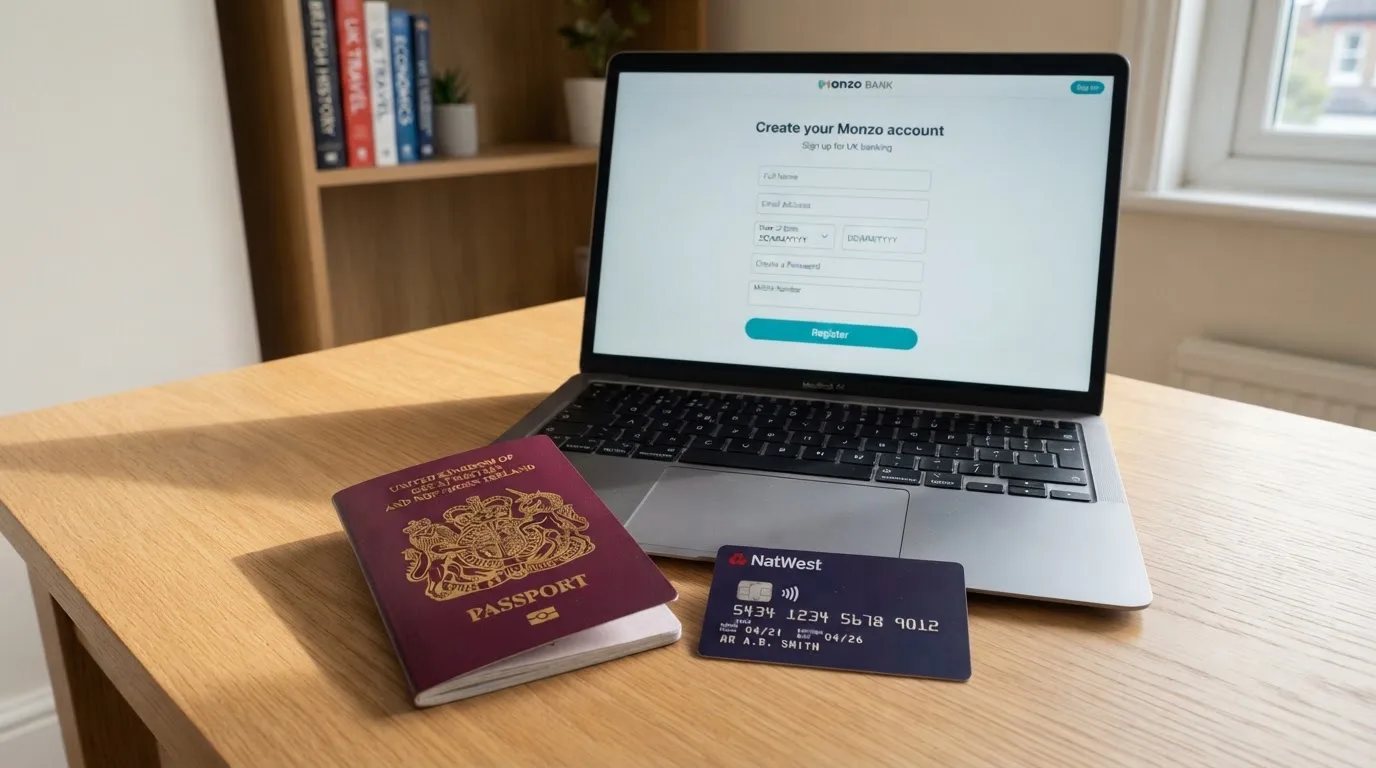
The loss is concrete. GAMSTOP — the national online self-exclusion scheme — is a mandatory condition of every Commission online licence, and it lets a player block themselves from every GB-licensed site in one step for six months, one year or five years. The exclusion cannot be cancelled early. An offshore BNB casino is not on the scheme, so a self-exclusion there is a single-operator request with a single-operator answer. The Commission’s financial vulnerability check runs at £150 net deposits in a rolling 30-day window and uses public data only; on an unlicensed site the figure is whatever the operator chooses to apply, or nothing. The reality-check pop-up that appears every hour on a GB-licensed slot is a Commission rule; it disappears the moment the casino sits outside the regime.
The same gap shows up in complaints. A dispute with a GB-licensed casino routes, in order, to the operator, then to an approved alternative dispute resolution provider, then to the Commission if the ADR finding leaves the player dissatisfied. The Commission’s enforcement record is published, and a brand that mistreats a customer faces licence action. An offshore BNB operator answers to the regulator that issued its licence, and the answer is rarely quick or, in practice, accessible to a British player filing from a London flat. The player is not committing an offence by gambling there — the offence sits with the operator under section 33 of the Gambling Act 2005 — but the protection the player is used to is gone.
A licensed site also cannot offer anonymous play. Name, address and date of birth are verified before the first deposit or any play, and that requirement has been in force since 7 May 2019. That is precisely the friction a BNB casino advertises as its selling point, and it is the friction a GB-licensed operator cannot lawfully remove. The reader who came here wanting to know whether BNB deposits work at a familiar British brand already has the answer: they do not, because the licence requires the verification BNB was chosen to skip.
BNB, the BNB Smart Chain, and why casinos advertise it
Binance Coin launched in July 2017 as an Ethereum-based token issued by the Binance exchange, raised about $15 million through an initial coin offering in 2017, and migrated to the Binance Smart Chain when that network launched in September 2020. The network rebranded to BNB Smart Chain in 2022 and runs a proof-of-stake consensus mechanism, which is why BNB transactions settle quickly and cheaply by comparison with Bitcoin’s proof-of-work chain. The token’s maximum supply is capped at 200,000,000 BNB, and by 2021 it had the third-highest market capitalisation among cryptocurrencies.
That technical profile — fast settlement, low fee, exchange-native wallet — is what crypto casino operators market. A player tops up a wallet with BNB on the exchange, sends it to the casino’s deposit address, and the funds appear in the account balance within a block or two. No card scheme, no bank statement, no merchant category code that flags gambling. The casino markets that as a feature; a reader weighing it against a licensed British site is weighing friction against protection.
The wider regulatory environment matters here too. The Financial Conduct Authority became the anti-money-laundering supervisor of UK cryptoasset businesses on 10 January 2020, under Regulation 8L and Regulation 9 of the Money Laundering Regulations. Cryptoasset exchange providers and custodian wallet providers operating in the UK, including those dealing in Bitcoin, must register with the FCA before starting business. Since that date the FCA has received 417 cryptoasset registration applications, of which 68 — 17% of the determined applications — have been registered and 263 have been withdrawn. The FCA’s new authorisation regime under the Financial Services and Markets Act opens for applications on 30 September 2026. None of that is a gambling licence, but it shapes who in Britain is allowed to handle BNB at all.
HMRC treats cryptoassets such as Binance Coin as property rather than currency. Individuals owe Capital Gains Tax when they sell or swap them and Income Tax when they receive them, for example from staking rewards. A player who deposits BNB at a casino and later withdraws in sterling has, in HMRC’s view, disposed of a property asset, and the gain or loss sits on the self-assessment return. The casino itself pays no UK tax on the transaction if it operates offshore, and a GB-licensed operator pays Remote Gaming Duty, which was raised from 21% to 40% from 1 April 2026 — and that is why the marketing copy rarely mentions the duty.
The Commission’s own guidance is plain. Great Britain-licensed gambling operators must notify the Commission of any change in payment methods, including the introduction of crypto-asset acceptance, and must review their anti-money-laundering risk assessment before doing so. The Commission classes cryptoassets, including Bitcoin, as a high-risk payment method and expects licensed gambling operators to treat crypto-funded play as a high-risk indicator requiring enhanced customer due diligence. A licensed operator that wanted to add BNB could, in principle, but the regulatory cost of doing so is the reason none of the major GB brands have.
The licensed set: ten GB-licensed casinos, side by side
The table below lists ten remote casino brands drawn from the Gambling Commission’s public register, each tied to the licence account that runs it. The licence numbers are the long forms the register publishes; the domain status is what the register showed for the brand on 18 September 2026. The right-hand column records whether the register or any operator disclosure shows the brand as accepting Binance Coin — and the answer, uniformly, is that the register carries nothing on BNB support at any of these brands. That is the subject support column reading honestly. Where it does not show a brand on BNB, the page does not claim it does.
A note on what a licence number means. A remote casino licence on the register takes the form account-R-number-suffix, where the six leading digits repeat the licence holder’s account number and the R marks a remote (online) licence. Two brands can sit under one licence account — Betfair and Paddy Power both run on the same PPB Games Limited account — and a white-label brand trades under another company’s licence entirely. Virgin Games is the white-label case in this list.
| Brand | Licence holder and GB remote casino licence | Domain status on the register | BNB support |
|---|---|---|---|
| Grosvenor Casinos | Rank Interactive (Gibraltar) Limited · 057924-R-334666-005 (account 57924) | Active | — |
| Virgin Games | Gamesys Operations Limited · 038905-R-319430-022 (account 38905) | White label | — |
| Betway | Betway Limited · 039372-R-319367-029 (account 39372) | Active | — |
| PokerStars | Stars Interactive Limited · 039108-R-319334-026 (account 39108) | Active | — |
| Betfair | PPB Games Limited · 039411-R-319335-010 (account 39411) | Active | — |
| Paddy Power | PPB Games Limited · 039411-R-319335-010 (account 39411) | Active | — |
| 32Red | Platinum Gaming Limited · 045322-R-324275-019 (account 45322) | Active | — |
| Betfred | Petfre (Gibraltar) Limited · 039544-R-319290-010 (account 39544) | Active | — |
| Casumo | Recro Limited · 061549-R-336718-002 (account 61549) | Active | — |
| bet365 | Hillside (UK Gaming) ENC · 055149-R-331499-004 (account 55149) | Active | — |
The brands are not a ranking. The Commission register lists 139 businesses holding an active remote casino operating licence, and the register’s domain list records each website against the licence account that runs it. On the day the data was pulled, that list held 1,065 active and 361 white-label casino domain entries — and a white-label site trades under another company’s licence, which is why the table flags Virgin Games that way. The ten brands are a sample of the household names a reader will already recognise; a wider list would not change the right-hand column, because the Commission register does not record cryptocurrency support per brand, and none of the operators in the set have announced BNB deposits through their own channels.
The shared shape of the column matters more than any single cell. Every brand on the list is on GAMSTOP. Every brand verifies identity before the first deposit. Every brand carries a stake cap — £5 per game cycle for players aged 25 and over (from 9 April 2025) and £2 for 18-24 (from 21 May 2025) — and a 2.5-second minimum spin interval, and no auto-play. Every brand accepts a deposit only through a method that lets the operator verify the source of funds. None of them take BNB, because BNB, by design, sits outside that verification chain.
Reading the operator cards
The cards that follow work through each brand in the same order the table uses, with the page’s own judgement on what the brand is worth and to whom. Where two brands share a licence account — Betfair and Paddy Power under PPB Games Limited — the judgement is on the brand a reader sees, not on the licence holder behind it, and the two are treated as separate rooms of the same house rather than as independent operators.
Grosvenor Casinos — Rank Interactive (Gibraltar) Limited, licence 057924-R-334666-005
Grosvenor runs as the online arm of the well-known land-based casino chain, and the licence sits with a Gibraltar-incorporated operator rather than a UK parent. The brand carries the full GB-licensed package — GAMSTOP, the £5/£2 stake cap, identity verification before the first deposit — and the customer base skews towards the live-dealer and table-game side of the lobby. BNB is not on the deposit list, and the Commission’s anti-money-laundering guidance on cryptoassets is the reason the brand has not added it. For a reader who wants a familiar British casino name with the protections the licence guarantees, Grosvenor is a steady pick; the read is unchanged whether the reader was planning to deposit in sterling or had hoped BNB would be an option.
Virgin Games — Gamesys Operations Limited, licence 038905-R-319430-022
Virgin Games is the only white-label domain in the set, trading under Gamesys Operations Limited’s licence account. The licence holder is the regulated party in any dispute, and the brand itself is the customer-facing layer the reader interacts with. The white-label status is not a downside — it is the way a number of the Commission’s licensed brands are structured — but it does mean the player is not the customer of Gamesys in any contractual sense, and the ADR route resolves against the licence holder. BNB is not supported; the deposit set is the standard GB-licensed one. The brand is a good fit for a reader who wants a slots-heavy lobby with a familiar media name on the front, and is comfortable with the white-label structure once it is explained.
Betway — Betway Limited, licence 039372-R-319367-029
Betway is the rare brand in the set where the licence holder carries the same name as the brand, which makes the licence trail short to follow. The brand is one of the larger multi-vertical operators on the register — sports, casino, esports — and the casino lobby sits behind the same identity-verification flow as the sportsbook. BNB is not on the deposit page; the brand’s anti-money-laundering controls would treat a crypto-funded deposit as a high-risk indicator under the Commission’s guidance. For a reader who wants casino and sportsbook behind one verified account, Betway is a strong choice; for a reader specifically looking for BNB deposits, the brand does not fit.
PokerStars — Stars Interactive Limited, licence 039108-R-319334-026
PokerStars.uk is the British-facing domain of an operation that runs in several jurisdictions, and the GB licence is held by Stars Interactive Limited rather than by the wider international group. The brand is best known for poker, but the casino lobby has grown into a sizeable slots and live-dealer offering. BNB is not in the deposit set; the brand runs the same KYC chain as the rest of the licensed set. The reader who came specifically for poker with a British-facing domain and a Commission licence has a clear answer; the reader looking for BNB deposits has the same answer the rest of the column gives.
Betfair — PPB Games Limited, licence 039411-R-319335-010
Betfair sits on the same licence account as Paddy Power, and the two brands share a parent company and a regulatory footprint. The brand carries the full GB-licensed package; BNB is not on the deposit page. The exchange model the brand grew up on — peer-to-peer pricing on sports markets — does not extend to a cryptocurrency deposit rail, and the Commission’s anti-money-laundering guidance on crypto-funded play makes adding one expensive. For a reader who wants a brand with exchange heritage and a Commission licence, Betway or Betfair are both credible; for a reader looking for BNB, neither fits.
Paddy Power — PPB Games Limited, licence 039411-R-319335-010
Paddy Power shares the Betfair licence account, and the brand carries the same GB-licensed package. The deposit page is the standard one — debit card, bank transfer, a small set of approved e-wallets — with no BNB and no cryptocurrency of any kind. The brand’s retail heritage in Ireland and the UK shows up in the promotional cadence rather than in the payments page. The read is the same as for the rest of the set: a strong GB-licensed option for a reader who does not need BNB; not an option at all for a reader who does.
32Red — Platinum Gaming Limited, licence 045322-R-324275-019
32Red is a long-established British-facing brand with a Microgaming-era casino lobby that has been updated to a wider provider set. The licence sits with Platinum Gaming Limited, and the domain is active on the register. BNB is not on the deposit page; the brand’s casino-only positioning makes the absence more visible than it is at a multi-vertical brand, because the reader does not have a sportsbook to fall back to. For a reader who wants a casino-only GB-licensed brand with a long track record, 32Red fits; for a reader looking for BNB, the answer is the same as everywhere else in the licensed set.
Betfred — Petfre (Gibraltar) Limited, licence 039544-R-319290-010
Betfred is one of the better-known British retail bookmakers, and the online casino sits behind the same Gibraltar-incorporated licence holder as several of the other sports-and-casino brands in the set. The brand carries the full GB-licensed package; BNB is not supported. The Commission’s anti-money-laundering guidance on crypto-funded play is the reason; the deposit page reflects it. The read is unchanged: a strong GB-licensed pick for a reader not looking for BNB; not an option for a reader who is.
Casumo — Recro Limited, licence 061549-R-336718-002
Casumo is the youngest brand in the set by reputation, founded as a casino-only operator rather than a sportsbook with a casino attached, and the licence sits with Recro Limited. The brand’s gamified loyalty structure has been one of its selling points, and the lobby is slots-and-live-dealer-heavy. BNB is not supported. For a reader who wants a casino-only brand with a younger feel and the full GB-licensed package, Casumo is a credible choice; for a reader looking for BNB, the column reading holds.
bet365 — Hillside (UK Gaming) ENC, licence 055149-R-331499-004
bet365 is the largest brand on the list by both customer base and product range, and the licence sits with Hillside (UK Gaming) ENC. The brand carries the full GB-licensed package on every product, and the payments page is the standard licensed set — debit card, bank transfer, approved e-wallets. BNB is not on that page. The brand’s scale means a reader searching specifically for a BNB-accepting major-brand casino will find the gap most starkly here, because the rest of the offer is exactly what the marketing for a BNB casino promises — fast, clean, friction-light — with the verification chain added. The read is unchanged: the gap is the licence, and the licence is what makes the rest of the protections possible.
The fundamentals of a crypto-casino comparison
The comparison above is built around a single axis — is the brand GB-licensed, and does it accept Binance Coin — because that axis is the one that decides everything else a player cares about. A comparison that lists game counts, slot RTPs and bonus size without the licence column has been written for someone shopping, not for someone deciding where to put their money; the licence is what gives the rest of the numbers any meaning, because the numbers on a site without a Commission route have no enforcement behind them.

Three things make a BNB casino comparison different from a standard one. The first is verification: a GB-licensed site verifies name, address and date of birth before the first deposit or any play, and a BNB casino markets itself on not doing so. The second is recourse: the Commission’s enforcement record is published, an approved ADR route exists, and a complaint that resolves against the player at the ADR stage can be escalated to the Commission. The third is the self-exclusion architecture: GAMSTOP is mandatory on every Commission online licence, and a self-exclusion that covers every GB-licensed site at once is not the same instrument as a single-operator request.
A reader who came here wanting a BNB casino will already have noticed that every brand on the licensed side of the comparison shows a dash in the BNB column. The reason is not that the brands have not got around to it — it is that the Commission’s anti-money-laundering guidance on cryptoassets makes the regulatory cost of doing so high enough that none of the major operators have. The offshore sites that accept BNB have made a different calculation: they sit outside the regime, they verify less, and the protection the player gives up is the headline trade.
Legality, regulation, and the limits that bind every GB-licensed site
The legality shelf closes the comparison because it is the part the marketing copy is quietest about, and the part the reader needs after the licence column has done its work. The Gambling Commission, sponsored by the Department for Culture, Media and Sport, regulates under the Gambling Act 2005, which covers Great Britain — England, Scotland and Wales — but not Northern Ireland. Since the Gambling (Licensing and Advertising) Act 2014 any operator taking customers in Great Britain needs a Commission licence wherever it is based, and a Curaçao, Maltese or Gibraltar operating licence is not a substitute. The register is the whole test of whether a brand holds one.
The Commission’s public register is searchable and downloadable, and on the day the data was pulled it listed 139 businesses holding an active remote casino operating licence. The register’s domain list records each website against the licence account that runs it, with a status of Active, Inactive or White Label. A licence number takes the form account-R-number-suffix, where the leading six digits repeat the licence holder’s account number and the R marks a remote (online) licence. The data the comparison is built on came from the CSV download published on the Commission’s site, and the figures in the licence column above are the licence numbers the register showed for each brand on 18 September 2026.
The limits that apply to every GB-licensed casino are uniform. Online slots carry a maximum stake per game cycle of £5 for players aged 25 and over, in force from 9 April 2025, and £2 for 18-24-year-olds, in force from 21 May 2025. There is no state-set deposit or loss ceiling, but operators must prompt a customer to set a financial limit before the first deposit — in force from 31 October 2025. Since 31 October 2021, auto-play is banned, a slot spin may not be faster than 2.5 seconds, and losses disguised as wins are banned. The minimum age is 18, and name, address and date of birth are verified before the first deposit or any play, a rule in force since 7 May 2019.
The player-protection architecture runs on a separate track. GAMSTOP, the national online self-exclusion scheme, has been a mandatory condition of every Commission online licence since 31 March 2020. Periods are six months, one year or five years, and the exclusion cannot be cancelled early. Financial vulnerability checks run at £150 net deposits in a rolling 30-day window, in force from 28 February 2025, and they use public data only; the wider financial risk assessments the Commission has signalled are not yet in force. The National Gambling Helpline, run by GamCare, and GambleAware are the published routes for a player who wants help. ADR is the formal dispute layer, and the Commission publishes the list of approved providers.
The payments and bonuses side of the regime closes most of what a BNB casino advertises as its edge. Credit cards have been banned for gambling since 14 April 2020, including credit cards routed through e-wallets. Since 19 December 2025 wagering requirements have been capped at 10x, and mixed-product bonuses — bet on sport, get casino spins, the staple of the bigger brands’ promotional calendars — are banned. Anonymous play is not possible at a licensed site. The combination is what makes the £2/£5 stake cap binding in practice: the verification chain that confirms the age also confirms the stake limit that applies to that age band.
The offshore side of the regime is the part that closes the loop. Providing gambling to people in Great Britain without a Commission licence is an offence under section 33 of the Gambling Act 2005. The Commission disrupts illegal sites — cease-and-desist notices, search-engine delisting, payment and hosting referrals — but it does not have ISP-blocking power. No penalty is aimed at the player; what the player loses on an unlicensed site is protection, and that is the cost the comparison above sits on top of.
What a wagering cap means in pounds
The 10x wagering cap that took effect on 19 December 2025 is the kind of rule that reads as a footnote and decides what a bonus is worth in practice. A bonus with a 10x wagering requirement means a player must turn the bonus amount over ten times in qualifying stakes before any of it can be withdrawn; a bonus with a 30x requirement, the kind that was standard on the GB-licensed market before the cap, takes three times as much play for the same headline figure. The cap is uniform, but the bonus amounts are not, and the comparison above is built around the rule rather than around any individual offer.
Take a £100 welcome bonus at the new cap. Required turnover is £100 × 10 = £1,000 in qualifying stakes. A £5 slot spin, the maximum for a player aged 25 or over, would clear the wagering in £1,000 ÷ £5 = 200 spins. At the 2.5-second minimum spin interval the Commission requires, those 200 spins take 200 × 2.5 seconds = 500 seconds, or roughly 8 minutes 20 seconds of continuous play. At the £2 stake cap that applies to 18-24-year-olds, the same wagering requires £1,000 ÷ £2 = 500 spins, or 500 × 2.5 seconds = 1,250 seconds, roughly 20 minutes 50 seconds of continuous play. The cap the Commission has set on stake size and the cap it has set on wagering interact, and the player is inside both of them.
The same bonus at a 30x multiple, the pre-cap norm, would have required £3,000 of qualifying turnover, 600 spins at the £5 stake cap, or 1,500 spins at the £2 cap. The 10x cap has shortened the clear-time by roughly two-thirds at the older stake and by exactly two-thirds at the younger one. That is the arithmetic the rule does, and it is the arithmetic that decides what a welcome bonus is worth once the marketing headline has been set aside. The rule is not retroactive, and bonuses advertised before 19 December 2025 may still carry higher wagering if their terms were set under the prior regime; the reader should read the terms on the offer being claimed, not the headline.
A reader using the comparison above should treat the 10x cap as the floor, not the ceiling. A bonus with a 5x wagering requirement, the kind some GB-licensed brands run on free-spin offers, requires half the play of a 10x bonus for the same headline amount, and a bonus with no wagering at all, attached to a cashback-style mechanic, requires none. The reading is the same on either side: the wagering multiple is the cost of the bonus, and the cost is what the comparison above is for.
Closing the comparison: who this list is for, and who it is not
The comparison above is honest about its shape. It is a list of ten GB-licensed brands, none of which accept Binance Coin, and the right-hand column is empty across the row because the register and the brands themselves do not show BNB support. A reader who came here to find a BNB casino will not find one in the licensed set, and that absence is the answer, not a hole in the comparison.
For a reader who wants a GB-licensed brand with the protections that come with the licence, the table ranks by household recognition rather than by play experience, and any of the ten is a credible choice. The brand-specific verdicts above close on what each one is for rather than on which is best — Grosvenor for the live-dealer reader, PokerStars for the poker reader, bet365 for the multi-vertical reader — because the comparison is between rooms in the same house, not between a safe house and a less safe one.
For a reader who specifically wants BNB deposits, the licensed set is the wrong list. The brands below that line — the offshore sites that advertise Binance Coin deposits — are a different population, and they trade the verification chain for the deposit rail the licensed set does not run. The protections lost are the ones the responsible-gaming shelf opened with: no GAMSTOP, no Commission complaints route, no approved ADR, no automatic verification that the player is an adult, and no recourse to a British regulator if the operator fails to pay a withdrawal. A British player choosing that side of the line is choosing it knowingly, and the comparison above is the shape of what is given up.
Frequently asked questions about BNB casinos in Britain
Can a licensed British casino accept Binance Coin as a deposit method?
In principle, yes — but in practice, none of the major GB-licensed brands do. The Commission’s anti-money-laundering guidance classes cryptoassets as a high-risk payment method and requires enhanced due diligence on crypto-funded play, and licensed operators must notify the Commission before adding a new payment method and review their AML risk assessment first. The regulatory cost of doing so is the reason the licensed set above shows a dash across the BNB column.
What identity checks apply to a BNB casino operating outside UK licensing?
That depends on the operator’s own terms and on the regulator that issued its licence. Many offshore BNB casinos run a wallet-based sign-up with email only, and some add KYC only at withdrawal. None of them is bound by the Commission’s 7 May 2019 rule that name, address and date of birth must be verified before the first deposit or any play at a GB-licensed site. The reader cannot assume the verification the licensed set runs; they have to read the operator’s own terms.
Is a casino that accepts Binance Coin automatically unlicensed in Britain?
Accepting BNB from a British player is not, by itself, a marker of licence status — but in practice the licensed set does not take crypto deposits, so a site advertising BNB support is almost always sitting outside the Commission’s regime. The Commission’s public register is the whole test, and the register should be checked directly: a brand that does not appear there as a domain of a remote casino operating licence account is not licensed.
What self-exclusion protection does a player lose by using a BNB-only casino?
GAMSTOP is a mandatory condition of every Commission online licence, and a self-exclusion there blocks the player from every GB-licensed site in one step for six months, one year or five years. An offshore BNB casino is not on the scheme, so a self-exclusion request there is a single-operator request with a single-operator answer. A player who has self-excluded via GAMSTOP and then opens an offshore BNB account has not been blocked from doing so, and the protection the player was relying on does not extend to that account.
How does a Binance Coin deposit differ from a standard bank transfer at a UK casino?
A bank transfer at a GB-licensed casino runs through the operator’s verified payments stack, and the source of funds sits inside the KYC chain the operator maintains for the Commission’s anti-money-laundering supervision. A BNB deposit at an offshore casino sits on a blockchain transaction — fast settlement, low fee, no merchant category code that flags gambling — and the wallet behind the deposit is not, by default, tied to a verified identity. The first fits the regime; the second sits outside it, and that is the practical difference the comparison above is built on.
Prepared by the safecasinoguideuk editorial staff.