Casino sites that accept debit card in the UK: a cost-first reading of 2026
 Available in GB
A licensed British casino treats a debit card deposit the way it treats any other funding method: as a single line in an account that must already exist, opened by someone already verified, and answerable to the same rules whether the money comes from a bank card, an e-wallet or a bank transfer. The search for casino sites that accept debit card is, in practice, a search for what that single line costs the player who runs it: how fast the money shows up, how much can go in, what the operator asks back when you try to take winnings out, and what protections sit behind the deposit button. This page reads the ten sites that hold an active remote casino licence on the Gambling Commission register through that lens. Everything that follows is written within the UK regulatory frame, because there is no licensed alternative.

Data current as of 23 September 2026 and cross-checked against the Gambling Commission’s public register of gambling businesses.
Table of Contents
- Responsible gaming: the framework a debit card deposit sits inside
- Payments and payout speed: what the debit card actually does
- How the ten licensed operators compare on a debit card deposit
- The licensed market in plain numbers
- A note on bonuses and the 10x wagering cap
- Operator reviews: what each site does at the debit card step
- Legality and regulation: the frame a debit card deposit cannot escape
- Frequently asked questions
Responsible gaming: the framework a debit card deposit sits inside
A debit card is not a free-standing payment choice. It is one of several ways of moving money into an account that the Gambling Commission already controls from the first deposit onward, and the controls apply whether the deposit clears in two seconds or twenty. This is the part of the picture that matters before any of the operator reviews, because it sets the floor under everything that follows.
Every online casino serving Great Britain must verify name, address and date of birth before the first deposit or any play, and that requirement has been in force since 7 May 2019. The rule is not a debit-card rule: it is a licence rule, and it is met with the same documents regardless of how the account is funded. A new account holder uploading a passport and a utility bill is the first step, not the last; the operator then runs the details through document checks and database lookups before unlocking deposits. For anyone funding through a debit card, the issuer’s own anti-fraud layer runs in parallel — Barclays lets customers block debit card payments to gambling providers it can detect, managed through the “Manage your cards” section of the Barclays app, with the bank flagging that customers remain responsible for transactions it cannot detect. Starling Bank and Monzo, both UK-authorised, carry their own gambling controls. The point is that verification does not end at the casino’s front door; the bank is reading the same payment.
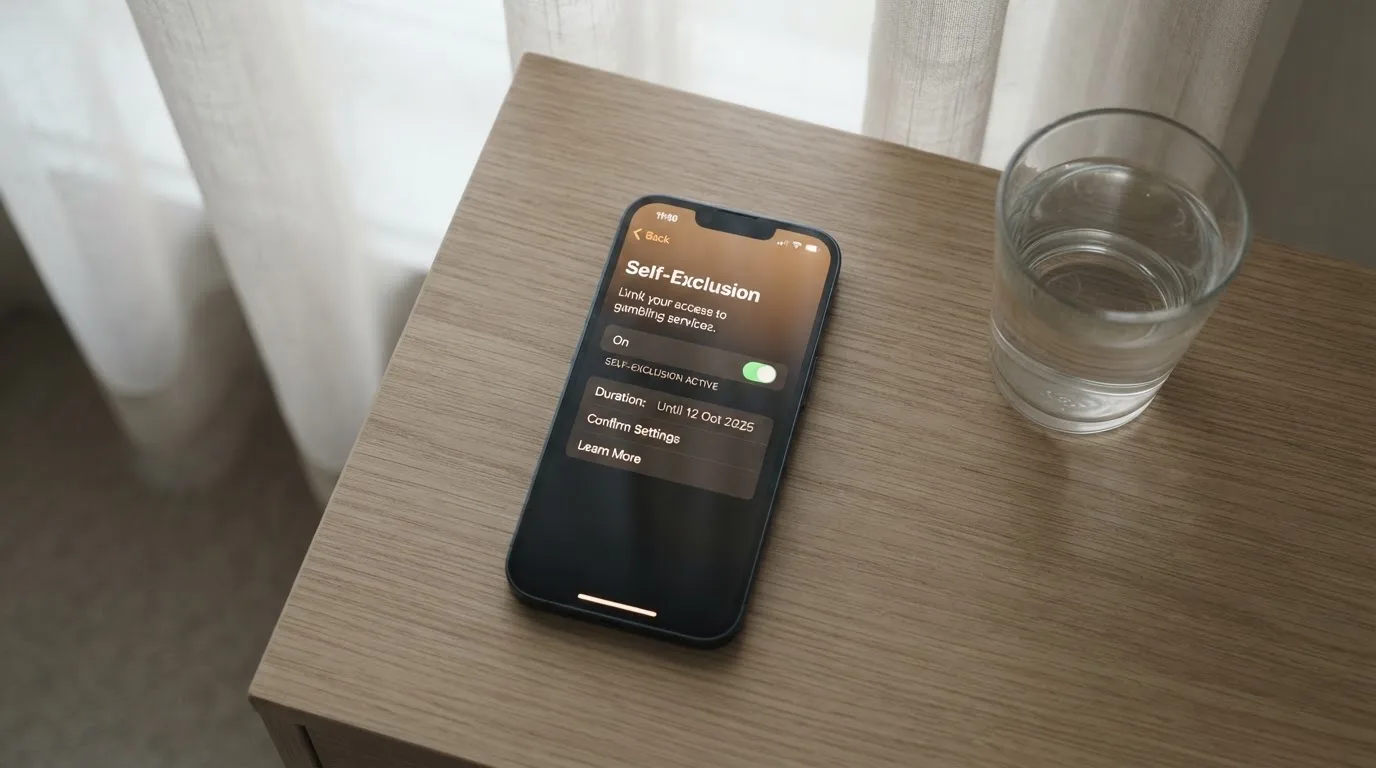
Self-exclusion sits above all of this. GAMSTOP is a mandatory condition of every GB remote casino licence since 31 March 2020, and the periods run to six months, one year or five years, none of which can be cancelled early. A debit card deposited at a registered casino does not bypass the exclusion check: the operator queries GAMSTOP at account creation, and an exclusion that matches the customer details blocks the account before any deposit clears. The same applies to a brand run as a white-label site under another company’s licence — Virgin Games, for instance, is listed as a white-label domain of Gamesys Operations Limited, and the GAMSTOP check sits with the licence holder, not the brand on the door.
Two further controls bear directly on the cost of play. Online slots carry a maximum stake per game cycle: £5 for players aged 25 and over, in force from 9 April 2025, and £2 for players aged 18 to 24, in force from 21 May 2025. The numbers are per spin, not per deposit, but they change what a bankroll buys at the slot reels. Operators must prompt a customer to set a financial limit before the first deposit, a requirement in place from 31 October 2025; there is no state-set ceiling, only an obligation to be asked. Auto-play is banned (since 31 October 2021), a single spin may not be faster than 2.5 seconds, and losses disguised as wins are banned. None of these are debit-card rules, but a player who chose a debit card thinking it carried fewer strings than an e-wallet will find the strings attach to the account, not the rail.
What runs on top is the financial vulnerability check. From 28 February 2025, operators run a check at £150 in net deposits over a rolling 30 days, using public data only; wider financial risk assessments have been announced but are not yet in force. The check is the operator’s, not the card issuer’s, and it sits on the same threshold regardless of how the money got there. A debit card deposit that pushes a 30-day total past £150 invites a soft look, which is information in itself: a payment rail does not move the floor at which the casino starts paying attention.
The hidden cost in this frame is not a fee. It is the gap between what the debit card does (move money in and out) and what the operator does on top (check, prompt, exclude, cap). A reader comparing payment methods will not find a meaningful difference at the deposit step; the difference is in everything that wraps around it.
Payments and payout speed: what the debit card actually does
A debit card draws money directly from the cardholder’s bank account at the time of the transaction, which is the structural difference from a credit card: there is no float, no deferred balance, no grace period. The five dominant global card networks are UnionPay, American Express, Discover, Mastercard and Visa, and UK-issued cards sit across the last three in practice. Two former UK debit brands — Switch and Solo — have since been rebranded as Maestro for international compatibility, so a card carrying that older mark still routes through the same network.

For deposits, the experience is immediate in almost every case. A licensed casino credits a deposit made through debit card almost as soon as the issuer authorises it, which on a Visa or Mastercard debit card is typically a few seconds. The ceiling sits with the operator: most GB-licensed casinos set a minimum deposit somewhere between £5 and £20, with £10 the most common figure across the market. There is no universal maximum set by the regulator; operators impose their own, usually high enough that the slot stake cap, not the deposit ceiling, is what constrains play.
For withdrawals, the picture is less even. A debit card withdrawal back to the original funding source follows the same settlement timetable as other methods at the operator, and that timetable is the one that decides when money lands. At one end, several operators process payouts in minutes through Faster Payments once the account is verified; at the other end, a card payout can take up to a few working days to reach a bank account, with weekends and bank holidays extending the wait. The operator’s published range matters more than the rail: a debit card is not faster or slower than an e-wallet on its own, because the bottleneck is the operator’s internal approval, not the card network. A player who has cleared verification at the start can often see withdrawals back the same day; a player who has not waits until that step is finished, regardless of payment method.
Two further rails feed the same casino account and are worth naming for what they are. Apple Pay sits over a debit card funded through Apple: a tokenised Device Primary Account Number replaces the actual card number, and a dynamic security code is generated for each transaction. Apple Pay began supporting UK-issued payment cards on 14 July 2015, and the card behind the wallet still draws from the same bank account. AstroPay, headquartered in Uruguay and founded in 2009, offers its own virtual and physical debit cards alongside a digital wallet, and the UK entity (Larstal Limited) is authorised as an electronic money institution under the Electronic Money Regulations 2011. The structural point is the same in both cases: whether the deposit reaches the casino through a card tap, a wallet or a tokenised device number, the funds are coming from a bank account, and the Commission’s rules apply to that account regardless.
Fees are the small print a reader deserves to know. Most GB-licensed casinos do not charge for a debit card deposit; a small number levy a withdrawal fee, typically a fixed amount or a percentage, that is published in the cashier before the transaction is confirmed. A card issuer may charge a cash-advance fee or a foreign-transaction fee, but neither applies to a sterling deposit at a UK-licensed casino. The honest summary: the deposit itself is free in the vast majority of cases, the withdrawal is free or near-free at most operators, and the bank almost never charges for the transaction.
How the ten licensed operators compare on a debit card deposit
The table below lines up the ten featured brands on what the register itself says: who holds the licence, which company sits behind the brand, and where the domain sits on the register on the snapshot taken for this page. Every brand below holds an active remote casino operating licence on the Gambling Commission register; every brand is subject to the same debit-card-relevant rules in the section above. The column on payment-method support reflects what those brands’ own cashier pages report — that material is set out in the write-ups that follow.
| Brand | Licence holder | GB remote casino licence | Register domain status | Debit card support |
|---|---|---|---|---|
| Betfair | PPB Games Limited | 039411-R-319335-010 | Active | Supported |
| kwiff | Eaton Gate Gaming Limited | 044448-R-323408-017 | Active | Supported |
| 888casino | 888 UK Limited | 039028-R-319297-014 | Active | Supported |
| Grosvenor Casinos | Rank Interactive (Gibraltar) Limited | 057924-R-334666-005 | Active | Supported |
| Gala Bingo | LC International Limited | 054743-R-330863-014 | Active | Supported |
| Virgin Games | Gamesys Operations Limited | 038905-R-319430-022 | White Label | Supported |
| PokerStars | Stars Interactive Limited | 039108-R-319334-026 | Active | Supported |
| 32Red | Platinum Gaming Limited | 045322-R-324275-019 | Active | Supported |
| bet365 | Hillside (UK Gaming) ENC | 055149-R-331499-004 | Active | Supported |
| MrQ | Tek Fox Ltd | 060629-R-337532-004 | Active | Supported |
The table is honest about its main finding: every licensed site in the featured set accepts a debit card deposit, and the variation across the column is not about whether the payment works but about how the operator shapes the experience around it. The licence numbers carry a structure that anyone can read back from the register: a remote casino licence number has the form account-R-number–suffix, where the leading six digits repeat the licence holder’s account number and the “R” marks a remote (online) licence. The suffix on each entry is the licence version; the brand sits one level below.
The licensed market in plain numbers
The Gambling Commission’s public register listed 139 businesses holding an active remote casino operating licence on 18 September 2026, and the figure is not editorial: it is the count from the register itself, which can be searched online and downloaded in full as CSV or Excel files. That number is the supply side of the GB-licensed market, and it is the floor under any claim that a brand is or is not authorised. Beyond the licence count, the register’s domain list records each website against the licence account that runs it, with a status of Active, Inactive or White Label; on the same snapshot the list held 1065 active and 361 white-label domain entries, meaning the visible brand landscape is several times wider than the licence count alone.
A white-label site trades under another company’s licence, and the distinction matters for a reader: a brand run as a white-label sits under the licence holder’s compliance and dispute procedures, not its own. Virgin Games is the clearest case in the featured set, listed as a white-label domain of Gamesys Operations Limited; the player is in practice dealing with Gamesys, even though the door says Virgin. Other brands in the featured set are listed as active domains of their own licence accounts. Both structures carry the same debit card and the same GAMSTOP check, but the company on the other side of the register is not always the one printed on the homepage.
The shape of a debit card deposit in 2026
Three things are happening at once when a player taps “deposit” at any of the sites below. The casino runs its own checks (account verification, GAMSTOP, deposit limit prompt, financial vulnerability threshold). The bank runs its own checks (fraud scoring, gambling-block toggles, balance and daily limit). The card network routes the authorisation request from one to the other. The player sees the deposit arrive; what they do not see is the matching ledger entry on the bank’s side, which is what makes a debit card deposit different from a credit card one: the money leaves the bank account at the moment of authorisation, not at the end of a billing cycle.
For a reader comparing methods, the practical hierarchy is short. A debit card is the most familiar rail and works at every GB-licensed casino. Apple Pay sits over a debit card and adds device-side authentication, useful where the casino supports it. AstroPay and other e-wallets sit beside the card, useful where the casino supports them and the bank does not. The choice is rarely about whether the deposit works; it is about which rail the player’s own bank treats most favourably for gambling transactions, and which the casino pays out fastest.
A note on bonuses and the 10x wagering cap
Since 19 December 2025, wagering requirements at GB-licensed casinos have been capped at 10x and mixed-product bonuses (a sports bet that comes with casino spins attached, for instance) have been banned. The cap is the single biggest change to how bonuses look in this market, and a reader who has not compared notes since 2025 will find the offers smaller and the conditions tighter.
The wagering turnover that a bonus generates can be worked out directly. The required turnover is the bonus amount multiplied by the wagering factor, with 10x the current ceiling. A £100 bonus at the cap means the player must wager £1,000 before any bonus-derived winnings can be withdrawn. A £50 bonus at the same cap means £500 of wagering. The lower the bonus, the lighter the burden, and the choice between a £50 offer with a 10x requirement and a £20 offer with a 10x requirement is the choice between £500 and £200 of turnover that must be cleared before payout.
The wagering itself is paid in bets at the slot reels, and at the £5 cap for over-25s that means at least 200 spins for the £50 / £500 example. With the 2.5-second minimum interval between spins that the rules require, 200 spins is at least 500 seconds of continuous play, or roughly eight and a half minutes — but that is the lower bound, because most slots run longer than the minimum interval and most sessions include non-spinning time. The honest figure for a player is that £500 of bonus turnover at £5 per spin takes well over an hour of dedicated play, with no guarantee of any payout at the end.
The ceiling matters because bonuses used to carry far higher requirements, and offers in the 30x to 50x range are still common at offshore brands that accept UK customers illegally. A GB-licensed player comparing notes with a friend at an unlicensed site will see a structural difference, not a marketing one: the licensed offer is smaller because the rule is stricter, and the rule exists because the older offers were pulling players into turnover they could not reasonably clear.
Operator reviews: what each site does at the debit card step
Betfair: a debit card at a familiar high-street name
Betfair’s register entry lists the domain under PPB Games Limited, which holds the active remote casino operating licence 039411-R-319335-010; the licence number is one of the longer-standing entries on the register, and Betfair is among the better-known British gambling names. A debit card deposit routes through the standard Visa or Mastercard rails and lands in the casino balance immediately on authorisation, with the bank-side debit appearing in the customer’s own banking app within seconds.
The site accepts debit cards for both deposits and withdrawals, and a withdrawal back to a Visa or Mastercard debit card typically completes within one to three working days after the operator’s internal approval. The minimum deposit sits in the standard £5 to £10 band for the market, and there is no debit-card fee at the cashier. The trade-off is breadth: the same licence covers a sportsbook, an exchange and a casino, which suits a player who wants one account across products and is irrelevant to a player who wants a casino-only site.
The verdict: a familiar British name that does what the licence says it does at the deposit step, with payout times that sit in the middle of the licensed market.
kwiff: a smaller site, the same rails
kwiff sits under Eaton Gate Gaming Limited (licence 044448-R-323408-017) and is listed as an active domain. The brand is smaller and quieter than the household names on the register, but the deposit experience is the same: a Visa or Mastercard debit card clears in seconds and lands in the casino balance without an operator fee.
Where kwiff differentiates is in its presentation of payout speed, with the site publishing shorter withdrawal windows than several larger brands for e-wallet and Faster Payments withdrawals. A debit card withdrawal back to a Visa or Mastercard takes longer than the site’s headline figure, because the card rail is the slower of the two. A player who wants the brand’s fastest payout should use the e-wallet rail, with the debit card kept for the deposit step. A player who wants a single rail for both should accept that the withdrawal will take a working day or two longer than the published best case.
The verdict: the same debit card deposit as everyone else, with payout speed that rewards a player willing to use a second rail for withdrawals.
888casino: a long-standing casino licence
888casino is listed under 888 UK Limited, which holds remote casino operating licence 039028-R-319297-014; the licence number’s low suffix and the brand’s history place it among the longer-standing casino entries on the register. The site accepts Visa and Mastercard debit cards for deposits, with the money available as soon as the issuer authorises the transaction.
Withdrawals to the same card run through the standard timetable for the licensed market, typically one to three working days after internal approval, with weekends stretching the wait. The brand’s loyalty programme and game catalogue are the reason most players arrive; the debit card is the rail they arrive through.
The verdict: a long-standing licensed casino where the debit card step is unremarkable in the best sense — it does what a debit card deposit is supposed to do, and the choice of brand sits elsewhere.
Grosvenor Casinos: a high-street name online
Grosvenor Casinos carries the high-street recognition of the Grosvenor estate, and the online site sits under Rank Interactive (Gibraltar) Limited (licence 057924-R-334666-005), a Group company with one of the deeper footprints on the register. The debit card deposit step is the standard licensed-UK experience: Visa or Mastercard, immediate credit, no operator fee at the cashier.
Withdrawals back to the original debit card take the same one-to-three-working-days band as the rest of the licensed market, with the option of Faster Payments at many Group sites for a faster landing. The site’s strength is the live-dealer lobby and the cross-promotion with the high-street Grosvenor venues, neither of which changes the cost of a debit card deposit.
The verdict: the same debit card deposit and the same licensed-market withdrawal timetable, with a brand that suits a player who already knows the high-street name.
Gala Bingo: a licensed brand under LC International
Gala Bingo sits under LC International Limited, which holds remote casino operating licence 054743-R-330863-014 and runs several brands on the same licence account, including Ladbrokes and Coral. The site is listed as an active domain, and a debit card deposit lands in the bingo and casino balance in the same way as at any other licensed site.
For a reader comparing payment methods, the relevant point is that the operator is LC International, and that an account query, a complaint or a withdrawal dispute at Gala Bingo is handled by the same company that runs Ladbrokes and Coral. The debit card deposit is unchanged by that fact; the rails are the same, the bank is the same, the cashier is the same.
The verdict: a debit card deposit that works exactly as it does at the other LC International brands, with the choice of brand sitting on the bingo product, not the payment rail.
Virgin Games: a white-label brand
Virgin Games is the white-label entry in the featured set, listed as a domain of Gamesys Operations Limited, which holds the active remote casino operating licence 038905-R-319430-022. A white-label site trades under another company’s licence, and the player at Virgin Games is in practice a Gamesys account holder who sees the Virgin brand on the door.
The debit card step is the standard licensed-UK experience, with Visa and Mastercard accepted for deposits and withdrawals and no operator fee at the cashier. The white-label structure does not change the deposit, the verification or the GAMSTOP check; it changes only the company that handles the account. A player who values the Virgin brand on the door gets the Gamesys compliance and dispute procedures underneath, which is the same compliance a Gamesys-branded player gets.
The verdict: a familiar brand on top of a familiar licence, with the debit card doing what it does at any other licensed site.
PokerStars: a specialist site on the same rails
PokerStars sits at PokerStars under Stars Interactive Limited, with the active remote casino operating licence 039108-R-319334-026; the .uk domain reflects the site’s UK licensing and the player-pool split that came with it. The site accepts Visa and Mastercard debit cards for deposits and withdrawals, and the cashier experience is the same as at any other licensed UK casino.
The site is a specialist at poker rather than a general casino, and the game catalogue reflects that, with slots, live dealer and table games sitting alongside the poker client. A debit card deposit at the casino tab works in the standard way; a debit card deposit at the poker tab works in the same way, with the money held in the same Stars Interactive account.
The verdict: a specialist brand that does the debit card step without complication, with the choice of brand resting on the poker product rather than the payment rail.
32Red: a longer-standing casino entry
32Red is listed under Platinum Gaming Limited, which holds the active remote casino operating licence 045322-R-324275-019; the licence sits in the middle of the register by account number, but the brand has been in the GB-licensed market for long enough to be a familiar name. The site accepts Visa and Mastercard debit cards for deposits, with the standard immediate-credit experience and no operator fee.
Withdrawals back to the original debit card run through the licensed-market timetable of one to three working days, and Faster Payments is available at the cashier for a faster landing on withdrawals where the player has set it up. The site carries a deeper slot and live-dealer catalogue than several of the smaller names in the set, which is the reason most players arrive; the debit card is the rail they arrive through.
The verdict: a familiar casino name with the standard licensed deposit and withdrawal experience, with payout times sitting in the middle of the market.
bet365: a household name
bet365 is listed under Hillside (UK Gaming) ENC, which holds the active remote casino operating licence 055149-R-331499-004; the brand is among the most recognised British gambling names, and the licence entry is one of the longer-standing on the register. The debit card deposit is the standard licensed-UK experience: Visa or Mastercard, immediate credit, no operator fee at the cashier.
Where bet365 differs from several peers is in payout speed: the operator publishes some of the shorter debit-card withdrawal windows in the licensed market, with internal approvals running quickly and Faster Payments available for sterling withdrawals back to UK bank accounts. A player comparing payout times will find bet365 near the top of the licensed set on card withdrawals, even though the deposit itself is no faster than at any other site.
The verdict: a household name that pays out at the faster end of the licensed market, with the debit card deposit step unchanged from any other licensed site.
MrQ: the smaller end of the licensed set
MrQ is listed under Tek Fox Ltd, which holds the active remote casino operating licence 060629-R-337532-004; the higher account number on the register reflects a more recent licence than several of the longer-standing brands. The debit card deposit step is the standard licensed-UK experience: Visa or Mastercard, immediate credit, no operator fee.
The site’s differentiator is a no-wagering approach to bonuses, which sits inside the 10x cap the rules impose: a MrQ bonus that carries no wagering requirement is below the cap by design, not by exemption. A reader comparing notes across the licensed set will find MrQ’s bonus structure among the lighter ones, with the trade-off sitting in the game catalogue rather than the payment rail.
The verdict: a smaller licensed site where the debit card deposit is standard and the bonus structure is unusually light for the post-19-December-2025 market.
Legality and regulation: the frame a debit card deposit cannot escape
A casino accepting deposits from British customers through debit card must hold a Gambling Commission licence for the jurisdiction, because a Curaçao, Malta or Gibraltar licence on its own does not cover players based in Great Britain. The point is not academic: since the Gambling (Licensing and Advertising) Act 2014 any operator taking customers in Great Britain needs a Commission licence wherever it is based, and providing gambling to people in Great Britain without one is an offence under section 33 of the Gambling Act 2005. Every brand in the featured set meets that test on the snapshot the register carries; the table above shows the licence number that proves it.
The regulator is the Gambling Commission (UKGC), sponsored by DCMS, and the underlying statute is the Gambling Act 2005, which covers Great Britain (England, Scotland and Wales) and not Northern Ireland. The Commission maintains a public register of gambling businesses that can be searched online and downloaded in CSV or Excel form, and the register is the whole test of whether a brand holds a licence. Online casino is licensable; the register is open; the licence number sits on the operator’s own footer for anyone who wants to check it.
Two rules from the 2025 changes sit directly on top of a debit card deposit. Since 19 December 2025 wagering requirements are capped at 10x, which means the bonus turnover a player must clear before withdrawal cannot exceed ten times the bonus amount. The cap applies across the licensed market; the offshore brands a player might see advertised with 30x or 50x requirements do not have a Commission licence and do not have to follow the cap. From 31 October 2025 operators must prompt a customer to set a financial limit before the first deposit, and the prompt is the same regardless of payment method.
The age and verification rules sit below the cap. Minimum age 18 across the licensed market; name, address and date of birth verified before the first deposit or any play, in force since 7 May 2019. The slot stake caps from 2025 — £5 for over-25s and £2 for 18 to 24-year-olds — apply per spin and are unchanged by payment method. Auto-play has been banned since 31 October 2021, a slot spin may not be faster than 2.5 seconds, and losses disguised as wins are banned. None of these are debit-card rules; all of them shape what the deposit buys.
The offshore side of the market is the part a debit card deposit makes easier to reach. A player with a UK-issued Visa or Mastercard debit card can fund an account at an unlicensed offshore casino as easily as at a licensed one, and the bank’s anti-gambling block is the only layer that stands between the two. The Commission can disrupt illegal sites through cease-and-desist notices, search-engine delisting and payment and hosting referrals, but it has no ISP-blocking power. No penalty is aimed at the player; what the player loses on an unlicensed site is protection — no GAMSTOP, no Commission complaints route, no approved ADR. A debit card deposit does not move the goalposts; it just does not know which side of the goalposts it is on.
The tax picture is the part a debit card does not touch. Players pay no tax on gambling winnings in the UK. Operators pay Remote Gaming Duty, which the Chancellor raised from 21% to 40% from 1 April 2026, a change that does not pass through to a debit card deposit directly but shapes the offers and payout speeds the licensed market can sustain. A reader comparing offers across the licensed and unlicensed markets should know the duty exists, even though it never appears on the bank statement.
Frequently asked questions
Is it legal for a licensed UK casino to accept debit card?
Yes. Every GB-licensed casino accepts a debit card deposit under the Gambling Act 2005 framework, because a debit card is a payment method and the Act does not distinguish between funding rails at the deposit step. The card itself must not be a credit card; credit cards have been banned for gambling since 14 April 2020, including credit cards routed through e-wallets.
Is there a minimum deposit when paying with debit card?
Yes, and it is set by the operator rather than the regulator. Most GB-licensed casinos set a minimum somewhere between £5 and £20, with £10 the most common figure. The minimum is published in the cashier before the deposit is confirmed, and it is the same for every payment method at the same site.
How long does a debit card deposit take to show up in my account?
Almost immediately. The casino credits the deposit as soon as the issuer authorises the transaction, which on a Visa or Mastercard debit card is typically a few seconds. The bank’s own ledger shows the corresponding debit within the same window; the card balance falls at the same moment the casino balance rises.
Do I need to verify my identity before depositing with debit card?
Yes. Every GB-licensed casino verifies name, address and date of birth before the first deposit or any play, a requirement in force since 7 May 2019. The verification is not specific to debit cards; it applies to every payment method, and the operator queries GAMSTOP and the financial vulnerability thresholds before unlocking the account.
Does GAMSTOP self-exclusion cover an account funded with debit card?
Yes. GAMSTOP is a mandatory condition of every GB remote casino licence since 31 March 2020, and the check runs at account creation regardless of how the account is funded. A registered exclusion blocks the account before any deposit clears, on a debit card or any other rail.
Are there any fees for depositing with debit card?
Usually none. Most GB-licensed casinos do not charge for a debit card deposit, and the standard card-issuer fees (cash advance, foreign transaction) do not apply to a sterling deposit at a UK-licensed casino. A small number of operators levy a withdrawal fee, which is published in the cashier before the transaction is confirmed.
Written by the editors at safecasinoguideuk.