
Best Bingo Sites UK No Wagering in 2026: What the 10x Wagering Cap Leaves on the Table
 Available in GB
The £ before the number is the only bit of British 90-ball bingo the average reader meets before the first deposit. A genuinely no-wagering promotion on a bingo and slots site still asks for a stake, still pays real money, and still sits underneath a Gambling Commission licence — three things the marketing line on the landing page works hard to soften. This page reads the register, the rule book and the bonus terms the way a reader who has been here before reads them: as the cost of a bonus, not as the headline it pretends to be.
Data current as of 23 September 2026 and verified against the Gambling Commission’s public register of gambling businesses.
Table of Contents
- The shape of no-wagering on a UK-licensed bingo site
- What the rule book still demands from a “no-wagering” offer
- The 10x wagering cap and what it does to a “no-wagering” claim
- The paytable on a 90-ball ticket
- How a no-wagering bonus shows up in the maths
- A turnover band for the 10x cap
- What no-deposit means when no wagering is also on the table
- Mobile: the page that gets used
- Aviator and the crash-style game on a bingo site
- The baccarat-shaped bet that no wagering does not touch
- What a bonus costs in cash and time
- The 10 brands on the register this month
- How a reader checks a licence on the public register
- Where the protection ends and where it does not
- Tax, duty and what the reader does not pay
- What the December 2025 rules closed and what they did not
- The rule book the marketing line does not show
- What the brand list actually compares
- What a no-wagering offer costs the operator and what it costs the player
- The limits a reader should set before they deposit
- Frequently asked questions about no-wagering bingo sites in the UK
The shape of no-wagering on a UK-licensed bingo site
A no-wagering bonus on a UK bingo site is a promotion whose winnings are withdrawable as cash, without the playthrough multiple that older offers carried. The headline “no wagering” answers one question — does the bonus cash need to be turned over before it can be withdrawn — and leaves every other question open. A bonus without wagering still has a maximum win cap, still has eligible games, still excludes payment methods, and still sits inside a promotional framework that the operator can change.

What it does not mean is that the player escapes the regulator. Every online offer in this market, wagering or not, runs through a Gambling Commission licensee. The licence number on the page footer is the line that decides whether the rest of the terms apply to anyone in Great Britain at all.
A no-wagering promotion also does not mean a no-rules one. The Commission still sets minimum spin speeds, a maximum stake per game cycle, and a stake tier that drops for players aged 18 to 24. A bonus that pays out cash and a bonus that pays out 40 free spins that themselves carry no wagering are two different products — the second one is bounded by the spin value, not by a playthrough, and that difference matters more than the marketing copy admits.
The point of the rest of this page is what each of those constraints actually costs the person paying it.
What the rule book still demands from a “no-wagering” offer
A no-wagering label covers the playthrough, not the licence or the verification. The Gambling Commission’s rules around online play apply identically to a bonus with no wagering and to a bonus with a 40-times playthrough: same licensee, same age check, same GAMSTOP registration, same deposit and identity controls.
The minimum age is 18. Name, address and date of birth are verified before the first deposit or any play, and have been since 7 May 2019. A reader who lands on a site, clicks Join and tries to skip the verification is the reader the Commission built the rule against — there is no path around it on a licensed brand.
Credit cards have been banned for gambling since 14 April 2020, including credit-funded e-wallet top-ups. A no-wagering bonus that requires a credit card deposit is, by definition, not a UK-licensed offer.
Auto-play is permanently banned on online slots, and a single spin may not resolve in under 2.5 seconds. A bonus that runs on an auto-play loop is one the Commission has not licensed. The 2.5-second floor on spin speed is the easiest rule for a reader to check on their own phone — if the reels land faster than that, the licence on the page is worth questioning.
Online slots stake is capped per game cycle: £5 for players aged 25 and over, in force from 9 April 2025; £2 for players aged 18 to 24, from 21 May 2025. A no-wagering offer that pays out free spins at £1 each does not breach the £5 cap, but a reader who runs the spins at maximum value sits inside the rule, not outside it.
The 10x wagering cap and what it does to a “no-wagering” claim
Since 19 December 2025, UK-facing wagering requirements are capped at 10x the bonus amount. Mixed-product bonuses — bet on sport, get casino spins — are banned. The cap is the line the Commission drew on what the industry had been doing for years; “no wagering” is what the industry drew on its own side of that line.
A reader who sees “no wagering” and stops reading there has missed what the rule does. The cap is the floor, not the ceiling: it caps how bad the requirement can be, it does not require a bonus to come without one. A site can still attach a 10x playthrough to a £10 bingo bonus, and a reader who treats “no wagering” as the only question to ask gets the answer right while the rest of the terms quietly move.
For a reader, the cap also closes off a familiar trick. A no-wagering offer can still exclude withdrawals until a deposit has been turned over once. A no-wagering bonus can still cap maximum winnings at £100. A no-wagering offer can still restrict the bonus to one slot and one stake size. The 10x ceiling is one ceiling among several, and the right reading order is the bonus headline, then the wagering terms, then the maximum-win and game-eligibility terms.
The deeper question is what “no wagering” costs the operator that runs it. A bonus that pays cash on winnings, with no playthrough, gives the player the full house edge as their discount: a 96% return-to-player slot, played through a £10 no-wagering bonus, returns about £9.60 on average, and the player withdraws the difference with no further play. A 40x offer would have asked the player to run the £10 forty times through the games first. The 10x cap moves the floor of the industry’s discount up, and “no wagering” is the offer at the ceiling of that floor — both pull in the same direction for the player, and the marketing line on each is the same.
This is also where the wagering cap and the no-wagering label collide. The cap is a maximum, not a target. A reader who treats the 10x as the standard and the no-wagering offer as the exception has the relationship reversed: a no-wagering offer is the best available on this measure, and 10x is what the regulator has decided the worst may be.
The paytable on a 90-ball ticket
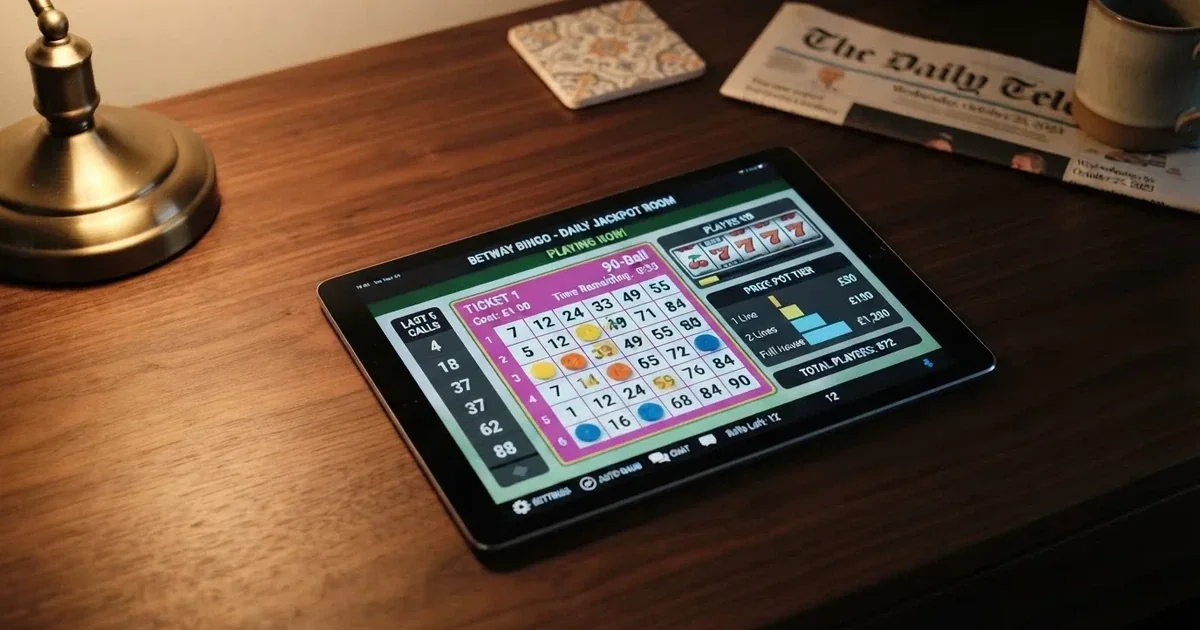
A British 90-ball ticket is 27 spaces: nine columns, three rows, with five numbers and four blanks in each row. Tickets are sold in strips of six that, between them, cover every number from 1 to 90 exactly once. There is no choosing numbers on a strip ticket — the numbers are printed, the player picks the strip and the game picks the rest.
Three patterns win a standard 90-ball game: one line, two lines, and a full house of all fifteen numbers on the ticket. The last number called must complete the pattern — a near-miss on row two with three numbers left in the machine is not a win, and a near-miss on the full house with one number left is not a win. The full house pays the most, one line pays the least, and two lines sits between them.
A no-wagering bonus attached to a bingo room pays those prizes as cash to the winner’s withdrawable balance, with no playthrough. A no-wagering bonus attached to a slot game pays its free-spins value as cash to the same balance. The two bonuses look the same on the page; they are priced very differently on the maths, and the maths is the only part a reader can verify with their own stake.
Bingo itself is the one form of gambling the Gambling Act 2005 leaves without a statutory definition, defining it only as “any version of that game, irrespective of by what name it is described”. What the Act does say, in section 8, is that bingo must be equal chance gaming — no bank, no edge, no in-game choice that changes a player’s chance of winning. The Commission cites a 1978 Royal Commission description of bingo as “a lottery played as a game”, which captures the same point.
How a no-wagering bonus shows up in the maths
The Commission caps wagering at 10x; it does not cap how the operator prices the bonus. The cleanest way to read the difference is to put a number on it.
Take a £10 bingo bonus at a 96% return-to-player slot, with a 10x wagering cap, and a £0.10 spin. The bonus must be turned over ten times: £100 of qualifying stakes, run through 1,000 spins at £0.10 each. At an average 96% return, the £100 returns £96; the £4 of expected loss is what the offer costs the player over the playthrough. A no-wagering £10 bonus on the same slot returns £9.60 immediately, with no playthrough — same expected loss, with the four pounds of house edge paid once instead of baked into a turnover the player has to clear.
For the same bonus with a higher wagering multiple — say the older 40x rule that the December 2025 cap closed off — the same £10 bonus would have required £400 of qualifying stakes, or 4,000 spins at £0.10 each. The expected loss at 96% return would have been £16 on the playthrough, plus the £10 stake already paid. The 10x cap cuts the maths roughly in half on the slots route, and “no wagering” cuts the rest.
That is the arithmetic underneath the headline. The rule book is the floor; the marketing line is the ceiling; the reader’s decision is which ceiling they want and which floor they have already accepted.
A turnover band for the 10x cap
The 10x cap is a ceiling on wagering, not a single figure. A reader who wants to know how long a bonus will take to clear needs to know two things: the bonus amount and the stake per spin. The band below holds the bonus constant at £10 and walks the stake from £0.10 to the £5 maximum a player aged 25 and over can run at.
A £10 bonus at the 10x cap requires £100 of qualifying stakes. At £0.10 a spin, that is 1,000 spins; at the £2 stake cap that applies to 18- to 24-year-olds, 50 spins; at the £5 cap that applies to everyone else, 20 spins. The Commission’s 2.5-second minimum spin speed sets a floor on the time it takes regardless of stake: 1,000 spins at 2.5 seconds is 2,500 seconds, or roughly 42 minutes; 50 spins at 2.5 seconds is 125 seconds, just over two minutes; 20 spins at 2.5 seconds is 50 seconds, under a minute.
The wider a reader can spread the stake, the longer the clear, and the longer the clear, the more house edge they pay into the playthrough. At a 96% return slot, the £100 of qualifying stakes at £0.10 returns £96 — £4 of expected loss. The same £100 at £5 a spin, run through 20 spins, returns the same £96. The time differs by an order of magnitude; the cost does not.
| Bonus | Stake per spin | Spins required | Time at 2.5 s floor | Expected loss at 96% RTP |
|---|---|---|---|---|
| £10 | £0.10 | 1,000 | ~42 min | £4.00 |
| £10 | £0.20 | 500 | ~21 min | £4.00 |
| £10 | £0.50 | 200 | ~8 min | £4.00 |
| £10 | £1.00 | 100 | ~4 min | £4.00 |
| £10 | £2.00 (18–24 cap) | 50 | ~2 min | £4.00 |
| £10 | £5.00 (25+ cap) | 20 | ~50 s | £4.00 |
A no-wagering bonus of the same £10 size returns £9.60 on average on the same slot, with no playthrough and no time floor. The two offers look close in headline value; they are priced very differently once the stake is set.
The wider read is that the 10x cap is the worst a UK-licensed offer can be. A reader who finds a 10x bonus has found the regulator’s ceiling; a reader who finds a no-wagering bonus has found the industry’s ceiling. The gap between those two is the room the December 2025 rule opened up.
What no-deposit means when no wagering is also on the table
A no-deposit bonus on a UK bingo site is a small promotional credit — usually £5 to £20 — paid without a deposit, on condition that the player registers and verifies. A no-wagering no-deposit offer combines the two: small credit, cash winnings, no playthrough.
The point the marketing line does not state is that the credit usually comes with a maximum win cap. A £10 no-deposit no-wagering bonus may cap withdrawable winnings at, say, £50 or £100, and the cap is enforced at withdrawal. The credit itself, if lost on the games, is not recovered; the winnings, if they beat the cap, are paid only up to the cap.
This is the trade-off a no-wagering offer makes for the operator, and it is the same trade-off the player pays for in advance. A £10 no-deposit credit at a 96% return slot returns £9.60 on average if the player can withdraw the full amount; capped at £50, the player still sees £9.60 on average and the operator loses nothing more. A 40x playthrough bonus on the same credit would have forced £400 of qualifying stakes before withdrawal — four times the cost, in time and in expected loss.
The Commission’s financial vulnerability check, in force from 28 February 2025, runs at £150 net deposits in a rolling 30 days using public data only. A no-deposit bonus sits below that trigger; a no-deposit bonus that converts into a deposit bonus after the first cash-in is the moment the check fires.
GAMSTOP, the national self-exclusion scheme, is mandatory on every online licence since 31 March 2020. A no-deposit offer does not exempt a player from GAMSTOP registration, and a self-excluded player cannot withdraw winnings from a no-deposit bonus while the exclusion is in force. The exclusion periods are six months, one year or five years, and none can be cancelled early.
Mobile: the page that gets used
Mobile bingo and slots play on a UK-licensed site runs in the phone’s browser, with no separate app required. The Commission’s Remote Technical Standards cover the same game on the same licence regardless of how the player reaches it, and a no-wagering offer advertised on the desktop page is the same offer on the phone.
The 2.5-second floor on spin speed is the easiest way to read the mobile experience. A slot that auto-resolves faster than that on a phone browser is running on a non-licensed product, or on a product that has not been updated to the current rule. A reader who can see the reels spin, count to three, and watch the result land before the third second is on a licensed game.
A no-wagering promotion does not change on mobile. The bonus is the same, the cap on winnings is the same, the eligible games are the same, the GAMSTOP registration is the same. What changes on mobile is the deposit screen, the verification flow, and the time a player spends looking at the screen — three things that the bonus terms do not see and the Commission does not regulate.
Aviator and the crash-style game on a bingo site
A small number of UK-licensed bingo and slots sites also carry crash-style games, of which Aviator is the most widely deployed. Aviator is a multiplayer crash game released by Spribe in 2019, where a multiplier rises from 1.00x until the round randomly crashes, and a player must cash out before the crash to win their stake multiplied by the current value. Spribe reports more than 42 million active users and around 350,000 bets per minute across more than 5,000 operators worldwide.
The Commission treats crash-style games as online games under the same technical standards that apply to a slot. The 2.5-second floor on a game cycle does not bind a round-by-round multiplier in the way it binds a reel spin, but the underlying random number generator and the stake limit per cycle do apply. A no-wagering bonus attached to a crash-style game pays winnings as cash, with no playthrough, and the maximum-win cap is the same cap the site applies to its other no-wagering offers.
The crash-style mechanic changes one thing a slot does not: the player chooses when to cash out, on every round. That choice is not skill in the regulated sense — the multiplier is generated server-side and the cash-out button does not move the eventual crash — but it is the part of the offer a player can control. A reader who treats the multiplier as a decision they are making has already paid a cost the maths does not show.
The baccarat-shaped bet that no wagering does not touch
Some bingo and slots sites carry a baccarat product alongside the bingo room and the slots lobby. Baccarat in its Punto Banco variant is the most common form on a UK-licensed site: the casino banks the game at all times, both hands are dealt out according to fixed drawing rules, and the player makes no strategic decisions. The house edge on the banker bet is around 1.06%, on the player bet around 1.24%, and on the tie bet around 14.4%.
A no-wagering bonus is rarely attached to a baccarat product. The house edge on baccarat is low enough that even a small bonus, paid as cash, would price the offer out of the operator’s margin. The point matters to a reader only because the baccarat lobby is the easiest place on the site to read what “no wagering” excludes — the same terms page that applies the bonus to the slots lobby will usually list baccarat as ineligible, and the reader who walks past that line has missed the most explicit statement of what the offer is not.
Chemin de Fer, the variant popular in France, gives players strategic choices, but it is rare on a UK-licensed site. A reader who finds it is reading a different product and a different licence, and the no-wagering offer on the bingo side does not carry across.
What a bonus costs in cash and time
A reader who takes a no-wagering £10 bonus on a 96% return slot, at £0.10 a spin, plays 100 spins on average before the bonus is gone. At 2.5 seconds per spin, that is 250 seconds, or just over four minutes of play. The expected loss is £0.40 — four pence in the pound, paid as the difference between the stake and the average return.
A reader who takes the same bonus on a 94% return slot, at £1 a spin, plays ten spins on average and loses £0.60. The two offers look close in headline; they cost differently in cash, and they take very different amounts of time.
The arithmetic behind the 10x cap, on the same £10 bonus at £0.10 a spin, runs to 1,000 spins and £4 of expected loss — ten times the cost in time, ten times the cost in expected return, and the only thing the cap changed is the maximum the operator was allowed to charge. A reader who reads “no wagering” as the answer to a single question has answered the cheapest question on the page.
| Slot profile | Stake | Spins on average | Time at 2.5 s floor | Expected loss |
|---|---|---|---|---|
| 96% RTP | £0.10 | 100 | ~4 min | £0.40 |
| 96% RTP | £1.00 | 10 | ~25 s | £0.40 |
| 94% RTP | £0.10 | 100 | ~4 min | £0.60 |
| 94% RTP | £1.00 | 10 | ~25 s | £0.60 |
| 92% RTP | £0.10 | 100 | ~4 min | £0.80 |
| 92% RTP | £1.00 | 10 | ~25 s | £0.80 |
The right comparison for a reader is not the headline of the offer but the RTP of the slot the offer pays on. The 10x cap does not move that number; the no-wagering label does not move it either. The number moves with the slot the operator has chosen to back the offer with, and that is the slot the reader should look up before they deposit.
The 10 brands on the register this month
The ten brands below are taken from the Gambling Commission’s public register as it stood on 18 September 2026. Each one is named on the register against the licence account that runs it; several of them sit under a single licence holder. The list is not a ranking and not a recommendation, and the licence number on each line is the single fact the register verifies.
| Brand | Licence holder | GB remote casino licence | Domain status |
|---|---|---|---|
| Paddy Power | PPB Games Limited | 039411-R-319335-010 | Active |
| kwiff | Eaton Gate Gaming Limited | 044448-R-323408-017 | Active |
| Betway | Betway Limited | 039372-R-319367-029 | Active |
| bet365 | Hillside (UK Gaming) ENC | 055149-R-331499-004 | Active |
| Unibet | Platinum Gaming Limited | 045322-R-324275-019 | Active |
| 888casino | 888 UK Limited | 039028-R-319297-014 | Active |
| Virgin Games | Gamesys Operations Limited | 038905-R-319430-022 | White label |
| Midnite | Dribble Media Limited | 042647-R-321653-022 | Active |
| Betfred | Petfre (Gibraltar) Limited | 039544-R-319290-010 | Active |
| BetVictor | BV Gaming Limited | 039576-R-319370-028 | Active |
The register lists 139 businesses holding an active remote casino operating licence, and 1,065 active domain entries with another 361 white-label entries. A white-label site trades under another company’s licence — Virgin Games is listed as a white-label domain on the Gamesys Operations Limited licence, which means the Gamesys licence is what the Commission enforces, even though the brand on the page is Virgin Games.
The right read of a brand on this list is the licence line, not the marketing one. The licence account is the entity the Commission can fine, the licence number is the line that opens the entry on the register, and the domain status is the Commission’s statement that the brand is currently trading against that licence. A reader who treats any of those three as decorative has read past the only test on the page.
Paddy Power — what the licence line settles
Paddy Power runs on the PPB Games Limited account, with remote casino operating licence 039411-R-319335-010. This brand appears as an active entry on the official register for that account.
PPB Games sits inside the Flutter group, which also runs Sky Betting and Gaming, Betfair and a number of other UK-facing brands. The licence on the page is the Flutter one, not a Paddy Power-specific one, and the reader who reads Paddy Power as a standalone operation has missed the parent. The same Flutter licence covers the rest of the Flutter portfolio, and a no-wagering offer on Paddy Power is, on the licence, a Flutter offer.
kwiff — what the licence line settles
kwiff runs on the Eaton Gate Gaming Limited account, with remote casino operating licence 044448-R-323408-017. This operator is verified on the Commission’s public database as active.
kwiff is a smaller brand on the register than Paddy Power, but it carries the same Gambling Commission licence and the same GAMSTOP registration. Verification of the licence number takes precedence over the brand name.
Betway — what the licence line settles
Betway runs on the Betway Limited account, with remote casino operating licence 039372-R-319367-029. This operator maintains an active registration on the Commission’s public database.
Betway Limited is part of the Betway group, which also runs a sportsbook and a casino product under separate brand identities in other markets. On the UK register, the brand is Betway and the licence is Betway Limited’s; the wider group structure is invisible to the Commission’s file and not relevant to a reader checking the licence.
bet365 — what the licence line settles
bet365 runs on the Hillside (UK Gaming) ENC account, with remote casino operating licence 055149-R-331499-004. This brand is recorded as active for this account.
bet365 is one of the larger UK-facing operators by both customer base and product surface. The licence number on the page remains the primary verification point for the site.
Unibet — what the licence line settles
Unibet runs on the Platinum Gaming Limited account, with remote casino operating licence 045322-R-324275-019. This operator maintains an active registration on the public file.
Platinum Gaming Limited is the Kindred group’s UK-facing entity. The .co.uk domain is the one on the register; the .com is not, and a reader who lands on unibet.com rather than unibet.co.uk has landed outside the Commission’s file.
888casino — what the licence line settles
888casino runs on the 888 UK Limited account, with remote casino operating licence 039028-R-319297-014. The brand is verified as active for this account holder.
888 UK Limited is the UK-facing arm of 888 Holdings. The licence is the same licence the Commission enforces on every domain on the account, including the casino product and any bingo or poker product the group runs alongside it.
Virgin Games — what the licence line settles
Virgin Games runs as a white-label domain on the Gamesys Operations Limited account, with remote casino operating licence 038905-R-319430-022. This status indicates the site trades under the Gamesys licence.
The white-label status is the single fact that changes how a reader should read the brand. Gamesys Operations Limited is the entity the Commission fines, the entity that holds the GAMSTOP registration, and the entity that runs the technical standards audit. Virgin Games is a brand on top of that licence, and a no-wagering offer on Virgin Games is, on the licence, a Gamesys offer.
Midnite — what the licence line settles
Midnite runs on the Dribble Media Limited account, with remote casino operating licence 042647-R-321653-022. The brand shows as active on the Commission’s register.
Midnite is a newer brand on the register than most of the others on this list. A newer licence is not a less enforceable one — the Commission’s standards apply the same way to a 2024 licence as to a 2014 one — but a newer brand is the one a reader is most likely to be reading for the first time, and the licence line is the place to start.
Betfred — what the licence line settles
Betfred runs on the Petfre (Gibraltar) Limited account, with remote casino operating licence 039544-R-319290-010. The operator shows as active for this account on the official register.
Petfre (Gibraltar) Limited is the UK-facing entity that Betfred operates through. The Gibraltar registration in the name is the corporate registration, not the gambling licence — the gambling licence is the Gambling Commission’s, and the licence number on the register is the one that matters to a UK reader.
BetVictor — what the licence line settles
BetVictor runs on the BV Gaming Limited account, with remote casino operating licence 039576-R-319370-028. This brand is recorded as an active entry on the Commission’s register.
BV Gaming Limited is the entity the Commission licences; BetVictor is the brand. The licence is the same one that covers the operator’s wider UK-facing products, including its sportsbook, and a reader who treats BetVictor as a casino-only operation has missed what the licence covers.
How a reader checks a licence on the public register
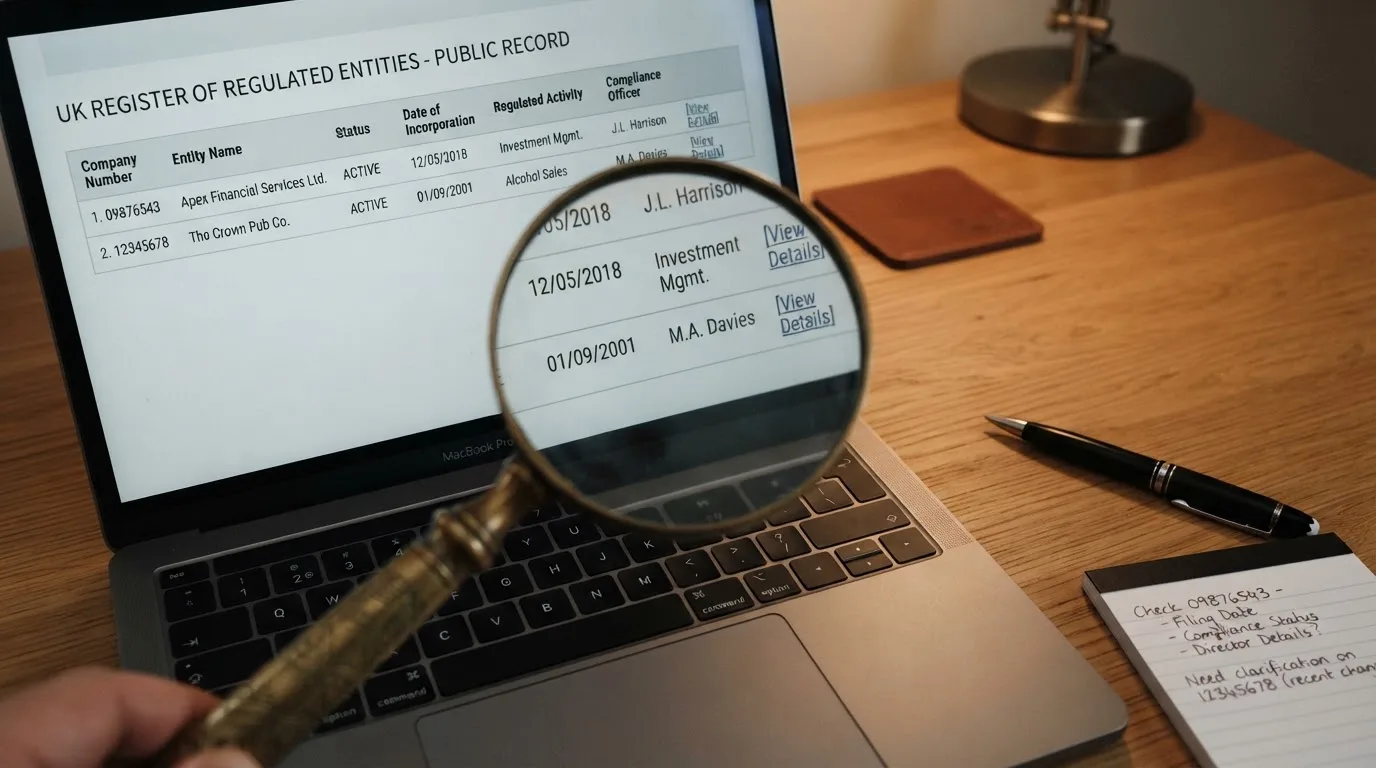
The Gambling Commission’s public register is searchable online and downloadable as CSV or Excel. The licence number on the page footer is the line that opens an entry on the register; the brand name is the second thing to check, and the domain status is the third.
A licence number on a UK remote casino licence takes the form account-R-number-suffix — the leading six digits repeat the licence holder’s account number, the R marks the licence as a remote (online) one, and the suffix is the version of the licence that is currently active. A licence number on the page footer that does not match an entry on the register is the single clearest sign that the page is not licensed.
The Commission can issue, vary, suspend or revoke a licence, and the register records each step. A licence that is active this month and was suspended last month is a licence with a history a reader can read on the register; a licence that has never been issued is not on the register at all.
The register is the whole test. It is the source the Commission uses, the source the Commission points readers to, and the source any complaint against the brand can be taken up against. A reader who has not checked the register has not finished the licence check.
Where the protection ends and where it does not
A Gambling Commission licence gives a reader the protections the Commission’s rules set out: GAMSTOP self-exclusion, a financial vulnerability check at £150 net deposits in a rolling 30 days, an approved ADR route for complaints, and a regulator that can take the licence away. The licence also binds the operator to the LCCP and the Remote Technical Standards, both of which the Commission audits.
The protections a Commission licence does not give a reader are the protections that sit outside the Commission’s file. A reader playing on an unlicensed site — a Curaçao-licensed brand, a Malta-licensed brand, an unincorporated operator — has no GAMSTOP registration, no Commission complaints route, and no approved ADR. The site may pay out; the site may not. The Commission’s cease-and-desist and search-engine delisting actions apply to illegal sites, but the Commission has no ISP-blocking power and no power to recover funds a player has lost on an unlicensed site.
The point is not that every unlicensed site is dishonest. The point is that the licence is the only test the reader can apply on their own, before they deposit, and the only test the Commission enforces after. A no-wagering offer on an unlicensed site is still a no-wagering offer, and it is still a marketing line; what it is not, on an unlicensed site, is one the Commission can enforce when the offer goes wrong.
Tax, duty and what the reader does not pay
Players in the UK pay no tax on gambling winnings. That has been the position for decades, and it applies to a no-wagering bonus in the same way it applies to a deposited cash win.
Operators pay Remote Gaming Duty, which was raised from 21% to 40% from 1 April 2026. The duty is paid on the operator’s gross gaming yield, not on the player’s stake, and it is invisible to a reader who is checking the bonus terms.
The 40% duty is the larger context for a no-wagering offer. A higher duty is a higher cost on the operator, and a higher cost is a pressure on the operator’s margin. The reader sees the pressure as tighter bonus terms, lower maximum-win caps, or fewer no-wagering offers. The duty itself is not on the page; the duty’s effect is.
What the December 2025 rules closed and what they did not
The 10x cap on wagering closed the worst end of the bonus market. The ban on mixed-product bonuses closed a familiar trick — bet on sport, get casino spins — that converted one product’s margin into another product’s bonus credit. The auto-play ban and the 2.5-second spin speed floor closed off the product surfaces that ran a slot on a sub-second loop.
What the rules did not close is the marketing line. A “no wagering” headline still does the work the 10x cap used to do: it lifts the offer above the regulator’s floor, it does not describe the regulator’s ceiling. A reader who treats the headline as the offer has read the most expensive line on the page.
What the rules did not close is the maximum-win cap. A no-wagering offer can still cap the cash the player can withdraw, and the cap is enforced at the moment the player tries to cash out. The cap is on the terms page, not the landing page, and a reader who does not open the terms page has not seen the cap.
What the rules did not close is the deposit-gated bonus. A no-wagering bonus can still require a deposit before it pays out, and a no-deposit offer can still be the smaller end of the marketing line. A reader who reads “free” as “without deposit” has read past the offer.
The rule book the marketing line does not show
A few Commission rules are worth holding in mind before a reader clicks Join:
The Commission requires operators to prompt a customer to set a financial limit before the first deposit, in force from 31 October 2025. The prompt is the moment a no-wagering offer meets the deposit screen, and the prompt is the rule that decides whether the bonus is the first thing on the page or the second.
Auto-play is permanently banned. A slot that lets the player set a number of auto-spins is a slot that has not been updated to the current rule, or one that has not been licensed.
Reverse withdrawals were banned as of 31 October 2021. A site that lets a player reverse a withdrawal request and re-gamble the funds is one the Commission has closed off; a player who finds the button on a current site is looking at an outdated product.
Losses disguised as wins — celebratory sounds and visuals on a losing spin — are banned. A slot that celebrates a 50p loss on a £2 stake as a “win” is one the Commission has acted against.
What the brand list actually compares
The ten-brand table on this page compares licences and domain statuses. It does not compare bonus terms, because the register does not carry them, and because the bonus terms on each landing page are the marketing line, not the licence line.
The right comparison for a reader is the licence line plus the terms page. The licence line tells the reader the brand is trading under a Commission licence; the terms page tells the reader what the licence lets the brand do. A reader who reads only the landing page has read the marketing line; a reader who reads only the register has read the licence line. The offer is what sits between them, and it is the part that costs.
A reader who treats this page as a ranking has read past the page. The list is a register snapshot, not an ordered preference, and the order in which the brands appear is the order the research took them from the register, not the order in which a reader should choose.
What a no-wagering offer costs the operator and what it costs the player
The cost a no-wagering offer imposes on the operator is the same cost it imposes on the player, in different currencies. The operator pays it as a marketing cost, written into the promotional budget and recovered across the rest of the player base; the player pays it as the house edge on the slot the offer runs on.
On a 96% return slot, the operator’s cost is 4 pence in the pound of the bonus. On a 92% return slot, the cost is 8 pence. The marketing line on a no-wagering offer usually does not state which slot the offer pays on, and the player who deposits before checking has accepted the cost before knowing what it is.
The 10x cap changes the relationship, but not the cost. A 10x bonus at a 96% slot, with a £0.10 spin, costs the player £4 in expected loss on the playthrough; a no-wagering bonus on the same slot costs £0.40 in expected loss. The cap moves the floor; the slot moves the offer.
The reader’s decision is which side of the cap they want to be on, and which slot they want to be on it with. The register settles the licence; the terms page settles the bonus; the slot’s RTP, on the developer’s site or the operator’s help page, settles the cost.
The limits a reader should set before they deposit
The Commission’s prompt to set a financial limit before the first deposit, in force from 31 October 2025, is the rule that decides how much of a no-wagering offer a reader can actually use. A deposit limit at £100 a month is a £100 a month no-wagering offer; a deposit limit at £500 a month is the same offer with five times the room.
A reality check prompt is a separate rule, and the operator must run one at intervals set by the player. A time-out — a short self-exclusion of 24 hours to six weeks — is a third rule, and a GAMSTOP self-exclusion of six months, one year or five years is the longest the operator can register. The rules stack: a reader who sets a deposit limit and a reality check interval and a time-out has set the boundary the no-wagering offer sits inside.
A no-wagering offer does not relax these. The offer is a marketing line; the limits are the rule book, and the rule book defines the boundaries the player must accept before engaging.
Frequently asked questions about no-wagering bingo sites in the UK
What does a no-wagering bonus on a bingo site actually mean?
A no-wagering bonus pays its winnings as withdrawable cash, with no playthrough requirement applied to the bonus. The label covers the wagering only; the bonus can still carry a maximum win cap, an eligible-game list and a deposit method restriction, and it still sits on a Gambling Commission licence with the same identity and age verification as any other offer.
Which slots on a bingo site tend to pay out best?
The slot’s return-to-player percentage is the only figure that determines what the slot pays back over a large number of spins, and that figure is set by the developer and published in the slot’s help file. A 96% RTP slot returns £96 on average for every £100 staked; a 94% slot returns £94; a 92% slot returns £92. The no-wagering label on a bonus does not change the slot’s RTP.
Is a no-deposit bingo offer still subject to a maximum win cap?
Yes. A no-deposit no-wagering bonus usually caps the cash a player can withdraw from the bonus, and the cap is enforced at the moment of withdrawal. A £10 no-deposit credit may, for example, cap winnings at £50 or £100; the cap is on the bonus terms page, not the landing page, and a player who does not open the terms page has not seen it.
How well does mobile bingo and slots play perform on a phone browser?
Mobile play on a UK-licensed site runs in the phone’s browser under the same technical standards as the desktop product. The Commission’s 2.5-second minimum spin speed applies to mobile slots, and a slot that resolves faster than that on a phone is running on a non-licensed product. The bingo room and the slots lobby are the same products on the same licence, and a no-wagering offer advertised on one is the same offer on the other.
Are bingo and slots offered on the same licence at a UK site?
Yes, in most cases. The Commission’s remote casino operating licence covers both bingo and slots under a single licence class, and most of the larger UK-facing brands run both products on the same licence account. A site that runs only bingo on the licence but offers slots on a separate sub-licence is one the Commission treats as two products on one licence, not as two licences.
Must a bingo and slots site be Gambling Commission-licensed to offer UK players a no-wagering bonus?
Yes. Any operator taking customers in Great Britain needs a Commission licence, regardless of where it is based, since the Gambling (Licensing and Advertising) Act 2014. A Curaçao, Maltese or Gibraltar licence is not a substitute; a no-wagering offer on an unlicensed site is, on the Commission’s file, an offer the Commission cannot enforce when it goes wrong. The public register is the test of whether a brand holds a licence, and the licence number on the page footer is the line that opens an entry.
Published by the safecasinoguideuk team.