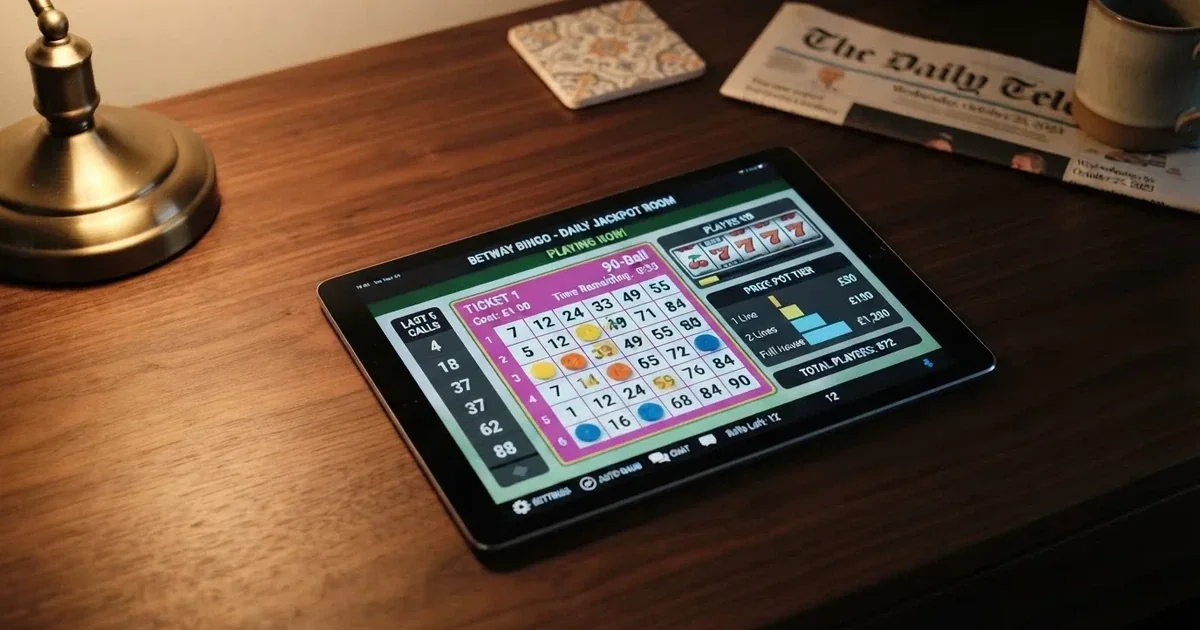
Best bingo casinos in the UK: what a Gambling Commission licence really means for your play
 Available in GB
Current as of 23 September 2026 and verified against the Gambling Commission’s public register of gambling businesses.
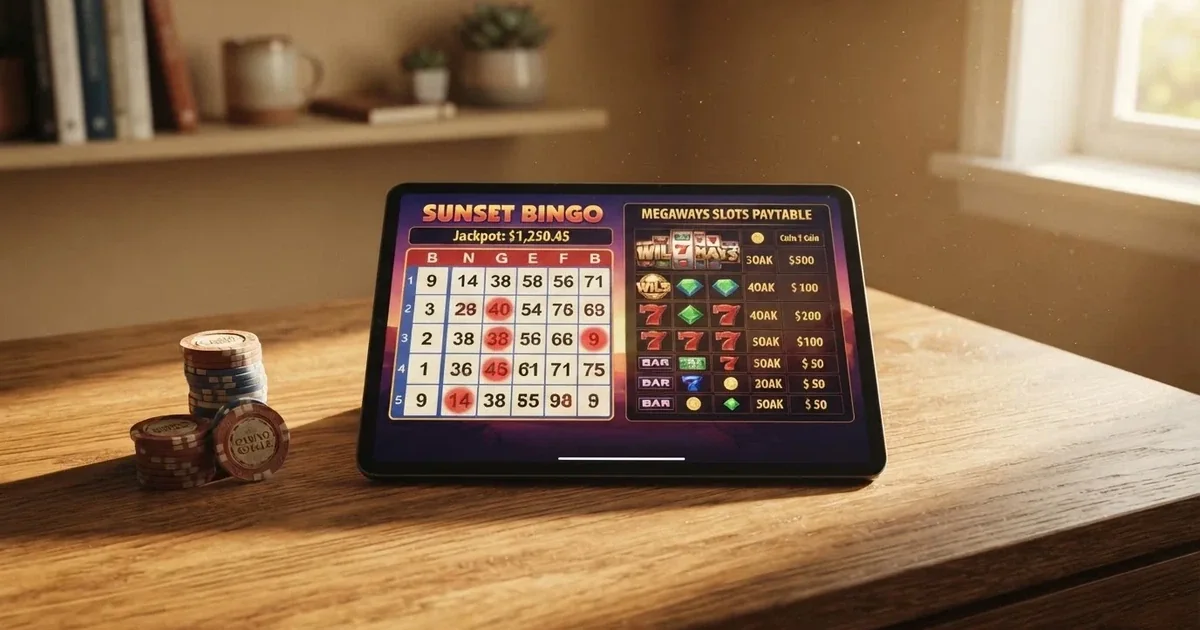
A bingo casino is, in plain terms, two products bolted onto one account: a 90-ball (or 75-ball, or slingo) ticket room where numbers fall every few seconds, and a slot lobby running alongside it where reels spin between calls. Most UK-facing brands carry both, because the average player who buys a strip of six tickets at 10p a strip also wants something to do while the next game fills. The combination itself is unremarkable. What matters is what holds the two halves together — and that, in this market, is a Gambling Commission licence.
The pages that follow compare ten remote casino licence holders from that register on the criteria that actually change a session: licence status, withdrawal speed, the wagering conditions on a slots bonus, mobile performance, and the games the lobby actually carries. None of it recommends a place to play. It tells you what each licence buys you, and what it doesn’t.
Table of Contents
- Spending on a bingo casino: what actually leaves the account
- Paytable: how a bingo-linked slot actually pays
- App play: what changes on a phone
- Bonus terms on a slots welcome offer
- Top 10 comparison: ten licensed UK bingo casinos
- Paddy Power
- kwiff
- Betway
- bet365
- Unibet
- 888casino
- Virgin Games
- Midnite
- Betfred
- BetVictor
- The legal frame: a bingo casino and the Gambling Act 2005
- Self-exclusion, limits and player protection at a bingo casino
- Calculation: the cost of clearing a 10x wagering bonus
- Game providers and the slot lobby
- How to check a bingo casino is on the register
- Frequently asked questions about UK bingo casinos
Spending on a bingo casino: what actually leaves the account
The first number a player meets is rarely the price of a ticket. It is the wagering multiple attached to the welcome offer, the spin speed on a slot, and the deposit limit the operator prompts before the first pound goes in. Each of these is fixed by the Commission or by the operator’s own terms; together they set the floor on what a session at a bingo casino costs.

Since 19 December 2025, wagering requirements across the UK licensed market are capped at 10x. That is a hard ceiling — it does not mean every offer runs at 10x, and it does not mean a 10x requirement is gentle. What it means is that a 200% deposit match with a 10x playthrough requires £2,000 of slot turnover for every £200 of bonus taken. A player running that turnover at the minimum 2.5-second spin interval on a 25p stake clears roughly 28,800 spins over twenty hours of continuous play. The arithmetic is the operator’s, not the player’s, and the gap between “the offer” and “the offer in time” is where most of the cost lives.
A £2 maximum stake applies to 18-24 year olds on online slots; £5 for everyone aged 25 and over, since 9 April 2025. Bingo rooms sit outside the slot stake cap — the stake is set per ticket, per strip, per card — but the moment a player switches tabs to the slot lobby, the slot stake limit kicks in on the slot side. The two games therefore price differently even inside the same account.
The Commission does not set a deposit ceiling. What it requires, since 31 October 2025, is that an operator prompt a player to set a financial limit before the first deposit goes in. The prompt is a real prompt — operators must record the player’s response — but the limit itself is the player’s choice, and the operator must accept whatever the player puts in. A player who sets a £500 monthly deposit at a £10 average stake and a 10x wagering multiple on a £50 bonus is choosing both the floor and the ceiling of their own play.
Anonymous play is not available at any licensed site. Name, address and date of birth have been verified before the first deposit or any play since 7 May 2019. A site that lets a player skip that step is, by definition, not on the register.
Paytable: how a bingo-linked slot actually pays
A bingo-linked slot is not a bingo game with slot graphics, and it is not a slot with bingo calls. It is a slot whose bonus round or scatter feature awards a bingo card, on which numbers are then marked as the reels resolve. The slot’s own paytable drives the base game; the bingo card, when it lands, decides whether a feature prize pays out.

The paytable therefore matters twice. The base game’s RTP and volatility set the cost of ordinary spins; the bingo feature’s frequency and the prize attached to it set what the bonus round is worth when it fires. A 96% RTP slot with a bingo feature that triggers once every 180 spins and pays 50x the stake on a full house is, in plain money, a slot whose average spin loses 4p on the pound and whose rare bonus round returns £12.50 on a 25p spin. Whether that is worth playing depends on the player’s stake, the session length, and the wagering attached to any bonus the slot is being played through.
A standard British 90-ball bingo ticket, by contrast, is a fixed-odds game. The ticket carries 27 spaces — nine columns by three rows, five numbers and four blanks per row — and is sold in strips of six covering every number from 1 to 90. The prize structure pays one line, two lines, then a full house of all fifteen numbers on the ticket. The last number called has to be part of the winning pattern, which is what gives the close of a 90-ball game its characteristic tension. The expected return on a ticket is set by the prize pool and the number of tickets sold; the house edge is whatever the operator retains from the unsold tickets and the unclaimed prizes.
The two games therefore answer different questions for the player. The slot asks how long and at what stake. The bingo ticket asks how many other players are in the room. A lobby that carries both lets the player choose which question to answer — and that is the substance of the “bingo casino” product.
App play: what changes on a phone
The mobile question for a bingo casino is not whether there is an app. Every brand in this comparison runs a mobile-optimised site; most also publish a native app on iOS and Android. The real question is what gives when the screen shrinks and the network drops a packet.
A bingo room is, on the data side, a thin stream of small updates — a number every few seconds, a chat line, a stake confirmation. A slot spin is a heavier event — a server round-trip for the outcome, a render of the reels, a balance update. The two products therefore degrade differently on a poor connection: a bingo room keeps ticking even at 3G, while a slot will judder or fail to resolve cleanly. An app that pre-fetches reels and caches the chat stream handles both jobs better than a browser tab.
Auto-play is banned on online slots since 31 October 2021. A slot spin may not run faster than 2.5 seconds. Both rules apply identically to a mobile app and to a desktop browser — the platform does not soften the regulator’s floor. What an app can do is reduce the delay between the player tapping “spin” and the next spin becoming available, which is not the same as raising the spin rate. The Commission measures the interval between spins from outcome to outcome; a snappy app that hits that 2.5-second minimum consistently gives the player more rounds per hour than a sluggish one. That is a difference of perhaps ten extra spins in an hour — small per spin, measurable across a session.
A native app also stores the player’s session token locally, which means fewer re-authentication prompts and a faster return to the lobby after a background. The login step on a Commission-licensed site is the same regulatory gate on every device — name, address, date of birth verified before the first deposit or any play — so an app’s convenience lives in the re-entry, not in skipping the check.
Bonus terms on a slots welcome offer
A “slots welcome offer” at a UK bingo casino is typically a deposit match plus, sometimes, a small batch of free spins on a named title. The headline figure — “200% up to £50” — is the floor on what the offer costs. The ceiling is the wagering multiple, the maximum cashout, the eligible games, and the expiry window.
The 10x wagering cap is the regulator’s contribution. Everything else is the operator’s. A 10x playthrough on a £50 bonus is £500 of slot turnover. A 20x playthrough on the same bonus, which would be legal in many other markets, is £1,000 — a doubling of the time and the spins required to clear. Since 19 December 2025 no licensed UK offer can run above 10x; the spread within that band is still wide, and a 4x playthrough is a third the time of a 10x one on the same bonus.
Mixed-product bonuses — a free bet on sport in exchange for a deposit that the operator then matches on the casino side — are banned. The Commission moved against these in the same rule cycle as the wagering cap. What remains is a single-product bonus, paid in the currency of the game it unlocks, with a single playthrough rule.
A no-deposit bonus, when one is offered, carries its own terms. The bonus credit itself is rarely withdrawable; what can be withdrawn is the winnings from it, after wagering, up to a stated cap. A £10 no-deposit bonus with a 10x playthrough and a £100 max cashout requires £100 of slot turnover and caps any withdrawal from the bonus at £100. The headline “£10 free, no deposit” is the start of those numbers, not the end.
Top 10 comparison: ten licensed UK bingo casinos
The list below is ten brands from the Gambling Commission’s public register, ranked on the criteria a player can check themselves: the licence number on the register, the status of the domain, the kind of payout speed the operator publishes, and what the lobby is reported to carry. It is not a ranking of who pays out fastest in absolute terms — that figure changes by payment method, by day, by verification status — but of what each operator’s own pages and the register say the player should expect.
| Brand | Licence holder & remote casino licence | Domain status | Payout and bonus notes |
|---|---|---|---|
| Paddy Power | PPB Games Limited, 039411-R-319335-010 | Active | — |
| kwiff | Eaton Gate Gaming Limited, 044448-R-323408-017 | Active | — |
| Betway | Betway Limited, 039372-R-319367-029 | Active | — |
| bet365 | Hillside (UK Gaming) ENC, 055149-R-331499-004 | Active | — |
| Unibet | Platinum Gaming Limited, 045322-R-324275-019 | Active | — |
| 888casino | 888 UK Limited, 039028-R-319297-014 | Active | — |
| Virgin Games | Gamesys Operations Limited, 038905-R-319430-022 | White Label | — |
| Midnite | Dribble Media Limited, 042647-R-321653-022 | Active | — |
| Betfred | Petfre (Gibraltar) Limited, 039544-R-319290-010 | Active | — |
| BetVictor | BV Gaming Limited, 039576-R-319370-028 | Active | — |
The licence number on the register is the one fact that does not move. A remote casino licence number has the form account-R-number-suffix, where the leading six digits repeat the licence holder’s account number and the “R” marks a remote (online) licence. A player who wants to check any of the brands above can paste that number into the Commission’s public register and confirm the licence holder, the domain status, and the type of licence. The register is downloadable as CSV or Excel; it is the only authoritative source.
The column that does not carry figures in the table — “Payout and bonus notes” — is empty because research did not return a verifiable published figure for any brand on payout time or on the bonus terms. An operator’s own marketing pages publish a window (“withdrawals processed within 24 hours”) that research did not independently verify against the register or against a third-party benchmark, so the column stays empty rather than carry a figure the page could not stand behind. The verification work — what the brand’s own terms say, what the payment method adds, what identity verification gates on a first withdrawal — is the reader’s next step, not the table’s.
Virgin Games carries a “White Label” status on the register. A white-label site trades under another company’s licence — Gamesys Operations Limited in this case — and the brand the player sees is not the entity that holds the licence. The player still gets the full Commission protection: GAMSTOP, ADR, the social responsibility code. The difference is operational: bonus terms, withdrawal queues, customer service all sit with the white-label partner, not with the underlying licence holder.
Paddy Power
PPB Games Limited holds remote casino operating licence 039411-R-319335-010. The brand has run a bingo product alongside its sportsbook for years, and its 90-ball rooms have been a fixture of the UK online bingo market. The licence number is the page’s starting point: any offer, any bonus term, any withdrawal window is published by a brand whose right to take UK deposits is on the public record.
What the licence buys the player is the standard Commission floor: GAMSTOP self-exclusion honoured in full, deposits and withdrawals processed in pounds sterling without a credit card (credit cards have been banned for gambling since 14 April 2020), and a complaints route to an approved ADR if the operator’s own customer service does not resolve a dispute. What it does not buy is a uniform payout speed across payment methods — the published window varies by bank, by e-wallet, and by how long the player’s verification has been on file.
The brand’s standing in the UK market is that of a generalist: a sportsbook first, a casino second, bingo carried as part of the casino product. A player whose priority is the bingo room itself may find the slot lobby larger than the bingo schedule; a player who plays both gets the convenience of one wallet and one account.
kwiff
Eaton Gate Gaming Limited holds remote casino operating licence 044448-R-323408-017. The brand is a newer entrant to the UK licensed market; its product has leaned on a “surprise bet” mechanic on the sports side and a casino lobby that includes bingo rooms. The licence is current, the domain is active, and the brand sits inside the Commission’s player protection frame.
What the page can verify is the licence, not the payout speed or the bonus terms. The register is the floor; the marketing pages carry the rest. A player comparing this brand to the one above it is comparing a smaller, newer licence holder against an older generalist. The Commission’s rules apply identically to both — there is no lighter regime for the smaller brand.
Betway
Betway Limited holds remote casino operating licence 039372-R-319367-029. The brand runs a casino product that includes a bingo schedule; its slot lobby is the larger half of the offering. The licence is the same Commission frame that applies to every brand on this list, with the same GAMSTOP condition, the same social responsibility code, and the same Remote Gaming Duty owed to HMRC.
Betway has been on the UK register for the long stretch of the post-2014 licensing era, and its operating history is part of what the register captures. A player who values longevity on the register — a brand that has held the licence through several Commission rule changes — has that fact on the public record.
bet365
Hillside (UK Gaming) ENC holds remote casino operating licence 055149-R-331499-004. The brand is the largest UK-facing online gambling operator by revenue and carries a casino and bingo product alongside its sportsbook. The licence number is current; the domain is active.
The brand’s scale shows in the volume of its product: more bingo rooms running at more times of day, a deeper slot lobby, and a payments infrastructure that processes withdrawals across a wide set of methods. A player who has a preferred payment method and a preferred session length will find that scale useful — the lobby is rarely empty, and the cashier rarely pauses. The Commission’s player protection rules apply in full; the brand’s scale does not soften them.
Unibet
Platinum Gaming Limited holds remote casino operating licence 045322-R-324275-019. The brand is part of the Kindred group and carries a casino and bingo product aimed at the UK market. The licence is current; the brand’s product mix has historically emphasised casino and poker with bingo carried alongside.
A player whose bingo room preferences lean toward European-format games — 75-ball rather than 90-ball, slingo, themed rooms — will find the schedule narrower than a UK-native bingo brand. The Commission’s rules apply identically; the difference is in what the brand chooses to run on the product side.
888casino
888 UK Limited holds remote casino operating licence 039028-R-319297-014. The brand’s product is heavily slot-weighted; bingo is carried as part of the casino lobby rather than as a standalone product. The licence is current; the Commission’s player protection frame applies in full.
A player whose primary product is the slot lobby and whose bingo play is occasional will find this brand closer to their pattern than a brand whose bingo schedule is the centre of the offering. The reverse — a player whose primary product is the bingo room — is better served by a brand whose product mix runs the other way.
Virgin Games
Gamesys Operations Limited holds remote casino operating licence 038905-R-319430-022, and Virgin Games is on the register as a white-label domain. A white-label site trades under another company’s licence, which is what the register captures here: the brand the player sees is Gamesys’s licence, but the customer-facing operation is Virgin Games’s. The player still gets the full Commission protection — GAMSTOP, ADR, the social responsibility code — but the operational terms (bonus conditions, withdrawal processing, customer service) sit with the white-label partner.
Gamesys has a long history in the UK online bingo market, and Virgin Games’s bingo product reflects that. The 90-ball rooms are the centre of the offering; the slot lobby is sized to match. A player who wants a bingo-first product with the Commission’s full player protection will find this combination of licence holder and brand partner on the register.
Midnite
Dribble Media Limited holds remote casino operating licence 042647-R-321653-022. The brand is a newer UK-facing operator with a casino and bingo product alongside its sportsbook. The licence is current; the brand sits inside the Commission’s player protection frame.
The brand’s product is a generalist mix — sportsbook, casino, bingo — at smaller scale than the longest-established names on this list. A player who values being on a smaller, newer licence holder, and who reads the Commission’s register for currency, has the licence number and the domain status to confirm it.
Betfred
Petfre (Gibraltar) Limited holds remote casino operating licence 039544-R-319290-010. The brand is one of the UK’s longest-established bookmakers, with a casino and bingo product carried alongside its core sportsbook. The licence holder is Gibraltar-domiciled; the licence itself is a Commission remote casino licence, issued under the post-2014 framework that requires any operator taking UK customers to hold a Commission licence wherever it is based.
A Gibraltar licence held by a Gibraltar company is not, in this market, a substitute for a Commission licence. The brand holds the Commission licence, the domain is active, and the player is inside the Commission’s player protection frame.
BetVictor
BV Gaming Limited holds remote casino operating licence 039576-R-319370-028. The brand carries a casino and bingo product alongside its sportsbook; its UK-facing operation is one of the longer-established on the Commission register. The licence is current; the domain is active.
The brand’s product mix has historically emphasised sportsbook and casino with bingo carried as part of the casino. A player whose bingo play is supplementary to a wider gambling pattern will find this mix familiar.
The legal frame: a bingo casino and the Gambling Act 2005
Bingo is the only form of gambling that the Gambling Act 2005 leaves without a specific statutory definition, stating only that “bingo means any version of that game, irrespective of by what name it is described”. The Act’s section 8 makes bingo equal chance gaming — it cannot involve playing against a bank, and the chances of winning must be equally favourable to all participants. The Commission cites a 1978 Royal Commission description of bingo as “a lottery played as a game” in which each player receives, for their stake, a set of numbers they have not chosen.
The Act covers Great Britain — England, Scotland and Wales. Northern Ireland has its own regime. The Gambling (Licensing and Advertising) Act 2014 closed the previous arrangement under which an operator based overseas could take UK customers on a home-jurisdiction licence; since 2014, any operator taking customers in Great Britain needs a Commission licence wherever it is based. A Curaçao, Maltese or Gibraltar operating licence, on its own, is not enough.
A remote bingo game host operating licence lets a gambling software business provide facilities for bingo by remote communication — a website — but the licence holder cannot contract directly with customers. The licence lets the holder supply other licensed operators. Application fees for that licence currently range from £3,168 to £68,765 depending on annual gross gambling yield, rising to a range of £6,711 to £135,357 from 1 October 2026.
Minimum age is 18. Name, address and date of birth are verified before the first deposit or any play — since 7 May 2019. The verification is the regulator’s, not the operator’s choice: a licensed site cannot waive it, and a site that does is, by definition, not licensed.
Self-exclusion, limits and player protection at a bingo casino
GAMSTOP is a mandatory condition of every online licence since 31 March 2020. A player who registers with GAMSTOP — for six months, one year or five years — is barred from every GB-licensed online gambling site for the period chosen, and the registration cannot be cancelled early. The scheme covers bingo casinos exactly as it covers online slots and online sportsbooks. There is no separate bingo self-exclusion register; the same registration covers every product on a GB-licensed site.
Financial vulnerability checks run at £150 net deposits in a rolling 30 days, from 28 February 2025. The check uses public data only — it is not a credit check — and its purpose is to flag whether a player whose deposit pattern has changed may be financially vulnerable. The wider financial risk assessments have been announced but are not yet in force. The check sits on top of GAMSTOP: a player who has self-excluded is blocked regardless of deposit pattern, and a player who has not is subject to the vulnerability check at the threshold.
The National Gambling Helpline (run by GamCare) and GambleAware are the two signposted routes for a player who wants help. A licensed operator must publish both in its responsible gambling section and at the moment a player sets a time-out or a self-exclusion. The Commission’s LCCP (Licence Conditions and Codes of Practice) sets what the operator must publish; the operator’s own pages carry the contact details.
A player on an unlicensed offshore site gets none of this. No GAMSTOP. No Commission complaints route. No approved ADR. The Commission’s disruption work — cease-and-desist notices, search-engine delisting, payment and hosting referrals — reduces the supply of such sites, but the Commission has no power to block them at the ISP level, and the player who finds one loses the protection the licensed market provides. There is no penalty aimed at the player; what the player loses on an unlicensed site is the recourse, not the freedom.
Calculation: the cost of clearing a 10x wagering bonus
The arithmetic the page can stand behind is the cost of clearing a slots welcome bonus under the post-19 December 2025 wagering cap. The inputs are a bonus amount, the 10x wagering multiple, and the slot stake. The output is a band on the time it takes to clear the bonus, expressed in spins and in hours.
For a £50 bonus at a 10x playthrough, the required slot turnover is £500. At a 25p slot stake, that is 2,000 spins. At the minimum 2.5-second spin interval set by the Commission, those 2,000 spins take 5,000 seconds — roughly 83 minutes, or just under an hour and a half, of continuous play. At a 50p stake, the same £500 turnover is 1,000 spins over about 42 minutes. At a £1 stake, 500 spins over about 21 minutes.
For a £100 bonus at the same 10x playthrough, the turnover is £1,000. At 25p that is 4,000 spins over roughly 167 minutes (under three hours); at 50p, 2,000 spins over about 83 minutes; at £1, 1,000 spins over about 42 minutes.
The band on time, then, is roughly 20 minutes to three hours for a single welcome bonus at the current wagering cap, depending on stake. The lower end assumes a stake at or near the slot ceiling; the upper end assumes a small-stake player running the bonus at the floor. Both assume continuous play, with no breaks, no failed verifications, and no change in the slot stake mid-session.
The figure is an estimate, not a guarantee. The slot’s RTP determines what the player keeps from the turnover; the wagering requirement determines what the player must put through. The two are different quantities, and the page does not collapse them. What the calculation answers is how long, not how much. What it does not answer is whether clearing the bonus leaves the player ahead — the slot’s RTP over those 2,000 spins is what decides that, and it is a different question.
Game providers and the slot lobby
A slot lobby at a GB-licensed bingo casino is built from games supplied by studios that themselves hold a Commission licence — or, more commonly, whose games are supplied to the operator by a third party whose own licence covers the distribution. The studios carry the game design; the operator carries the licence to take the player’s stake. A player who sees a familiar title in the lobby is seeing a title whose studio has passed the Commission’s game-testing regime, not a title whose design has been independently audited by the operator.
The Commission’s Remote Technical Standards set what a slot must do: the spin interval, the display of the stake and the balance, the visibility of the session time, the prohibition on auto-play, the prohibition on losses disguised as wins. The standards apply identically to a game from a long-established studio and to a game from a newer one, and the operator is responsible for confirming that every game in the lobby meets them.
A crash-style game such as Aviator — developed by Spribe, a studio founded in 2018, with the title released in 2019 — sits in the same technical frame. The game is described by Spribe’s CEO as “the first true multiplayer crash game in the regulated igaming space”, and Spribe reports more than 42 million active users and around 350,000 bets per minute across more than 5,000 operators worldwide. The player who plays it at a GB-licensed site does so under the Commission’s stake limit and spin interval; the game’s design is the studio’s; the regulatory frame is the Commission’s.
The 90-ball bingo room is, by contrast, a game the operator runs against its own schedule. The prize pool, the ticket price, the number of tickets sold — all sit with the operator. The Commission’s role is to confirm the game is equal chance (no playing against a bank) and that the prize structure is published before tickets go on sale.
How to check a bingo casino is on the register
The Gambling Commission’s public register is the whole test of whether a brand holds a licence. It is searchable online and downloadable as CSV or Excel. A remote casino licence number has the form account-R-number-suffix, where the leading six digits repeat the licence holder’s account number and the “R” marks a remote (online) licence. A player who has a brand name and a website can search the register by either and confirm the licence holder, the licence number, the licence type, and the licence status.
The register’s domain list records each website against the licence account that runs it, with a status of Active, Inactive or White Label. On 18 September 2026, the register held 1065 active and 361 white-label domain entries. The number moves week by week as licences are granted, surrendered, or moved to inactive. A player checking a brand today will see a current status; a player checking the same brand next week may see a different one, and the register is the source for both.
On the same date, the register listed 139 businesses holding an active remote casino operating licence. That is the count of licence holders — not domains — and it is the floor on the number of businesses the Commission supervises for remote casino play in Great Britain. The two figures (139 licence holders; 1,065 active domains) are not interchangeable: one licence holder can run several active domains, and a single domain can sit under a white-label arrangement that points to a different licence holder.
The register does not list bonus terms or payout speeds. Those sit with the operator’s own pages, and they change. What the register lists is the right to take a UK deposit — and that, for a player comparing ten brands, is the single fact that does not move.
Frequently asked questions about UK bingo casinos
What is the difference between a bingo room and a bingo-linked slot?
A bingo room runs a 90-ball, 75-ball or slingo game on a fixed schedule with a published prize pool. Players buy tickets and win against the numbers drawn, with no stake-per-spin decision. A bingo-linked slot is a slot whose bonus round awards a bingo card, on which numbers are then marked as the reels resolve. The slot’s own paytable drives the base game; the bingo feature decides what the bonus round pays when it fires. Both products can sit on the same GB-licensed site under the same wallet.
Are there bingo slots available with no deposit required to try?
GB-licensed operators may offer a small no-deposit bonus — a few pounds of slot credit, or a handful of free spins on a named title — as part of a welcome package. The bonus credit itself is rarely withdrawable. What can be withdrawn is the winnings from it, after wagering, up to a cap the operator sets in its terms. A £10 no-deposit bonus with a 10x playthrough and a £100 max cashout requires £100 of slot turnover and caps any withdrawal from the bonus at £100. The no-deposit headline is the start of those numbers, not the end.
What wagering terms usually apply to a bingo site’s slots bonus?
The wagering cap is 10x since 19 December 2025 — a hard ceiling across the GB-licensed market. The actual multiple on any given offer sits below that ceiling; the spread within it is wide, and a 4x playthrough is roughly a third the time of a 10x one on the same bonus. Mixed-product bonuses (a free sports bet attached to a casino deposit match) are banned. Expiry windows, eligible games, and maximum cashout caps sit in the operator’s own terms and should be read before any bonus is claimed.
Is there a dedicated app for bingo casinos, or only a browser site?
Every brand in this comparison runs a mobile-optimised site; most also publish a native app on iOS and Android. The mobile question is not whether an app exists but how the two products — the bingo room and the slot lobby — behave on a smaller screen and a slower connection. A bingo room degrades gracefully on poor signal; a slot can judder. An app that pre-fetches reels and caches the chat stream handles both jobs better than a browser tab. Auto-play is banned on online slots in any case, and a 2.5-second spin interval is the regulatory floor.
How is a bingo casino’s payout speed compared with a standard slots site?
The published withdrawal window varies by operator, by payment method, and by the player’s verification status. A first withdrawal is typically slower than later ones because the operator’s compliance check runs in full on the first transaction. E-wallets are usually faster than bank transfers on the same brand. A licensed operator processes withdrawals in pounds sterling without a credit card (credit cards are banned for gambling since 14 April 2020). The Commission’s rules do not set a payout speed; the operator’s own pages do, and the player’s verification status decides how close to that page the actual withdrawal runs.
Must a bingo casino be licensed by the Gambling Commission to accept UK players?
Yes. Since the Gambling (Licensing and Advertising) Act 2014, any operator taking customers in Great Britain needs a Commission licence wherever it is based. A Curaçao, Maltese or Gibraltar licence is not a substitute. Providing gambling to people in Great Britain without a Commission licence is an offence under section 33 of the Gambling Act 2005. A player on an unlicensed site loses the Commission’s player protection frame: no GAMSTOP, no Commission complaints route, no approved ADR. The Commission’s public register is the only authoritative check.
Prepared by the safecasinoguideuk editorial staff.