
What an Online Casino Tournament Costs a British Player in 2026
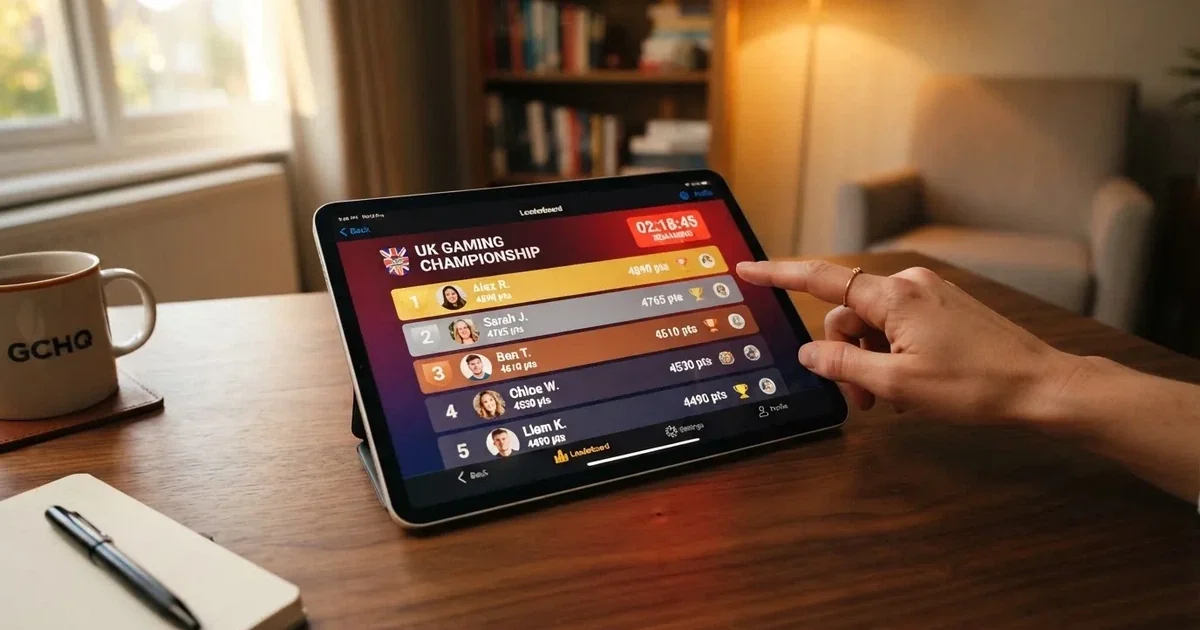
A slot tournament looks like a leaderboard with a timer and a prize pool behind it. Underneath, it is a fixed-budget promotional format with the same Gambling Commission stake caps and the same wagering ceiling that govern every other casino product aimed at British players. The £5 maximum spin stake for adults 25 and over, the £2 cap for 18-24s, the 10x wagering requirement cap that took effect on 19 December 2025 — none of these stop because the slot is being played for ranking points rather than cash. This page works through what a tournament actually is, which licences gate who can run one, what entering and winning costs, and where the figures leave a British player.
Data current as of 14 November 2026 and cross-checked against the Gambling Commission’s public register of gambling businesses.
Table of Contents
- Responsible Play Around Slot Tournaments
- Cryptocurrency and Tournament Entry
- Payments and How Fast Tournament Prizes Reach a British Account
- Bonus Wrappers Around Tournaments
- Which Slots and Studios Appear Most Often on UK Tournament Leaderboards
- How the Ten GB-Licensed Brands Compare on Tournament Access
- How UK Slot Tournaments Work in Practice
- The Legal Frame Around a Tournament
- The Wagering Turnover Behind a Tournament Credit
- Slot Tournament Strategy for a British Player
- What a Tournament Costs in Practice
- Choosing Between the Ten Brands
- Frequently Asked Questions
Responsible Play Around Slot Tournaments
Slot tournaments are not a different product for safer gambling purposes. They use the same licensed slots, the same wallet, and the same identity a player already verified at deposit. A leaderboard format adds two pressures that ordinary session play does not: a time window during which only ranked spins count, and the sense that other players are spending in the same window. Both pull toward longer sessions and higher stakes than a player may have planned.
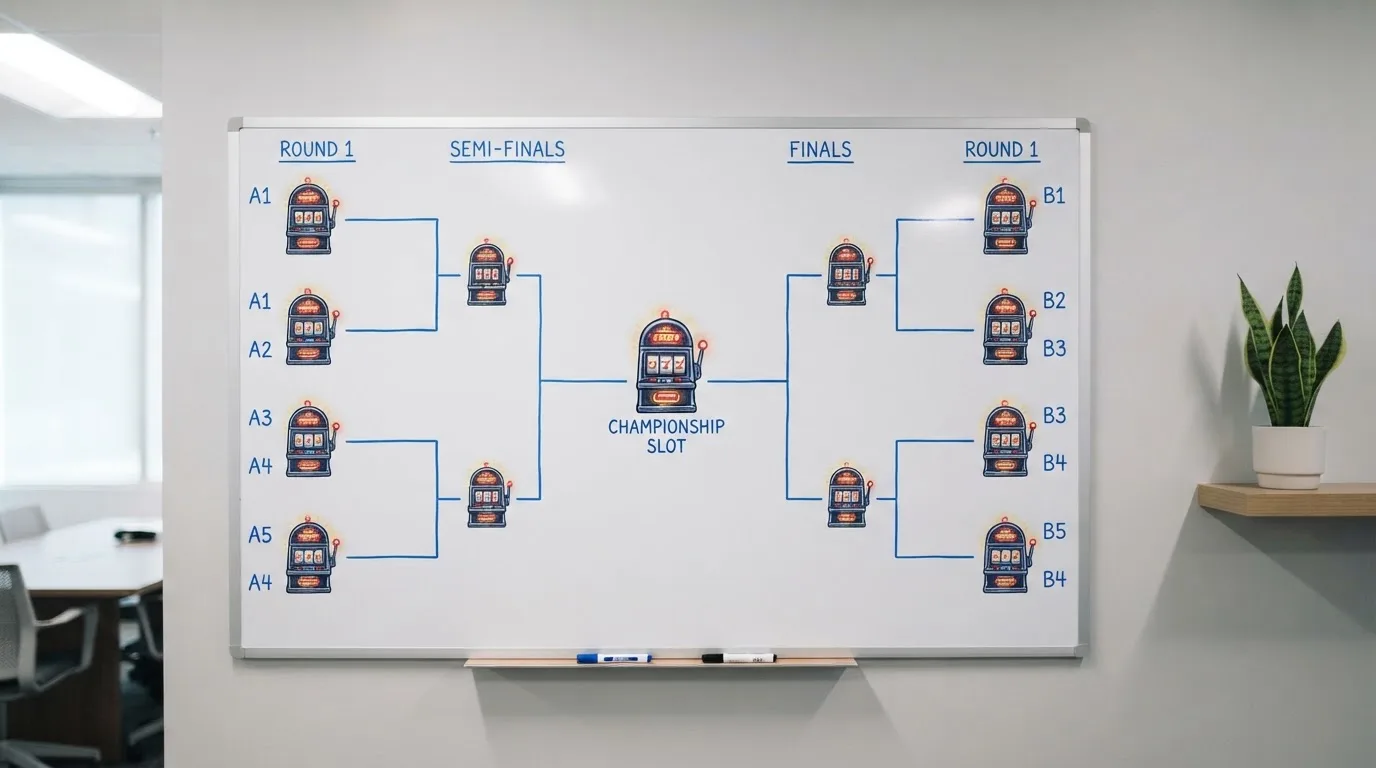
The most useful pre-entry habit is to set a financial limit and a time limit before the first spin of the tournament. The Commission requires operators to prompt that limit before the first deposit (since 31 October 2025); a tournament run by the same operator sits on the same wallet, so the limit carries across. Reality checks at 30, 60 and 120 minutes of continuous play are mandatory on every GB-licensed product and apply during a tournament session. The 2.5-second minimum spin interval, in force since 31 October 2021, slows the rate at which a budget can be spent and gives the reality check a chance to land.
GAMSTOP self-exclusion covers every GB-licensed online operator and is mandatory on each licence since 31 March 2020. A player who has excluded themselves cannot enter a tournament run by any of the ten brands covered in this comparison, even one they have not used before. GamCare runs the National Gambling Helpline; GambleAware publishes the wider directory of treatment and support services. The Commission also requires financial vulnerability checks at £150 of net deposits in a rolling 30-day window (since 28 February 2025). A tournament that produces a burst of deposits in one month can trip that threshold faster than ordinary play.
The point is not that tournaments are uniquely risky. They are a promotional wrapper around the same product, and the regulatory safeguards apply in full. The point is that the wrapper is built around urgency, and the safeguards work best when a player uses them before urgency sets in.
Cryptocurrency and Tournament Entry
Crypto deposits exist at the edges of the UK market and not in its centre. A GB-licensed operator cannot offer anonymous play: name, address and date of birth are verified before the first deposit or any play, since 7 May 2019. A player funding a wallet with Bitcoin, Ethereum or USDT and then transferring from that wallet to a casino still has to pass those checks. The coin moves; the identity check does not.

Offshore brands that accept crypto without UK licensing are a different proposition. Section 33 of the Gambling Act 2005 makes it an offence to provide gambling to people in Great Britain without a Commission licence, wherever the operator is based — the post-2014 regime closed the route where a Malta or Curaçao licence once stood in. The Commission’s enforcement tools include cease-and-desist notices, search-engine delisting referrals, and payment and hosting referrals. They do not include ISP blocking. The consequence for the player is not a penalty; the consequence is the loss of every protection a Commission licence carries — no GAMSTOP coverage, no ADR complaints route, no Commission enforcement if a withdrawal stalls.
For tournament play specifically, the practical question is whether the wallet used to deposit also accepts the prize payout. Crypto-friendly offshore brands may pay tournament winnings back to the original coin; GB-licensed brands that take crypto at all tend to settle in pounds and apply the standard payout rails. There is no tournament advantage to entering with one currency over another: leaderboard scores are calculated on the slot, not on the deposit method.
The honest summary for a British player who prefers digital coins is this. Crypto at a GB-licensed brand is a deposit rail, not an exemption from identity verification. Crypto at an unlicensed brand is a withdrawal of every player protection the rest of this page describes. Neither gives a tournament edge.
Payments and How Fast Tournament Prizes Reach a British Account
Tournament prizes are paid from the operator’s cashier, through the same rails as any other withdrawal. The only difference is timing: a leaderboard result that closes at midnight may not produce a payout until the next morning, because the operator has to verify the score, settle disputes over ties, and confirm the winner’s account is in good standing before sending funds.
Within the UK, bank transfers run through the Faster Payments Service, launched in 2008 and operated by the industry’s payment authority. The scheme runs 24 hours a day, seven days a week, and most payments arrive instantly or within a couple of minutes; transfers can occasionally take up to two hours. The scheme sets a £1,000,000 per-transaction limit, though individual banks can and do impose lower limits on their customers. The Bank of England oversees the system and provides final settlement but is not a direct participant.
Debit cards and bank transfers are the standard deposit and payout rails at every brand in the GB-licensed comparison set. Apple Pay sits on top of those rails at brands that accept it; the service protects card data through tokenization, replacing the actual card number with a device-specific Device Primary Account Number and generating a dynamic security code for each transaction. Apple Pay was launched on 20 October 2014 and began supporting UK-issued payment cards on 14 July 2015. AstroPay operates as an alternative digital wallet with a UK entity, Larstal Limited, authorised by the Financial Conduct Authority under the Electronic Money Regulations 2011. Neither adds a tournament-specific delay; both move through Faster Payments or card rails on the back end.
Credit cards are banned for gambling since 14 April 2020, including credit cards routed through e-wallets. A player cannot fund a tournament entry with a credit card directly or via a wallet that exposes the card on the back end. Debit cards and bank transfers are unaffected by the ban.
Free or no-deposit tournament entries are a separate route: the operator funds the prize pool and the player uses a fixed credit of spins. No deposit moves; no payout rail is engaged. The prize structure is what changes — a no-deposit tournament typically pays free spins, bonus funds or smaller cash pools than a deposit-funded event.
Bonus Wrappers Around Tournaments
The 10x wagering requirement cap that took effect on 19 December 2025 is the single largest change to the bonus side of tournament play in years. Any free spin, bonus fund or prize credit issued as part of a tournament now carries a wagering requirement no higher than 10x the bonus amount. Mixed-product bonuses — bet on sport, get casino spins — are banned under the same rule. A tournament that promises “deposit £10, get 50 spins on Book of Dead, win a tournament share of £5,000” sits inside that frame: the spins themselves, the entry credit, and any tournament-specific bonus attached are all subject to the 10x ceiling.
For a £10 deposit-funded tournament credit at the 10x cap, the required turnover is £100. At the maximum slot stake of £5, that is 20 spins. At the £2 cap for 18-24-year-olds, that is 50 spins. The Commission requires a minimum 2.5-second interval between spins, so 20 spins run for at least 50 seconds of active play and 50 spins for at least two minutes and five seconds. Those numbers assume only the bonus amount is wagered; a player who funds additional spins from their own wallet will spend more.
The honest framing of the 10x cap is that it does not remove the cost of clearing a bonus. A bonus with a 10x requirement still costs the expected loss over the required turnover, and the expected loss scales with how much of a bankroll is being cycled. The cap limits the multiplier; it does not eliminate the playthrough. A bonus advertised as “10x wagering, max win £100, deposit £10” produces roughly £100 of required turnover at a slot whose RTP sits in the mid-90s. The expected loss over that turnover is small in absolute terms but is not zero, and a player chasing the maximum win cap will see most outcomes fall well short of it.
The wagering-turnover band is the right way to present this on a page that is about cost. A £10 tournament credit at 10x produces a required turnover between £80 and £100 depending on whether the operator counts the deposit itself, and a play time well under five minutes. That is the band a player should plan for, not the marketing figure of “wager once, withdraw fast.”
Which Slots and Studios Appear Most Often on UK Tournament Leaderboards
Tournaments do not run on every slot in a casino’s library. Operators pick titles that produce frequent, visible events per spin so a leaderboard can populate within a session: cascades, free spin retriggers, multipliers and bonus buys are over-represented. Studios that design slots around those mechanics appear more often than studios that design around single big wins.
Pragmatic Play’s Drops & Wins network runs a year-round slot tournament structure across multiple GB-licensed brands, paid as cash drops and tournament shares rather than bonus credits. NetEnt’s pooled jackpot network has been adapted into tournament-friendly formats at several operators. Evolution-owned studios (NetEnt, Red Tiger, Big Time Gaming) appear in the same slot catalogue at many of the brands in the comparison set. Gamesys in-house titles — the studio behind Jackpotjoy — dominate that brand’s leaderboard formats.
Live casino tournaments exist but are rarer in the GB-licensed market. Pragmatic Play runs live game tournaments at selected brands, but live dealer rounds produce fewer events per hour than a slot spin, so leaderboard sizes tend to be smaller and prize pools proportionally lower. The slot-side tournament is the dominant format for British players.
The strategic consequence is that a player who wants to enter tournaments regularly should pick a brand whose catalogue overlaps with the studios running network tournaments. Drops & Wins tournaments require Pragmatic Play slots; an operator with a thin Pragmatic catalogue will exclude the player from the largest pooled prize events regardless of how much they wager.
How the Ten GB-Licensed Brands Compare on Tournament Access
The comparison below covers every operator whose brand appears in the Gambling Commission’s public register snapshot used for this page. The register held 139 businesses holding an active remote casino operating licence on 18 September 2026, and the domain list records 1065 active and 361 white-label entries — a white-label site trades under another company’s licence and is not an independent operator.
The table is built from register data only. Subject support — whether the operator runs slot tournaments in the form described above — is not carried by the register and is left blank.
| Brand | Licence holder and GB remote casino licence | Domain status on the register | Subject support |
|---|---|---|---|
| Paddy Power | PPB Games Limited (account 39411), 039411-R-319335-010 | Paddy Power active | — |
| Ladbrokes | LC International Limited (account 54743), 054743-R-330863-014 | Ladbrokes.com active | — |
| MrQ | Tek Fox Ltd (account 60629), 060629-R-337532-004 | Mrq.com active | — |
| Coral | LC International Limited (account 54743), 054743-R-330863-014 | coral.co.uk active | — |
| bet365 | Hillside (UK Gaming) ENC (account 55149), 055149-R-331499-004 | Bet365.com active | — |
| Betfred | Petfre (Gibraltar) Limited (account 39544), 039544-R-319290-010 | Betfred.com active | — |
| Casumo | Recro Limited (account 61549), 061549-R-336718-002 | Casumo.com active | — |
| 888casino | 888 UK Limited (account 39028), 039028-R-319297-014 | 888casino active | — |
| Jackpotjoy | Gamesys Operations Limited (account 38905), 038905-R-319430-022 | Jackpotjoy.com active | — |
| Gala Bingo | LC International Limited (account 54743), 054743-R-330863-014 | Gala Bingo active | — |
The most striking thing about the list is the licence holder overlap. Ladbrokes, Coral and Gala Bingo all sit under LC International Limited and share one remote casino operating licence, 054743-R-330863-014. That licence number is a real legal entity in the Commission’s register; the three brands are domains, not separate licensees. A player who has self-excluded via GAMSTOP at one of those three is excluded from all three, because GAMSTOP attaches to the licence condition, not the brand.
The second striking thing is the breadth. Ten brands, five distinct licence holders, ten active domains. A white-label brand — the 361 entries on the register that trade under another company’s licence — would slot under one of the five holders above. The register is the test of whether a brand is licensed at all: a domain not on the list is unlicensed, and any tournament prize it pays out is unprotected.
Paddy Power — high-traffic brand, single GB licence
Paddy Power sits under PPB Games Limited (account 39411), which holds the active remote casino operating licence 039411-R-319335-010. The brand is active on the public register. Paddy Power’s product is broad — sportsbook, casino, bingo — and the slot tournament catalogue sits inside the casino vertical rather than being promoted as a standalone format. The brand’s tournament footprint reflects that positioning: regular network tournaments through Pragmatic Play’s Drops & Wins, plus shorter promotional events tied to specific slot releases.
The reader Paddy Power suits is one who wants sportsbook and casino in one wallet and is comfortable navigating a casino lobby that is not organised around tournaments as a primary surface. The brand is not a tournament-first destination; it is a generalist with a tournament offering.
Ladbrokes — shared licence, different brand surface
Ladbrokes is the largest of the three LC International brands in this set by market recognition, but it is the same licence as Coral and Gala Bingo. The remote casino operating licence 054743-R-330863-014 covers all three domains, and the operator’s slot tournament catalogue is shared across them. A player comparing the three on tournament selection is comparing brand surfaces, not licence rights.
The reader Ladbrokes suits is one who already has an account there from sports betting and wants tournament entry without opening a new wallet. The same product is available under the same licence at Coral or Gala Bingo, and the choice between them is mostly about which brand surface the player prefers.
MrQ — single-brand operator, focused catalogue
MrQ sits under Tek Fox Ltd (account 60629), which holds the active remote casino operating licence 060629-R-337532-004. The brand is active on the public register. MrQ is a casino-only operator with no sportsbook, and the slot catalogue is curated rather than sprawling. Tournament selection reflects that focus: network tournaments from the major studios plus MrQ-branded events targeted at the brand’s regulars.
The reader MrQ suits is one who wants a casino-only wallet and a smaller, more curated tournament selection. The brand’s identity is built around transparency around wagering — its promotional pages have historically stated bonus terms in plain language — and that posture extends to tournament pages.
Coral — the LC International alternative surface
Coral sits under the same licence as Ladbrokes and Gala Bingo — 054743-R-330863-014, held by LC International Limited (account 54743). coral.co.uk is listed as an active domain. The product overlaps substantially with Ladbrokes; the difference is the brand surface, the customer base, and the specific promotional events each brand chooses to run at any given time. A tournament player comparing Coral and Ladbrokes is comparing two brand skins over one licence.
The reader Coral suits is the existing Coral customer who prefers the Coral brand surface and wants tournament entry through that wallet. There is no tournament advantage to choosing Coral over Ladbrokes for a new player; both sit on the same catalogue.
bet365 — scale brand, broad catalogue
bet365 sits under Hillside (UK Gaming) ENC (account 55149), which holds the active remote casino operating licence 055149-R-331499-004. The brand is active on the public register. bet365 is the largest private operator in the comparison set by customer base, and the casino vertical is built around a wide slot catalogue with regular tournament formats. The brand runs both network tournaments and in-house events, and the leaderboard infrastructure is mature.
The reader bet365 suits is one who wants the largest catalogue and a brand with operational scale. Tournament formats are stable rather than experimental, and the brand’s terms pages are detailed.
Betfred — retail heritage, casino vertical
Betfred sits under Petfre (Gibraltar) Limited (account 39544), which holds the active remote casino operating licence 039544-R-319290-010. The brand is active on the public register. Betfred’s heritage is retail bookmaking, and the casino vertical has grown around that core. The slot tournament catalogue is smaller than at bet365 but includes the same network tournaments.
The reader Betfred suits is the existing Betfred customer from the retail or sports side who wants tournament access through the same wallet. The casino vertical is not the brand’s primary identity; tournament formats are present but not the headline.
Casumo — single-brand casino, gamified surface
Casumo sits under Recro Limited (account 61549), which holds the active remote casino operating licence 061549-R-336718-002. The brand is active on the public register. Casumo is a casino-only operator and the brand surface has historically included gamification elements — level progression, achievement badges — that sit naturally next to a tournament format. The slot catalogue is broad and the tournament selection runs both network and in-house events.
The reader Casumo suits is one who wants a casino-only wallet with a more interactive brand surface than a traditional sportsbook-led operator. The tournament catalogue is comparable to the larger brands in the set.
888casino — established casino brand
888casino sits under 888 UK Limited (account 39028), which holds the active remote casino operating licence 039028-R-319297-014. The brand is active on the public register. 888casino is an established casino brand with its own in-house slot studios alongside the network catalogue. Tournament selection includes both 888-specific events and the major network formats.
The reader 888casino suits is one who prefers a casino-first brand with a long track record in the UK market. The tournament catalogue is broad and the brand’s terms pages are detailed.
Jackpotjoy — Gamesys catalogue dominance
Jackpotjoy sits under Gamesys Operations Limited (account 38905), which holds the active remote casino operating licence 038905-R-319430-022. The brand is active on the public register. Gamesys operates its own slot studios in-house, and the Jackpotjoy catalogue leans heavily on those proprietary titles. Tournament selection reflects that: Gamesys-led events sit alongside network tournaments, and a player who prefers the proprietary catalogue will find more of it here than at brands that carry a thinner Gamesys presence.
The reader Jackpotjoy suits is one who prefers the Gamesys in-house slots and wants tournament entry on those titles specifically. Network tournaments are also available; the in-house events are the differentiator.
Gala Bingo — shared LC International licence
Gala Bingo sits under the same licence as Ladbrokes and Coral — 054743-R-330863-014, held by LC International Limited. The brand is active on the public register. The brand surface is bingo-led, but the slot tournament catalogue runs across the LC International licence and includes both bingo-format and slot-format events. A player comparing the three LC International brands is choosing between brand surfaces that share one catalogue.
The reader Gala Bingo suits is the existing Gala Bingo customer who wants slot tournament entry through the same wallet. The bingo brand surface is the differentiator; the slot catalogue is shared.
How UK Slot Tournaments Work in Practice
A slot tournament at a GB-licensed operator is a fixed window during which a player’s ranked spins are scored against other players on the same slot or set of slots. Entry may be free, may require a deposit, or may require a buy-in. The leaderboard score is calculated on the slot itself — total win, biggest single win, multiplier of stake, or a combination — and the prize pool is split among the top finishers according to a published pay table.
The wagering cap matters here. A player’s entry credit may carry a wagering requirement, but the 10x cap that took effect on 19 December 2025 limits how high that requirement can climb. The stake caps (£5 for 25+, £2 for 18-24) limit how fast a player can move up a leaderboard, and the 2.5-second minimum spin interval limits how many spins fit in the window. Together these rules put a ceiling on how much a player can spend chasing the top of a board within the time limit.
The free or no-deposit version is structurally simpler. The operator funds a fixed credit of spins, the player uses them within the window, and any winnings are paid according to the tournament’s prize terms. Free tournaments typically have smaller prize pools than deposit-funded or buy-in tournaments, but they require no bankroll commitment to enter.
The Legal Frame Around a Tournament
Every online casino tournament aimed at British players runs under a Gambling Commission remote casino operating licence. The Gambling Act 2005 covers Great Britain — England, Scotland and Wales — and the Gambling (Licensing and Advertising) Act 2014 closed the route where a Curaçao or Maltese licence once stood in. Since 2014, any operator taking customers in Great Britain needs a Commission licence wherever it is based.
The minimum age is 18, and name, address and date of birth are verified before the first deposit or any play, since 7 May 2019. Online slots carry a maximum stake per game cycle of £5 for adults 25 and over (from 9 April 2025) and £2 for 18-24 (from 21 May 2025). Auto-play has been banned since 31 October 2021, the minimum spin interval is 2.5 seconds, and losses disguised as wins are banned. There is no state-set deposit or loss ceiling; operators must prompt a customer to set a financial limit before the first deposit (from 31 October 2025).
GAMSTOP is a mandatory condition of every online licence since 31 March 2020. Self-exclusion periods are six months, one year or five years and cannot be cancelled early. Financial vulnerability checks apply at £150 of net deposits in a rolling 30-day window (from 28 February 2025) using public data only. The National Gambling Helpline is run by GamCare; GambleAware publishes the wider directory of treatment and support services.
Players pay no tax on gambling winnings in the UK. Operators pay Remote Gaming Duty, raised from 21% to 40% from 1 April 2026. Anonymous play is not possible at a licensed site, and providing gambling to people in Great Britain without a Commission licence is an offence under section 33 of the Gambling Act 2005.
The wagering requirement cap that took effect on 19 December 2025 capped wagering requirements at 10x and banned mixed-product bonuses. A tournament prize or entry credit carrying a wagering requirement above 10x is not compliant with the rule; a tournament offering “deposit on sports, get casino spins” is not compliant under the same rule.
The section above states the frame once. Where it resurfaces later in this page, it appears as a reference back to those terms rather than a re-statement.
The Wagering Turnover Behind a Tournament Credit
A £10 tournament credit at the 10x wagering cap in force since 19 December 2025 produces a required turnover of £100. At the maximum slot stake of £5 per spin, that is 20 spins. At the £2 cap for 18-24-year-olds, that is 50 spins. The 2.5-second minimum spin interval sets a floor on play time: 20 spins run for at least 50 seconds, 50 spins for at least two minutes and five seconds. Those numbers assume only the bonus amount is wagered; a player who funds additional spins from their own wallet will spend more and will spend it at the stake cap rather than at a higher figure.
The band a player should plan for is therefore between roughly 20 and 50 spins of active play, with a required turnover in the £80–£100 range depending on whether the operator counts the deposit itself toward the wagering requirement. The expected loss over that turnover, at a slot whose RTP sits in the mid-90s, is small in absolute terms — single pounds for a £10 credit — but is not zero. The cap limits the multiplier; it does not eliminate the playthrough.
The honest framing is that a 10x wagering cap is the regulatory ceiling, not the marketing promise. A tournament that advertises “low wagering” is competing against a market where the cap is now 10x across the board; a tournament that advertised “no wagering” before 19 December 2025 is now simply at the floor of what the rule allows.
Slot Tournament Strategy for a British Player
The first decision is whether to enter at all. A free or no-deposit tournament carries no bankroll commitment but still takes time and produces a session of slot play that counts toward the Commission’s financial risk checks (see above). A deposit-funded tournament commits bankroll on top of that.
The second decision is the slot. Network tournaments — Drops & Wins and similar formats — require the studio’s slots, and a player outside that catalogue cannot enter regardless of stake. A player who wants regular tournament access should pick a brand whose slot catalogue overlaps with the studios running the largest network prize pools.
The third decision is the stake level. The Commission’s stake caps set a ceiling, not a floor. A player at the £2 cap is in the tournament at half the spin rate of a player at the £5 cap, and the leaderboard score scales with spin output. The 2.5-second interval limits the number of spins in any case.
The fourth decision is the window. Tournament windows are fixed by the operator; a player who cannot return during the window should not enter. Some tournaments count spins across the full window; others reset daily. The terms page is the place to check.
The fifth decision is the wagering requirement. The 10x cap that took effect on 19 December 2025 limits how high a requirement can climb. A tournament with no wagering requirement on its prize is rare but exists; a tournament with the maximum 10x is the regulatory ceiling; anything above 10x is not compliant.
The sixth decision is the payout method. A prize paid in bonus funds has to clear wagering before it becomes withdrawable cash. A prize paid in cash is withdrawable immediately, subject to the operator’s standard payout rails. The terms page states which.
The honest summary is that slot tournament strategy at a GB-licensed operator is bounded by the same rules that bound every other slot session. The leaderboard is a wrapper around the same product, and the rules that govern the product govern the wrapper.
What a Tournament Costs in Practice
The 10x wagering cap is the headline cost control. A £10 tournament credit at 10x produces £100 of required turnover, 20 spins at the £5 cap or 50 spins at the £2 cap, and a play time in minutes rather than hours. The expected loss over that turnover, at a slot whose RTP sits in the mid-90s, is in the single-pound range.
The hidden cost is time. A tournament window runs for a fixed period; a player who wants to compete seriously spends that window at the slot, and the Commission’s mandatory reality checks at 30, 60 and 120 minutes will fire during the session. A player who treats the tournament as background play will spend less and rank lower.
The second hidden cost is the bankroll commitment. A deposit-funded tournament takes from the player’s wallet; a buy-in tournament takes the buy-in plus any additional bankroll the player adds for ranked spins. The Commission’s mandatory prompt for a financial limit before the first deposit applies to the wallet, not to the tournament, and the limit covers both.
The third cost is the wagering requirement on the prize itself. A prize paid in bonus funds has to clear wagering before it becomes cash; the 10x cap applies. A prize paid in cash is withdrawable immediately subject to the operator’s payout rails. The terms page states which.
The expected loss over a single tournament session is a statistical estimate, an average over many spins under the stated assumptions, not a guaranteed outcome for any single player. A session that hits a top prize pays out many times the entry cost; a session that does not returns less. The estimate is the average, not the outcome.
Choosing Between the Ten Brands
The honest framing is that all ten brands sit on the same regulatory floor and differ on brand surface, catalogue and tournament selection rather than on the underlying rules. A GB-licensed operator cannot offer anonymous play; cannot accept credit cards; cannot offer a wagering requirement above 10x; cannot run a tournament outside the GAMSTOP framework. Those are the rules.
Within that floor, the brands split along two axes. The first is licence-holder concentration: Ladbrokes, Coral and Gala Bingo share one licence, and a player who has excluded themselves at one is excluded at all three. The second is catalogue: Jackpotjoy leans Gamesys in-house; bet365, Paddy Power, Betfred and 888casino lean broad network catalogues; MrQ and Casumo are casino-only brands with curated catalogues; the LC International trio splits its catalogue across three brand surfaces.
A player who wants the largest pooled prize events should pick a brand whose catalogue overlaps with the studios running network tournaments — Pragmatic Play’s Drops & Wins being the largest. A player who prefers in-house games should pick a brand whose studio is on the in-house side. A player who wants casino-only without a sportsbook should pick MrQ, Casumo, 888casino or Jackpotjoy.
A player who has self-excluded via GAMSTOP cannot enter at any of the ten. The exclusion attaches to the licence condition, not the brand.
Frequently Asked Questions
How do online slot tournaments work at UK casinos?
A slot tournament at a GB-licensed operator is a fixed window during which ranked spins are scored against other players on the same slot or set of slots. The leaderboard score is calculated on the slot itself — total win, biggest single win, multiplier of stake, or a combination — and the prize pool splits among the top finishers according to a published pay table. Stake caps (£5 for 25+, £2 for 18-24) and the 2.5-second minimum spin interval apply throughout.
Can I enter a slot tournament without making a deposit?
Yes. Free or no-deposit tournaments are funded by the operator and give a fixed credit of spins for the window. Prize pools on no-deposit events tend to be smaller than on deposit-funded or buy-in events, and the prize terms may include a wagering requirement capped at 10x since 19 December 2025. No deposit moves and no payout rail is engaged.
What determines my ranking on a tournament leaderboard?
The leaderboard score is calculated on the slot itself, using a formula stated on the tournament’s terms page. Common formulas are total win, biggest single win, win-to-stake ratio, or a points system that rewards both win size and frequency. The formula is published before the tournament starts and applies to every entrant equally.
How quickly are tournament prizes paid out?
Tournament prizes are paid from the operator’s cashier through the same rails as any other withdrawal. Within the UK, bank transfers run through the Faster Payments Service and most arrive instantly or within a couple of minutes. The operator verifies the leaderboard result before releasing funds, which can add a short delay after the window closes.
Do crypto deposits count towards tournament entry the same as card payments?
At a GB-licensed brand, crypto is a deposit rail, not an exemption from identity verification. Name, address and date of birth are verified before the first deposit or any play, since 7 May 2019. The leaderboard score is calculated on the slot, not on the deposit method, so crypto and card deposits produce the same leaderboard result. Offshore brands that accept crypto without a UK licence are a different proposition and are not covered by the rules described in this page.
What tips help with slot tournament strategy?
The regulatory rules bound the strategy: the £5 stake cap for 25+ and £2 for 18-24, the 2.5-second minimum spin interval, the 10x wagering cap since 19 December 2025, and the mandatory financial risk check (see above). Within those bounds, the practical decisions are slot selection (network tournaments require the studio’s slots), stake level (the cap is a ceiling, not a floor), the tournament window (fixed by the operator), the wagering requirement on the prize, and the payout method (cash or bonus funds).