The Financial Reality of International Casinos for UK Players
 Available in GB
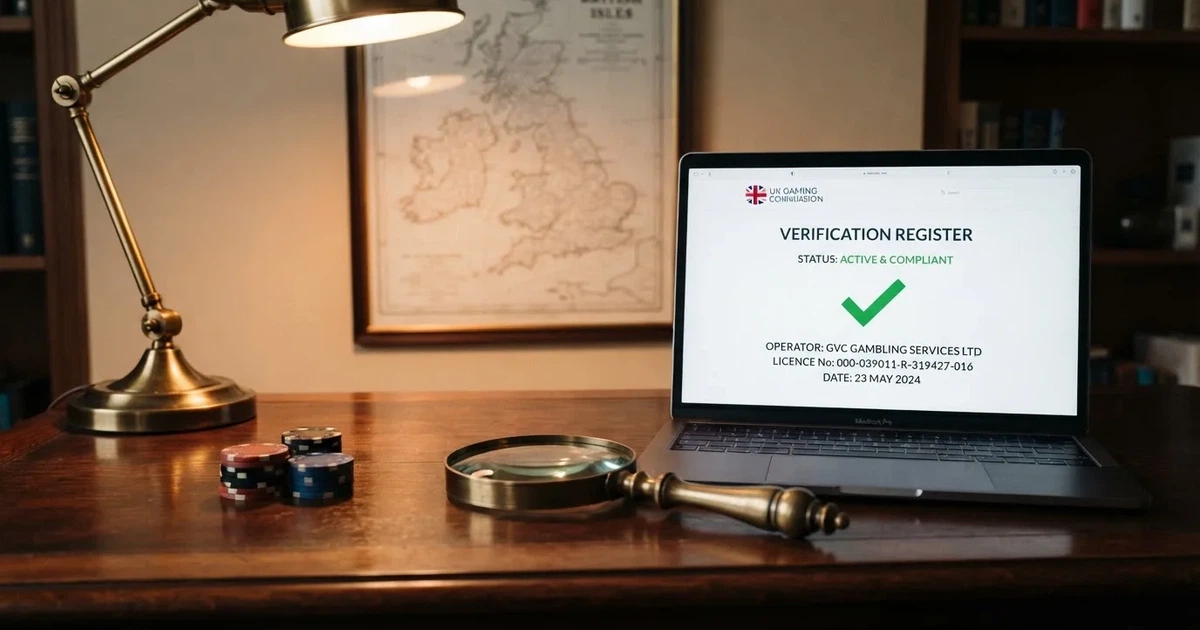
Current as of 23 September 2026 · verified against the Gambling Commission’s public register
An “international casino” in the UK market usually means one of two things, and they are not the same. It can mean a Gambling Commission-licensed operator whose corporate parent sits abroad — Flutter, Entain, the bet365 Group — running a perfectly legal site for British customers under a British licence. Or it can mean a casino licensed somewhere else entirely, a Curaçao sub-licence, a Kahnawake permit, an Anjouan registration, that happens to accept sign-ups from UK IP addresses. The first category is governed by the Gambling Act 2005, joined GAMSTOP, capped at £5 a spin for adults, and lets the player complain to an approved adjudicator when something goes wrong. The second is none of those things. The word “international” does the work of blurring those two worlds together, which is what this page sets out to undo.

The honest frame for someone comparing international casino sites is what the player loses when the Gambling Commission is not the regulator. The November 2025 package of affordability checks, the December 2025 cap on wagering requirements, the May 2025 stake limits, the 2020 credit card ban — every one of these protections exists because a British licence made it a condition. On a site running under a different jurisdiction, the player is not bound by them, and that is the point worth understanding before signing up anywhere.
Table of Contents
- Player Protection First: What a UK Licence Guarantees and an Offshore Site Does Not
- Top 10 International Casinos Accepting UK Players Compared
- How the UK Online Casino Landscape Actually Works
- The Legality Question: Licence Jurisdictions and What They Mean
- How the 10x Wagering Cap Actually Changes the Cost of a Bonus
- Payment Methods and What They Actually Add
- Reading the Comparison: What the Player Should Actually Look At
- The Verdict on Each Brand
- Closing on the Question the Comparison Actually Answers
- Frequently Asked Questions
Player Protection First: What a UK Licence Guarantees and an Offshore Site Does Not
The responsible-gambling shelf comes first because it sets the floor below which nothing else on this page makes sense. A reader who has not understood what protections a Gambling Commission licence delivers will not understand what an international site is selling them in place of those protections.

The mandatory framework for every GB-licensed site
Every operator holding a remote casino operating licence from the Gambling Commission has been required, since 31 March 2020, to integrate GAMSTOP, the national online self-exclusion register. A player who signs up for six months, one year or five years cannot shorten the period; the exclusion runs to its end. The same licensed site must run age and identity verification before the first deposit or any wagering: full name, address, date of birth, confirmed against public data. Credit cards have been banned for gambling in Great Britain since 14 April 2020. Auto-play was banned on slots from 31 October 2021; no spin can complete in under 2.5 seconds; losses presented visually as wins are not permitted.
Online slot stakes have been capped since 9 April 2025 for adults aged 25 and over at £5 per game cycle, and since 21 May 2025 at £2 per game cycle for 18-to-24-year-olds. A “game cycle” in the Commission’s Remote Technical Standards means one full play of the game — a spin, the resolution of its outcome, and the accounting that follows — so the cap binds every round, not just the headline spin button. There is no statutory deposit ceiling, but every licensed site must now prompt the customer to set a financial limit before accepting the first deposit, a rule in force since 31 October 2025. From 28 February 2025, the same sites run a light-touch financial vulnerability check at £150 in net deposits across any rolling 30-day period, drawing on public data only; a wider multi-source financial risk assessment has been announced but is not yet live.

Wagering requirements on bonuses have been capped at 10x since 19 December 2025, and mixed-product offers — “bet on sport, receive free casino spins” — were banned in the same package. The 10x ceiling is the strictest such rule in any major European market and matters because the wagering multiplier is the single number that decides how much a bonus actually costs the person claiming it.
What the player gives up on an unlicensed international site
An offshore site is not bound by any of this. The player who signs up to a casino licensed in Curaçao or Anjouan or Kahnawake walks away from GAMSTOP, which means a self-exclusion registered with one licensed brand does not follow them there. The £5 stake cap does not apply, nor does the £2 cap for younger adults. The 10x wagering cap does not apply. The credit card ban does not apply, although card issuers in the UK will typically decline gambling transactions on unlicensed merchant categories regardless of what the casino accepts. Identity verification is whatever the operator chooses to enforce, and the approved alternative dispute resolution bodies — IBAS, eCogra, the Commission’s own complaints process — are out of reach, because none of them has jurisdiction over an operator the Commission does not regulate.
The Commission’s enforcement toolkit against unlicensed sites is real but partial. It can issue cease-and-desist notices, refer sites for payment blocking and hosting takedown, and request search-engine delisting. It cannot order ISP-level blocking. The penalty for the player caught using an unlicensed site is nil — providing gambling to people in Great Britain without a licence is the offence, under section 33 of the Gambling Act 2005, and the offence runs against the operator, not the customer. What the player loses is not legal exposure; it is the safety net.
The real cost of missing protections
The arithmetic on this is uncomfortable. A problem gambler who used credit cards to fund online play in 2018 was, in the Commission’s own estimate, twice as likely to be classified as a problem gambler as the average online player: 22% of online credit-card users fell into that category against roughly 11% of the general online population. That is the population GAMSTOP exists to interrupt. Take GAMSTOP out of the picture — as an international site does by definition — and the same population has no automatic block, no second-line check, no national register to catch a fresh sign-up with a new email address.
For a player without a gambling problem the stakes are smaller but still material. A dispute over a withheld withdrawal on a licensed site goes to an ADR provider that has to answer to the Commission. A dispute over the same withdrawal on an offshore site goes to the operator’s own customer service, and then to whatever regulator the licence sits under, who may or may not answer a UK complaint, and who almost certainly has no power to compel payment from a licensee that has decided not to pay. The £150 vulnerability-trigger threshold, the 10x wagering cap, the £5 spin cap: these are not marketing. They are the price of being licensed, paid in advance by the operator, and they disappear with the licence.
Top 10 International Casinos Accepting UK Players Compared
This shelf is the practical centre of the page. Every brand below sits on the Gambling Commission’s public register as a holder of an active remote casino operating licence. They are the “international” casinos in the first sense of the word — operators whose group structure runs through holding companies in Dublin, Douglas, London or Malta, but whose UK-facing site is regulated from Britain. None of them is recommended here over any of the others; the comparison is meant to show what the reader is actually choosing between, not to make the choice.
The landscape at a glance
| Brand | Licence holder and GB remote casino licence | Domain status on the register |
|---|---|---|
| MrQ | Tek Fox Ltd · 060629-R-337532-004 | Active |
| bet365 | Hillside (UK Gaming) ENC · 055149-R-331499-004 | Active |
| PokerStars | Stars Interactive Limited · 039108-R-319334-026 | Active |
| Paddy Power | PPB Games Limited · 039411-R-319335-010 | Active |
| Betfair | PPB Games Limited · 039411-R-319335-010 | Active |
| William Hill | WHG (International) Limited · 039225-R-319373-015 | Active |
| BetVictor | BV Gaming Limited · 039576-R-319370-028 | Active |
| Sky Vegas | Bonne Terre Gaming Limited · 065519-R-339675-002 | Active |
| Virgin Games | Gamesys Operations Limited · 038905-R-319430-022 | White label |
| Gala Bingo | LC International Limited · 054743-R-330863-014 | Active |
The register held 139 businesses with an active remote casino operating licence on 18 September 2026, and 1,065 active domain entries against a further 361 white-label entries. A white-label domain trades under another company’s licence — Virgin Games here runs on Gamesys Operations Limited’s licence — which is the structural reason two of the ten brands above share a licensee. Paddy Power and Betfair both sit under PPB Games Limited; neither is an independent operator for the purpose of this comparison. The number of operators is small. The number of domains is large. The licence is the only thing that resolves which one the player is dealing with.
MrQ — the small-catalogue independent
MrQ runs from account 60629, held by Tek Fox Ltd, on remote casino licence 060629-R-337532-004. The domain for MrQ sits on the register as active. Tek Fox is a smaller licensee than most of the household names further down this list, and the brand’s positioning has long been built around a tight slot catalogue and straightforward promotions rather than the volume a Flutter or Entain site offers. For those seeking a smaller, clearly run British-licensed site without a massive daily jackpot volume, MrQ offers a focused experience.
bet365 — the full-stack platform under one licence
Bet365 sits on account 55149, held by Hillside (UK Gaming) ENC, on remote casino licence 055149-R-331499-004. The domain for bet365 is listed as active. Hillside is the UK-facing arm of the bet365 Group; the licence is the only licence under which bet365 takes British customers, and the same group structure means casino, sportsbook and poker all live on the same platform and the same compliance regime. This is the operator a reader has most likely already heard of, and it is on the register for the reason every operator on this list is on the register — it earned the licence, and it holds it.
PokerStars — poker-first, casino attached
PokerStars is the British face of the Stars Group, now part of Flutter. The domain for PokerStars is listed on the register. The .uk domain, rather than the older .com, is the version that resolves into the Gambling Commission’s regulated scope. A reader looking at PokerStars for casino play is choosing a poker platform that runs a casino alongside it; the casino is not the centre of gravity, and the catalogue reflects that.
Paddy Power and Betfair — same licensee, different storefronts
Both brands sit on account 39411, held by PPB Games Limited, on remote casino licence 039411-R-319335-010. Paddy Power and Betfair are both active on the register. They are Flutter brands under the same British licence, and a player registered with one is, from the Commission’s point of view, registered with the other for the purposes of GAMSTOP, affordability checks and the £5 / £2 stake cap. The two brands have different marketing, different product mixes, and different customer bases; the regulator sees one combined operation.
William Hill — the legacy high-street name
William Hill runs from account 39225, held by WHG (International) Limited, on remote casino licence 039225-R-319373-015, with William Hill active. Caesars Entertainment owns the William Hill group outside the US, and 888 Holdings now owns the William Hill international online operation. The licence in this list is the British one, and it is what governs William Hill; a reader who only knows the brand from the betting shops is not yet seeing the online product, which has been restructured several times since the Caesars takeover.
BetVictor — the independent holdout
BetVictor sits on account 39576, held by BV Gaming Limited, on remote casino licence 039576-R-319370-028, with the domain for BetVictor listed as active. Among the ten operators here, BetVictor is one of the few that remains under independent ownership rather than absorbed into a multinational group. For a player who prefers to deposit on a site that is not part of an FTSE-listed conglomerate, BetVictor is the closest the register comes to offering that.
Sky Vegas — media brand, narrow vertical
Sky Vegas runs from account 65519, held by Bonne Terre Gaming Limited, on remote casino licence 065519-R-339675-002. The domain for Sky Vegas is listed as active. The licence is held by Bonne Terre rather than Sky itself; Sky licenses the brand. The product is slots and live dealer, without the wider sportsbook integration other operators carry, and Sky Vegas is managed accordingly.
Virgin Games — white-label on Gamesys
Virgin Games appears on the register as a white-label domain of account 38905, held by Gamesys Operations Limited, on remote casino licence 038905-R-319430-022. A white-label site trades under another company’s licence — Virgin Games runs on Gamesys’s licence, the brand is licensed in. The practical effect for the player is that complaints, AML checks and affordability assessments are Gamesys’s, not Virgin’s; the brand on the landing page is not the entity holding the licence.
Gala Bingo — LC International’s bingo arm
Gala Bingo runs from account 54743, held by LC International Limited, on remote casino licence 054743-R-330863-014, with Gala Bingo active. LC International is the Entain subsidiary that holds the British licences for Ladbrokes, Coral and Gala Bingo, and the three brands share a single compliance regime. A player signed up with one of them cannot use the others to bypass a GAMSTOP exclusion or a financial vulnerability trigger.
How the UK Online Casino Landscape Actually Works
The fundamentals shelf sits between the responsible-gambling argument and the legality argument, because the reader needs to know what the comparison above is a comparison of before the legal frame makes sense.
What “international” means in this market
The word has at least two meanings and they are not equivalent. In the licensed-broad sense, every operator on the Gambling Commission’s register is, in some sense, international — Flutter is dual-listed in London and New York, Entain runs out of Gibraltar, Hillside is part of a privately held UK group with global operations. They hold British licences because they take British customers, and the Gambling (Licensing and Advertising) Act 2014 closed the loophole by which a remote operator could serve Britain from abroad without one. In the marketing sense, “international casino” usually means a brand whose primary licence sits elsewhere and which accepts UK sign-ups anyway — a Curaçao sub-licence, a Kahnawake registration, an Anjouan permit, occasionally a Maltese Gaming Authority licence held by a company that has decided the UK market is not worth the compliance cost.
The first group is regulated by the Commission, bound by every rule set out in the responsible-gambling section above, and answerable to UK alternative dispute resolution if something goes wrong. The second group is regulated by whoever issued its licence, which may be a serious regulator with real teeth or may be a registry that issues permits on payment and has no enforcement staff. The player cannot tell from the landing page which of those it is.
What the Commission’s public register actually shows
The register is the test. A brand that holds an active remote casino operating licence appears on it, with the licence number, the licensee name and the account number; every domain the licensee runs against that licence also appears. A licence number on a remote casino licence has the form account-R-number-suffix — six digits that repeat the licence holder’s account, an “R” marking remote (online), a sequence number, and a suffix. Hillside’s 055149-R-331499-004 begins with 55149 because that is Hillside’s account number on the register. Reading the licence number back to its account number is the cheapest sanity check on whether a brand has confused you with another one.
A white-label domain is one that trades under another company’s licence, and the register marks it as such. Virgin Games on Gamesys Operations Limited’s licence is the clearest example in the comparison table above. The distinction matters because the entity the player has a contract with is the white-label partner, not the underlying licensee — but the entity responsible to the Commission for AML, social responsibility and payout is the licensee. A withheld withdrawal on a white-label site is, for complaints purposes, a complaint against the licensee.
What changed between 2024 and 2026
The regulatory ground shifted more in the twenty months to December 2026 than in the previous decade. The 9 April 2025 stake cap at £5 for adults and the 21 May 2025 cap at £2 for younger adults, the 28 February 2025 light-touch vulnerability check, the 31 October 2025 financial-limit prompt, the 19 December 2025 wagering cap and mixed-product ban — these are not small changes. Each one cut into operator margin, and each one is the reason a brand might prefer to be licensed elsewhere. A reader looking at an international casino offer in late 2026 is looking at it in the wake of a regulatory tightening that pushed several smaller UK-facing sites to exit the market entirely.
The Remote Gaming Duty rose from 21% to 40% from 1 April 2026, paid by the operator on its gross gambling yield, not by the player. The duty has no direct effect on the player’s winnings — UK players pay no tax on gambling winnings — but it raises the cost of being licensed and is another pressure on the smaller end of the market.
The Legality Question: Licence Jurisdictions and What They Mean
The legal shelf comes last among the topical sections because it makes sense only once the reader understands what protections a British licence delivers and what the Commission actually does.
The basic rule under the Gambling Act 2005
Operating a gambling facility for customers in Great Britain without a Commission licence is a criminal offence under section 33 of the Gambling Act 2005. The offence is committed by the operator, not the player. The Gambling (Licensing and Advertising) Act 2014 closed the previous overseas-licence loophole: any operator, wherever based, that targets customers in Great Britain needs a Commission licence. The Act covers England, Scotland and Wales; Northern Ireland runs a separate regime under earlier legislation.
The Commission’s public register is the authoritative list of who is licensed. The register can be searched online or downloaded in full as CSV or Excel; it carries the licence number, the licensee name and the domains linked to that licence. As of 18 September 2026, 139 businesses held an active remote casino operating licence, with 1,065 active and 361 white-label website entries attached to those licences. Every one of them is bound by the social responsibility code, the licence conditions and codes of practice (LCCP), and the Remote Technical Standards. The Commission audits them, fines them when they breach, and revokes licences in the worst cases.
How the Commission handles unlicensed operators
The Commission does not regulate offshore sites. What it can do is disrupt them: cease-and-desist notices, payment-blocking referrals to banks and card schemes, hosting-provider referrals, search-engine delisting requests. It cannot order ISP-level blocking, which is why unlicensed sites continue to reach UK customers. The Commission’s published enforcement record shows dozens of unlicensed operators disrupted each year; it does not show zero unlicensed operators reaching UK customers.
A brand licensed in Malta by the Maltese Gaming Authority is regulated by the MGA, not the Commission, and a UK player dealing with one has no Commission complaints route. The MGA is a serious regulator with real enforcement; not every jurisdiction the player will see named is. The Commission’s own register is the right place to check whether a brand is licensed at all; the player who wants a second opinion on a non-UK licence should check the regulator’s own register, not the operator’s marketing.
Why the player keeps nothing if the operator keeps everything
This is the line worth sitting with. The Commission cannot refund a player’s losses on an unlicensed site, cannot compel an unlicensed operator to pay a disputed withdrawal, cannot apply a vulnerability check that an unlicensed site is not bound by. The player who joins an offshore casino under a self-exclusion still in force at a GB-licensed site is, from GAMSTOP’s perspective, still excluded at the licensed site; from the offshore site’s perspective, they are a fresh customer.
The data point the Commission published alongside its 2020 credit card ban is the most direct evidence of why these protections exist in the first place. The Commission estimated that around 800,000 UK consumers used credit cards to gamble in 2018, and found that 22% of online gamblers who used credit cards to gamble were classed as problem gamblers. That is the population the framework was designed to catch. Removing the framework does not remove the population.
How the 10x Wagering Cap Actually Changes the Cost of a Bonus
The wagering cap that took effect on 19 December 2025 is the single most consequential bonus rule in the current market. The calculation belongs to the writer: a bonus that required 35x turnover in 2014 now requires 10x, and the difference is the cost the player used to pay.
A standard bonus scenario before the cap might have required the player to wager 35 times the bonus amount before any winnings became withdrawable. A £100 bonus at 35x meant £3,500 of qualifying wagers, with the house edge on slots of, very roughly, 3–5% — leaving an expected cost somewhere in the £100–£175 range. At 10x, the same £100 bonus means £1,000 of qualifying wagers, and the expected cost drops into a band somewhere between roughly £30 and £50, depending on the game. The exact figure varies with the slot’s RTP, the stake size, and how much of the bonus is wagered versus how much of the player’s own cash is. The shape is fixed: a 10x cap has shrunk the expected cost of clearing a bonus to roughly a quarter to a third of what it was at 35x.
This is the calculation that explains why the December 2025 rule matters more than it looked. A wagering multiple is a multiplier on the house edge, and the house edge is the only number in the casino that compounds in the operator’s favour on every spin. Cutting the multiplier from 35 to 10 cuts the cost of the bonus by approximately the same factor. A reader comparing a generous-sounding bonus on an international casino site against a more modest offer on a licensed site should check the wagering multiple first, because that number decides which one is actually cheaper.
The cost calculation runs as a band rather than a single number because the inputs vary. A player who clears a £100 bonus entirely on a 96% RTP slot at £5 stakes per spin will lose, on average, somewhere in the £30–£40 range across the £1,000 of required turnover. A player who clears the same bonus on a 94% RTP slot at a lower stake will lose more. The rule the calculation exposes is simple: the higher the RTP of the slot used to clear, the lower the cost of the bonus, and the 10x cap is what made the difference between a 35x cost and a 10x cost small enough that the player can clear a bonus without the bonus itself becoming a worse deal than depositing without one.
Payment Methods and What They Actually Add
The payments shelf sits between the licence question and the closing comparison because the choice of payment method is one of the few decisions a player makes that touches both the responsible-gambling regime and the international/offshore split.
Payment Methods and Restrictions
| Payment Method | Availability on UK Licensed Sites | Impact of Credit Card Ban |
|---|---|---|
| Debit Cards | Wide | Unaffected |
| Bank Transfers | Wide | Unaffected |
| E-wallets | Selective | Banned for gambling funding |
| Mobile Wallets | Selective | Depends on underlying card |
Debit cards and bank transfers under UK rules
Debit cards and bank transfers are unaffected by the credit card ban that took effect on 14 April 2020. Faster Payments, launched in 2008 and operated by Pay.UK, processes bank-to-bank transfers in seconds and runs 24/7; the scheme sets a £1,000,000 per-transaction limit, though individual banks impose lower limits on their customers. For a player funding a licensed UK site, debit card and Faster Payments are the ordinary options.
E-wallets and what the credit card ban caught
The credit card ban covers credit cards routed through e-wallets — funding an e-wallet from a credit card and then using the e-wallet to gamble counts as gambling on credit. Funding an e-wallet from a debit card does not. PayPal, Skrill, Neteller and Trustly all sit on most licensed UK sites; the question for the player is what funds the e-wallet, not what the e-wallet itself is.
Apple Pay and other mobile wallets
Apple Pay launched on 20 October 2014 with US-issued cards only and began supporting UK-issued cards from 14 July 2015. It protects card data by replacing the real card number with a tokenised device-specific number and generating a dynamic security code per transaction, which is the underlying technology that lets it pass the Commission’s verification checks. For a UK player funding a licensed site via Apple Pay, the funding source remains the underlying card; if the underlying card is a credit card, the transaction falls under the gambling credit ban. If it is a debit card, the transaction is allowed. Apple Pay is a transport, not a funding source in its own right.
AstroPay and other international wallets
AstroPay, founded in 2009 in Uruguay, runs as a global digital wallet with virtual and physical debit cards and peer-to-peer transfers. Its UK entity, Larstal Limited, is an electronic money institution authorised by the Financial Conduct Authority under the Electronic Money Regulations 2011 — which is an FCA payment regulation, not a Gambling Commission licence. On a UK-licensed casino, an AstroPay deposit is processed as an e-money payment and is treated like any other e-wallet deposit. The player still funds the wallet from a debit card, and the credit card ban still applies to that funding.
What changes offshore
On an offshore site, the payment-method rules are whatever the operator chooses to enforce. Credit card deposits may be accepted even where the UK card issuer would block them; e-wallets that decline UK gambling transactions may still process them through the operator’s offshore merchant account. None of this is a benefit to the player. It is the same transaction routed through a different compliance regime, with less protection if something goes wrong. The Faster Payments scheme runs only between UK banks and only on sterling transactions; an offshore site typically settles in euros or US dollars, which adds a foreign-exchange cost on top of whatever the casino charges.
Reading the Comparison: What the Player Should Actually Look At
The comparison table shows what every brand has in common — a UK licence, a domain on the register, a single accountable licensee — and what differs in the structural detail. What the player does with that comparison is the point worth closing on.
The decision the licence question answers
A reader who has decided they want a UK-licensed site has narrowed the field to every operator on the register. Every brand above passes that test; the ten in this article are a sample, not the whole set. The 139-licensee register holds hundreds more domains, including white-labels and B2C operators that did not make the headline ten.
A reader who is open to an offshore site has accepted the trade-offs spelled out in the responsible-gambling section: no GAMSTOP, no Commission complaints route, no affordability trigger, no £5 / £2 stake cap, no 10x wagering cap, no ADR. That is a coherent choice if the reader understands it; the page’s job is to make sure the reader does, before signing up.
The decision the bonus calculation answers
For two licensed brands offering similar bonus terms, the comparison question reduces to product, catalogue and payment-method fit. For an international site versus a licensed site, the comparison question is mostly about the wagering multiple and the responsible-gambling protections the player is giving up. A 10x bonus on a licensed site is roughly a third of the cost of a 35x bonus on an offshore site, before counting the protections.
The decision the player’s own situation answers
A player who has signed up to GAMSTOP and wants to honour that self-exclusion has only one option: a licensed site, or no site. A player who wants to use a debit card and Faster Payments for daily play has a wide choice on the licensed register. A player who needs to be able to complain to a UK ADR body has only licensed sites. A player who is comfortable without any of these and is choosing on price alone is choosing offshore, and should know that is what they are choosing.
The Verdict on Each Brand
The ten brands in the comparison are all licensed, all bound by the same framework, and all different in the product mix they offer. What matters to the reader is not which one is “best” — the comparison shows why that question does not have a single answer — but which one fits the reader’s situation.
What MrQ suits
A player looking for a small, plainly run British-licensed site with a tighter slot catalogue will find MrQ fits; a player looking for the deepest live-dealer library will not. The Tek Fox licence is the same kind of licence as the larger operators hold, and the same protections apply.
What bet365 suits
A player who wants a single platform for casino, sportsbook and poker under one British licence has bet365; the group integration is the product. A player who only wants slots will find the catalogue wider than they need.
What PokerStars suits
A poker-first player who occasionally plays casino will find PokerStars works; the casino is not the centre of gravity, and a slots-focused player will find better fit elsewhere on the register.
What Paddy Power and Betfair suit
A Flutter-customer who wants to use either brand interchangeably will find both sit under PPB Games Limited; the regulatory sameness is the point, and the marketing difference is what separates the brands from each other.
What William Hill suits
A player who values a recognisable high-street brand and is comfortable with the post-Caesars ownership structure will find William Hill on the register; the licence is British, the brand is global.
What BetVictor suits
A player who wants a British-licensed site that is not part of a multinational group has BetVictor as the closest fit; the company maintains its independence in a crowded market.
What Sky Vegas suits
A slots and live-dealer player who likes the Sky brand will find Sky Vegas fits; the absence of sportsbook integration is part of the narrower product.
What Virgin Games suits
A player who wants a Gamesys-run product on the Virgin brand has Virgin Games; the white-label structure means the underlying operator is Gamesys Operations Limited, which takes full responsibility for regulatory compliance, and players should expect Gamesys to handle any service-related queries.
What Gala Bingo suits
A bingo player who also wants the broader Entain product under LC International has Gala Bingo; the licence is shared with Ladbrokes and Coral, which is the structural reason the three cannot be used to bypass each other’s responsible-gambling controls.
Closing on the Question the Comparison Actually Answers
The question “best international casinos for UK players” has two honest answers, and they are not the same answer. For the player who wants a British-licensed site with a group structure that runs through Dublin, Douglas or Malta, every brand in the table above is one of those, and the choice between them is a product and catalogue choice rather than a regulatory one. For the player who wants a casino licensed somewhere other than Britain, the comparison changes shape entirely, and the field opens to operators the Commission does not regulate, with the protections that implies.
What the page has tried to show is the second of those decisions, not the first. The licensed UK market is well-regulated, well-documented and easy to compare; the international market is poorly documented, inconsistently regulated and harder to compare on the same terms. A reader who wants the first is choosing within a 139-licensee register of GB-licensed brands. A reader who wants the second is choosing outside that register and accepting the trade-offs the responsible-gambling section sets out. Neither choice is wrong if it is made knowingly. The harm starts when the two are blurred.
Frequently Asked Questions
What counts as an international casino site for a UK player?
An international casino site is any operator that accepts customers in Great Britain without holding a remote casino operating licence from the Gambling Commission. A brand whose parent company sits abroad but which holds a UK licence, such as Flutter or Entain brands, is not international in this sense; it is a GB-licensed operator with international ownership. The distinction matters because the responsible-gambling framework, including GAMSTOP, the stake caps and the 10x wagering cap, applies only to the licensed set.
Does an international casino need a UK Gambling Commission licence to accept UK players legally?
Yes, since the Gambling (Licensing and Advertising) Act 2014. Any operator that takes deposits from customers in Great Britain needs a remote casino operating licence from the Commission, wherever the operator itself is based. Operating without one is an offence under section 33 of the Gambling Act 2005, committed by the operator rather than the player. The Commission’s public register is the test of whether a brand is licensed.
What player protections are missing on a site outside UK licensing?
An offshore site is not bound by GAMSTOP, the £5 / £2 slot stake cap, the 10x wagering cap, the credit card ban, the affordability checks at £150 net deposits, or the Commission’s approved alternative dispute resolution process. Identity verification is whatever the operator chooses to enforce. The player keeps no Commission complaints route and no UK ADR body has jurisdiction.
Can a UK player still use GAMSTOP if they sign up to an international site?
GAMSTOP exclusion applies to every GB-licensed site but not to offshore operators. A player who has self-excluded for six months, one year or five years is excluded at every UK-licensed brand. The exclusion does not follow them to an offshore casino, which is the structural reason offshore sites reach players with active self-exclusions.
Are international casino sites regulated at all, or entirely unregulated?
It varies by jurisdiction. A Curaçao sub-licence, a Kahnawake registration and an Anjouan permit are real licences issued by named authorities, although the depth of enforcement differs. A Maltese Gaming Authority licence sits behind several major operators and is a serious regulator. The point is not that offshore sites are unregulated; it is that they are regulated by someone other than the Gambling Commission, and the player has no UK route into a complaint against them.
Why might an international site be easier to find than a licensed UK one?
Because offshore operators spend heavily on search-engine marketing, affiliate programmes and bonus offers that licensed UK sites cannot match under the December 2025 wagering cap and mixed-product ban. The licensed UK market has shrunk partly under the cost of compliance, while offshore operators face none of those constraints. Easier to find is not the same as better regulated.
Prepared by the safecasinoguideuk editorial staff.