
What “Foreign Casino” Actually Means for a UK Player in 2026
 Available in GB
Most players searching for a “foreign casino” want one of three things: a softer welcome bonus, looser stake rules, or simply a brand that is not plastered across every British billboard. The honest answer sits on a single line. An active Gambling Commission licence is the only thing that lets any site, foreign-registered or not, legally take deposits from people in Great Britain. Everything else on this page follows from that.
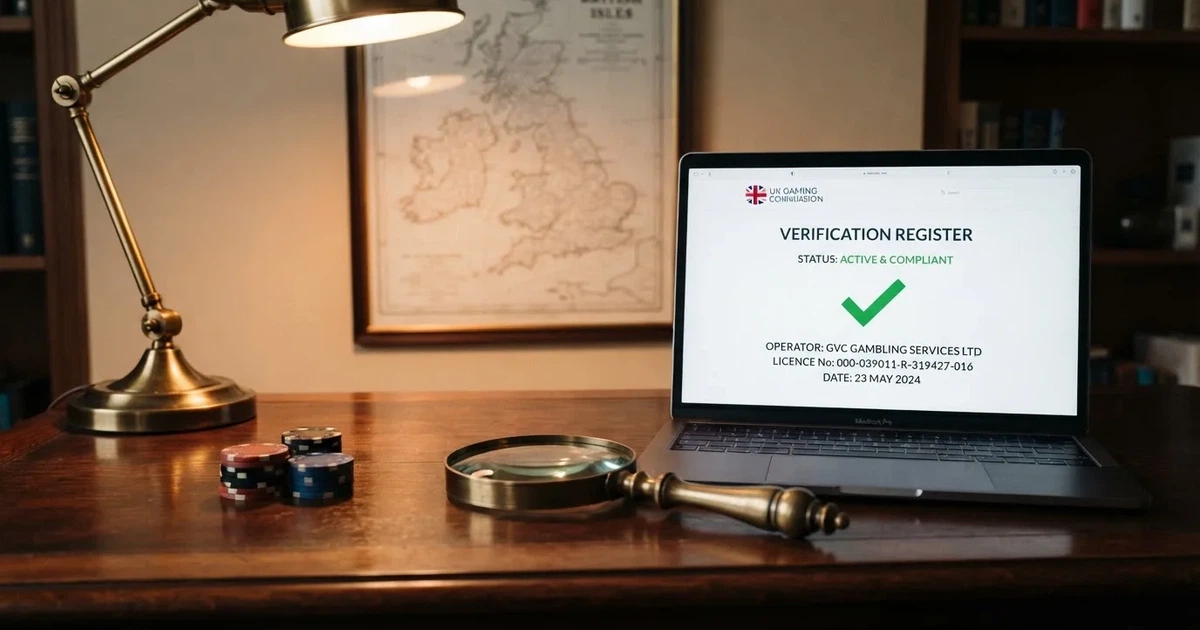
A “foreign” casino site, as the term gets used, is one whose operating company sits outside the UK. That is a description of incorporation, not of legality. Since the Gambling (Licensing and Advertising) Act 2014, the location of the licence holder does not matter — what matters is whether the Gambling Commission’s public register carries that brand against a valid remote casino operating licence. A Curaçao number, a Malta Gaming Authority seal, a Gibraltar registration: none of those substitute. They can sit alongside a UK licence, but they cannot replace one.
That leaves a precise question for anyone shopping around: which sites are licensed to take UK money, and what does the licence actually deliver?
Last verified 23 September 2026 against the Gambling Commission’s public register of gambling businesses (CSV download, 18 September 2026).
Table of Contents
- Player Protections That Disappear the Moment a Site Leaves the UK Licence
- How the Licensing Landscape Actually Looks in 2026
- The Ten Licensed Sites Worth Naming
- Bonuses, Wagering and the New 10x Reality
- What “Anonymous Play” Actually Means in This Market
- Payments: What the Credit-Card Ban Actually Closes
- What a Reader Should Take Away
- Frequently Asked Questions
Player Protections That Disappear the Moment a Site Leaves the UK Licence
The single sharpest reason to know where a brand sits on the register is not the welcome package. It is what the licence enforces every day a player is logged in.

A Gambling Commission-licensed site must, by licence condition, do the following: verify name, address and date of birth before the first deposit or any play; take part in GAMSTOP, the national self-exclusion register; cap slot stakes at £5 per game cycle for players aged 25 and over (from 9 April 2025) and £2 for 18-24-year-olds (from 21 May 2025); run a financial vulnerability check once a player’s net deposits cross £150 in a rolling 30-day window (from 28 February 2025); prompt the player to set a deposit limit before the first deposit is accepted (from 31 October 2025); ban credit cards as a funding method entirely (since 14 April 2020); cap any wagering requirement at 10x the bonus and forbid mixed-product bonuses such as “bet on sport, get casino spins” (since 19 December 2025); refuse auto-play and force a minimum 2.5-second spin cycle on slots (since 31 October 2021); and refer unresolved complaints to an approved alternative dispute resolution (ADR) provider, with the Commission itself as the backstop.
A foreign-registered site without that licence runs on its own house rules. Some impose their own stake caps and self-exclusion, some do not. None of them is bound by GAMSTOP, because GAMSTOP enrolment is a condition of holding the Commission licence, and only Commission-licensed sites can enrol. None of them routes complaints to a UK ADR or to the Commission itself. The Commission’s enforcement powers — cease-and-desist, payment-block referrals, search-engine delisting — work against unlicensed sites, but the disruption is upstream. The player using one has already deposited.
A useful mental model: a UK-licensed site is a tenancy in a regulated building. The landlord enforces the rent, the deposit cap, the smoke alarm. An unlicensed foreign site is the same flat advertised on a different platform: same square footage, none of the safety net.
Two consequences follow for anyone who has self-excluded through GAMSTOP. First, the exclusion will not stop you opening an account on an unlicensed foreign site, because that site cannot read the register. Second, that site is not bound by the six-month, one-year or five-year exclusion period you signed up to; nothing in its terms has to honour it.
How the Licensing Landscape Actually Looks in 2026
The numbers below are pulled directly from the Gambling Commission’s public register on 18 September 2026. The register is searchable online and downloadable as CSV or Excel; it is the definitive test of who holds a licence.

The register listed 139 businesses holding an active remote casino operating licence on that date. That is the universe of operators who may legally take online casino deposits from people in Great Britain. Some of those 139 businesses run multiple brands; LC International Limited, for example, is the licence holder behind Ladbrokes and several sister sites. Treating them as independent operators is a marketing trick, not a regulatory distinction.
The register’s domain list, which is a separate companion table, recorded 1,065 active domain entries and 361 white-label domain entries on the same date. A white-label site trades under another company’s licence: the website is operated by a third party, but the licence sits in someone else’s name. The figure matters because a player reading “licensed by the Gambling Commission” on a small brand’s footer should still trace that footer back to the licence account number to see who is actually on the hook.
Every licence number on the register follows a fixed shape: six-digit account number, the letter R for “remote”, a second number, then a suffix. Unibet’s remote licence, for instance, is 045322-R-324275-019. The six leading digits — 045322 in that case — repeat the licence holder’s account number. That is the simplest sanity check a player can run before depositing: take the licence number from the footer, paste it into the register, and confirm the company name matches the brand.
The register is also where the “active” status lives. A licence can be suspended, surrendered or in administration while the brand’s website is still live. Status changes show up on the register, sometimes with a delay; a brand whose licence status moved yesterday is not what it was last week.
Regulatory Differences: UK vs Offshore
| Protection Feature | UK-Licensed Site | Offshore-Licensed Site |
|---|---|---|
| Stake Cap (£2–£5) | Mandatory | No |
| GAMSTOP Participation | Mandatory | No |
| Wagering Cap (10x) | Mandatory | No |
| Complaints ADR | Commission Approved | Regulator-Specific |
| Financial Vulnerability Checks | Mandatory | No |
Three of the licence conditions above do most of the work in practice.
The stake cap is the headline. £5 per spin for adults aged 25 and over, £2 per spin for 18-24-year-olds. “Game cycle” means a single spin from wager to settlement, so a bonus round with several stages counts as one cycle, not several. For a high-stakes player, the cap is the difference between playing at the speed they choose and being forced down a gear; for most players it is invisible. The two-tier structure exists because the Commission’s own evidence links larger stakes to harm among younger adults. That is why the lower cap holds until age 25.
The deposit-limit prompt is the one players are most likely to meet without noticing. From 31 October 2025, the licensed site must, before accepting a first deposit, ask the player to set a financial limit. Setting a limit is a licence condition; declining to set one is also a choice the site must record. There is no state-set ceiling, only the player’s own chosen limit and the operator’s duty to honour it.
GAMSTOP is the third leg. Since 31 March 2020, every online licence-holder must enrol, and the exclusion periods (six months, one year, five years) cannot be shortened once chosen. A player who has self-excluded cannot simply move to an unlicensed foreign site and keep playing — they can, in the sense that nothing physically stops them, but the GAMSTOP-protected brands will remain closed to them, and the new brand has no obligation to honour their stated wish to stop.
What a Curaçao or Malta Licence Does and Does Not Cover
A Curaçao e-gaming licence or a Malta Gaming Authority (MGA) licence is a real authorisation, granted under real statute. It binds the operator to the rules of that jurisdiction, including KYC checks, segregation of player funds, and ADR in the regulator’s home country. What it does not do is bring the site under UK law.
Practically, this means three things for a UK player:
- UK rules on stake caps, mixed-product bonuses, the 10x wagering cap, and the credit-card ban do not apply. The operator must follow its own regulator’s rules, which are different and usually looser.
- UK complaint routes do not apply. The Commission will not hear the dispute, and an MGA or Curaçao ADR process is the player’s recourse. It works, but it is a different system, in a different country, on different timescales.
- GAMSTOP does not apply. The exclusion register is closed to the operator, and the operator is not obliged to check it.
A site that holds both a Commission licence and a Curaçao or Malta licence will, by the Commission’s conditions, give UK players the UK-standard protections. The dual licence is what the bigger international groups run. A site that holds only the foreign licence, and markets itself to UK players anyway, is offering UK customers a product that is not built to UK rules.
The Ten Licensed Sites Worth Naming
The brands below all hold an active Gambling Commission remote casino operating licence as of 18 September 2026, and each domain is listed as active on the register. They are not ranked by quality and not endorsed for play — they are simply the named operators whose licence status is verified against the register, in the order research assigned.
The table that follows carries four things: the brand, the licence holder and the GB remote casino licence number, the domain’s status on the register, and whether research could confirm subject support for the page’s topic. Every licence number is on the public register; the domain status is the register’s own classification.
Licences and Register Status Side by Side
| Brand | Licence holder and GB remote casino licence | Domain status on the register | Subject support |
|---|---|---|---|
| Unibet | Platinum Gaming Limited · 045322-R-324275-019 | Active (Unibet) | — |
| Betfair | PPB Games Limited · 039411-R-319335-010 | Active (Betfair) | — |
| Sky Vegas | Bonne Terre Gaming Limited · 065519-R-339675-002 | Active (Sky Vegas) | — |
| MrQ | Tek Fox Ltd · 060629-R-337532-004 | Active (MrQ) | — |
| Betway | Betway Limited · 039372-R-319367-029 | Active (Betway) | — |
| PokerStars | Stars Interactive Limited · 039108-R-319334-026 | Active (PokerStars) | — |
| Paddy Power | PPB Games Limited · 039411-R-319335-010 | Active (Paddy Power) | — |
| Ladbrokes | LC International Limited · 054743-R-330863-014 | Active (Ladbrokes) | — |
| BetVictor | BV Gaming Limited · 039576-R-319370-028 | Active (BetVictor) | — |
| Betfred | Petfre (Gibraltar) Limited · 039544-R-319290-010 | Active (Betfred) | — |
Several of those brands share a licence holder. Betfair and Paddy Power both sit under PPB Games Limited’s 039411-R-319335-010. Ladbrokes is one of several brands under LC International Limited’s umbrella. That is a structural feature of the licensed market rather than an oversight, and it tells a reader something useful: the corporate group behind the brand is what the Commission regulates, not the brand identity.
The “subject support” column reads as a row of dashes because research carried no per-brand figure on how each operator specifically courts UK customers resident abroad, and the licensing register does not track that detail. That absence is itself information: the register is the test of legality, not a measure of how each operator tailors its offer to non-UK-resident Britons.
Unibet: The Kind of Established Operator With the Licence to Match
Unibet runs from unibet.co.uk and is listed on the register against account 45322, Platinum Gaming Limited, with active remote casino operating licence 045322-R-324275-019. Platinum Gaming is part of the Kindred group, which has held a UK licence continuously through the post-2014 regime. The Kindred footprint spans several European jurisdictions, which means Unibet carries dual licensing in practice: a Commission licence for the UK-facing site, and its home regulator’s licence for the wider European operation.
For a player choosing between “foreign” and “UK-licensed”, the relevant fact is that unibet.co.uk is the UK-facing skin of a group whose broader estate sits abroad. The brand’s offer to UK players is built to Commission rules; the corporate structure is the “foreign” part.
Betfair: One Licence, Two Well-Known Brands
Betfair’s domain sits on the register as an active entry of account 39411, PPB Games Limited, which holds active remote casino operating licence 039411-R-319335-010. The same licence number covers Paddy Power further down the list, because both brands sit under the same Flutter-owned group. That is not a coincidence, and it is also not a sign of weakness: a single licence can stretch across many domains, and the Commission’s test is whether the licence is valid, not whether each domain has its own.
What this means practically: a player reading the small print on a Betfair promotional email and the small print on a Paddy Power promotional email is reading two products off the same regulatory scaffold.
Sky Vegas: The Broadcast-Adjacent Brand
Sky Vegas runs from Sky Vegas and sits on the register against account 65519, Bonne Terre Gaming Limited, active remote casino operating licence 065519-R-339675-002. Bonne Terre is the Sky-branded gaming entity, and the licence is one of the more recent remote casino operating licences on the register — the second-tier number in the licence string is higher than the legacy operators’. A newer licence number does not mean weaker oversight, but it does mean the operator has gone through a more recent round of Commission vetting under the current LCCP and Remote Technical Standards.
For a player whose decision turns on regulatory freshness rather than brand familiarity, Sky Vegas sits closer to the current rule book than the older 2014-era licences.
MrQ: The Smaller Independent
MrQ runs from its own domain and sits against account 60629, Tek Fox Ltd, active remote casino operating licence 060629-R-337532-004. MrQ is the smallest operator in this list by brand recognition, and its licence holder is the only operator-name in the list that is not a household word. A smaller licensed operator is not a weaker one; it is, however, the kind of brand a player might overlook when scanning a search results page for the biggest names.
The point worth keeping: smaller licensed brands exist, and the Commission’s register carries them on the same terms as the bigger ones.
Betway: The Established Sportsbook-Casino Hybrid
Betway’s domain is listed as an active entry of account 39372, Betway Limited, active remote casino operating licence 039372-R-319367-029. Betway’s history in the UK market goes back well before the 2014 regime change, and the licence number’s structure — 039372 as the leading account digits — places it among the older holders. For most players, Betway’s familiarity comes from its sportsbook; the casino product sits underneath that visibility.
PokerStars: The Poker Specialist With a Casino Attached
PokerStars runs from its UK-facing domain and sits against account 39108, Stars Interactive Limited, active remote casino operating licence 039108-R-319334-026. The .uk domain is the explicit signal: this is the UK-facing skin of the Stars group, and the .uk domain is what the register tracks. Stars Interactive is part of the Flutter-owned group alongside Betfair and Paddy Power, but it runs on its own licence account.
The casino product at PokerStars is the smaller side of a poker-first operation. The licence covers it on the same terms as the bigger casino brands; the product mix does not.
Paddy Power: Same Licence, Different Brand Voice
Paddy Power’s domain Paddy Power sits on the register under the same PPB Games Limited account as Betfair — active remote casino operating licence 039411-R-319335-010. The licence is shared, not the brand. Paddy Power carries an Irish heritage in its marketing and an unmistakably louder brand voice than its sister site; the regulatory framework behind both is the same Flutter entity.
Ladbrokes: One Licence, Multiple Sister Sites
Ladbrokes runs from its own site under account 54743, LC International Limited, active remote casino operating licence 054743-R-330863-014. LC International is the post-merger entity that absorbed Ladbrokes and Coral under one operator; several other familiar UK-facing brands also sit under this same licence. The licence number is a single point of regulatory accountability, even though the customer-facing footprint is broader than the licence string suggests.
For a player who treats “the operator” as “the company on the other end of the chat window”, LC International is the company, and the brand is the wrapper.
BetVictor: The Family-Owned Independent
BetVictor’s domain sits against account 39576, BV Gaming Limited, active remote casino operating licence 039576-R-319370-028. BV Gaming is the family-owned operator that has run BetVictor since the brand’s founding, and the licence holder is the same name a player sees on the operator’s terms page. Independent does not mean small; the licence has been live through multiple Commission enforcement rounds.
Betfred: The High-Street Bookmaker With an Online Casino
Betfred’s domain is listed as an active entry of account 39544, Petfre (Gibraltar) Limited, active remote casino operating licence 039544-R-319290-010. Petfre (Gibraltar) Limited is the Gibraltar-registered parent entity that holds the UK licence; the corporate structure runs through Gibraltar, but the licence itself is a UK Gambling Commission remote casino operating licence. The “foreign” descriptor fits the corporate parent better than the UK-facing site.
Bonuses, Wagering and the New 10x Reality
The headline change on bonuses took effect on 19 December 2025: any wagering requirement on a UK-licensed site is capped at 10x the bonus amount. That is a hard ceiling, set by the Commission’s social responsibility code. It applies to every bonus type the operator offers, not just the welcome package. It also extends to mixed-product bonuses: a “bet £10 on sport, get 50 casino spins” structure is no longer licensable, because the wagering attached to the casino portion is no longer free of the cap and the bundle cannot be split.
For a player who remembers the pre-cap market, the difference is stark. Welcome packages in the 2018-2023 era routinely attached a 35x or 50x wagering multiple to bonus funds, with extra weight on free-spin winnings. The current rule forces that down to a tenth of those figures or below. What that does to the bonus’s real cost is what the calculation below sets out.
What the 10x Cap Costs the Player, in Plain Numbers
Suppose a licensed site offers a £100 bonus with a 10x wagering requirement. Required turnover is bonus multiplied by wagering factor: £100 times 10, which gives £1,000 of qualifying wagers. At a £2 stake per spin, the player needs 500 spins. At 2.5 seconds per spin — the minimum spin cycle on a UK-licensed slot — that is 1,250 seconds, or roughly 21 minutes of pure spinning, before adding the time between spins and the reality checks the operator is required to surface.
Suppose instead the same £100 bonus carries the maximum-stake rule for an 18-24-year-old player, capped at £2 per spin. The arithmetic is unchanged: 500 spins to clear, 21 minutes of spinning. Suppose a £5-per-spin player aged 25 and over takes the same offer: 200 spins, 8 minutes 20 seconds.
The takeaway is the wagering figure, not the time. £1,000 of qualifying turnover on a typical online slot with a house edge of, say, 4% gives an expected loss of around £40 over the clearing process. That £40 is the bonus’s real cost to the player — the price of unlocking the £100 in bonus funds. A 35x wagering requirement on the same bonus would have set required turnover at £3,500, with an expected loss in the £140 region for the same RTP. The cap’s purpose is to compress that gap.
The honest reading: under the 10x cap, a £100 bonus costs around £40 in expected loss to clear; before the cap, comparable offers cost closer to £140. The cap is a Commission intervention that took the cost down by roughly two-thirds.
What Goes Wrong Without the Cap
An unlicensed foreign site is not bound by the 10x rule, because the rule is a UK licence condition. A site licensed only in Curaçao, Malta or Gibraltar can attach a 35x, 50x, or higher wagering multiple to its bonus. It can also bundle mixed-product offers, because nothing in its regulator’s rules forbids them.
The arithmetic above flips on its head. The same £100 bonus at 50x wagering demands £5,000 of qualifying turnover, with an expected loss on a 4% house edge slot in the £200 region. That is the offer’s true price. The marketing tends to show the £100, because the £200 is what the player pays to get it.
Where the Wagering Cap Stops Working
Three cases where the 10x cap does not save the player.
First, game-weighting. Slots usually count 100% toward wagering; table games often count 10-20%. A bonus cleared on roulette takes five to ten times as long in real play. The cap stops the multiplier climbing, but it does not stop the operator down-weighting the games a player actually wants to play.
Second, max-cashout caps. Some bonuses, particularly free-spin packages, carry a ceiling on withdrawable winnings — say, £100 from a “50 free spins” offer. The 10x cap does not touch that ceiling, because the cap is on the wagering multiple, not on the eventual payout. A player can fulfil the wagering, hit the ceiling, and still walk away with less than the slot’s nominal payout would suggest.
Third, time limits. A bonus might need clearing within 7 days. If a player deposits a small bankroll and the wagering is high enough to require several hundred spins, a tight window forces a faster pace than the 2.5-second spin cycle allows.
What “Anonymous Play” Actually Means in This Market
A second consequence of the licensing line is verification. A UK-licensed site must, by condition, verify a player’s name, address and date of birth before the first deposit or any play. That rule has been in force since 7 May 2019. It applies irrespective of deposit size, payment method, or bonus claim.
The verification is not a polite request. It is a licence condition with consequences: failure to verify means the operator cannot accept play. The Commission’s enforcement record on this point has been consistent.
An unlicensed foreign site may, depending on its home regulator, ask for less. Some do. Some do not. The “anonymous play” that some marketing language promises is the absence of a UK verification step, which is also the absence of the Commission’s complaint route if anything goes wrong. The trade is not anonymous-versus-identified. It is unregulated-versus-regulated.
Payments: What the Credit-Card Ban Actually Closes
The credit-card ban for gambling has been in force across Great Britain since 14 April 2020. It applies to all online and offline gambling products, with the single exception of face-to-face non-remote lottery sales. Debit cards and bank transfers were unaffected. E-wallets cannot be funded by credit card for gambling, even indirectly: if a player tops up Skrill or Neteller from a credit card and then uses the e-wallet at a gambling site, the operator’s payment checks should catch it.
For a UK-licensed site, the ban is a hard line. For an unlicensed foreign site, it is whatever the operator’s payment processor enforces. Some will refuse UK credit cards; some will not. What changes is the level of assurance: the UK site is bound to refuse; the foreign site is choosing to refuse.
The Commission’s evidence behind the ban is worth keeping in view. The Commission estimated that around 800,000 UK consumers used credit cards to gamble in 2018, and found that 22% of online gamblers using credit cards were classed as problem gamblers. The figure is dated, but the rationale is current: a credit card is a separate line of credit from a deposit account, and gambling on borrowed money is the specific pattern the ban targets.
What This Page Does Not Compare
Several things a reader might expect from a casino comparison are deliberately absent.
Bonus amounts. No specific offer is named on this page because the comparison’s point is the licensing frame. Welcome packages change weekly; the licence does not. A reader who wants the current Betfair welcome offer or the current Sky Vegas free-spin count should go to the operator’s own page; this page is not that page.
Game-by-game RTP and volatility. A handful of named slots carry fixed RTP figures in industry databases; the licensed operators on this list do not publish a single canonical RTP table across their full game libraries, and a comparison of unbacked figures would mislead.
Payment-method-by-payment-method coverage at each operator. The register does not track which payment methods each operator supports, and the operators’ own pages change. The page covers payments at the rule level, not at the per-brand level.
Where Research Stopped
Two limits on this page are worth being explicit about.
First, the comparison table’s “subject support” column reads as a row of dashes because research carried no per-brand figure on whether each operator specifically tailors its offer to non-UK-resident Britons. That absence is information in its own right: the register tracks the licence, not the marketing segment.
Second, the figures behind the bonus arithmetic are illustrative rather than pulled from a specific operator’s current terms. The 4% house edge on a typical online slot is a working figure; the £100 bonus is a round-number example. The point is the shape of the calculation under the 10x cap, not a precise ranking of current offers.
What a Reader Should Take Away
A “foreign casino for UK players” is not, in the licensing sense, a category of operator. It is a category of corporate structure. Some operators incorporated abroad hold UK licences and operate to UK rules. Others do not. The difference shows up in the protections a player has, not in the welcome bonus.
The register is the test. A licence number on a brand’s footer, traced back to the Gambling Commission’s public register, is the simplest check. The 139 active remote casino operating licence holders on the register as of 18 September 2026 are the universe of operators legally entitled to take UK online casino deposits. The brand list above is a subset of that universe; the rest sit outside this page’s scope.
Three things change the calculus for a player choosing between a licensed site and an unlicensed foreign site.
First, the stake cap. £5 per spin for adults 25 and over, £2 for 18-24-year-olds, is a UK rule. An unlicensed site does not enforce it.
Second, GAMSTOP. A self-exclusion registered with GAMSTOP applies to every UK-licensed operator; it does not apply to an unlicensed site. The exclusion is the player’s, but its reach stops at the licence line.
Third, the wagering cap. The 10x ceiling on bonus wagering, in force since 19 December 2025, is a UK rule. An unlicensed site can demand 35x or higher.
A site that is licensed, complies with the verification requirement, and runs on the Commission’s current rule book is what a UK player is actually choosing when they pick a brand off the register. A site that is not, regardless of its marketing, is a different product.
Frequently Asked Questions
What does it mean for a casino site to be based outside the UK?
A “foreign” or “overseas” casino site is one whose operating company is incorporated outside the UK. The location of incorporation has no bearing on whether the site can legally take UK customers. What matters is whether the Gambling Commission has issued that site an active remote casino operating licence. A Curaçao or Malta licence alone does not authorise the operator to take deposits from people in Great Britain.
Do foreign casino sites accepting UK players hold a Gambling Commission licence?
Some do, some do not. The brands named on this page all hold an active UK remote casino operating licence as of 18 September 2026, which is what makes them eligible to take UK customers. Other foreign-registered sites marketing to UK players hold only a Curaçao, Malta, Gibraltar or similar offshore licence. Those sites are not authorised to take UK deposits under UK law.
What protections does a UK player lose by using a foreign casino site?
A foreign site without a UK licence does not enforce the £5 or £2 slot stake cap, does not participate in GAMSTOP, does not run the £150 net-deposit financial vulnerability check, does not cap wagering requirements at 10x, and does not accept complaints through the Gambling Commission’s approved ADR route. The Commission can disrupt unlicensed sites but cannot award the player a remedy the way the ADR process can.
Is a Malta or Curaçao licence the same as a UK Gambling Commission licence?
No. A Malta Gaming Authority or Curaçao e-gaming licence is a real authorisation under that regulator’s statute, but it does not extend to UK players. UK rules on stake caps, mixed-product bonuses, the 10x wagering cap, the credit-card ban, and the verification requirement only apply to UK-licensed sites. A foreign-only site offers UK customers a product built to the foreign regulator’s rules, not the Commission’s.
Can a UK player self-exclude through GAMSTOP on a foreign casino site?
No. GAMSTOP enrolment is a condition of holding a Gambling Commission licence, and only Commission-licensed sites can enrol. An unlicensed foreign site has no obligation to honour a GAMSTOP exclusion, and it cannot read the register to enforce one. A player who has self-excluded and then opens an account on an unlicensed foreign site has not bypassed GAMSTOP; they have left its jurisdiction.
Why would a foreign casino site still market itself to UK players?
Some foreign-licensed sites continue to advertise in the UK because the Commission’s disruption powers — cease-and-desist notices, payment referrals, search-engine delisting — work upstream but cannot prevent every deposit. Marketing reach and enforcement reach are not the same thing. The Commission’s enforcement record against unlicensed operators has grown, but the gap is not closed.
Written by the editors at safecasinoguideuk.