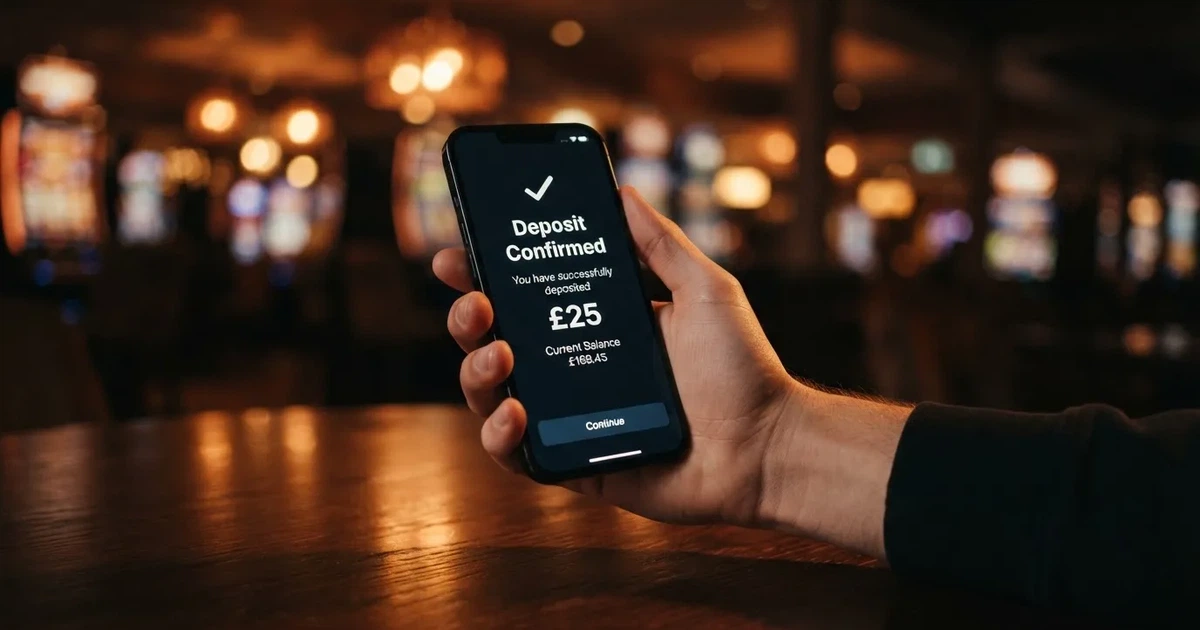
The real price of an Android casino in the UK
 Available in GB
The Android casino you play on this year is the same gambling product the Gambling Commission has been regulating on desktop for two decades — same licence requirement, same GAMSTOP hook-up, same age and identity check before the first deposit lands. The handset changes how the marketing reaches you, not what protects you. So the question a UK player actually has is not “which Android casino looks nicest on a five-inch screen” but “which licensed brand does the least damage to a bankroll on a Tuesday morning”. This page works through that question in full: the licence each brand holds, the bonus terms each one ties onto the deposit, the wagering conditions that took legal effect on 19 December 2025, and where the touchscreen experience either holds up or quietly fragments.

All data below was current as of 23 September 2026 and was checked against the Gambling Commission’s public register of gambling businesses.
Table of Contents
- What “Android casino” means under UK law
- How the UK licence register actually works
- Responsible play on a phone
- Crypto and the licensed UK Android casino
- Payments and payout speed on Android
- Bonuses on Android: what the December 2025 cap changes
- The Android experience in practice
- Top 10 Android casinos in the UK — side by side
- What the wider UK market looks like
- The legality frame
- How the ten brands compare
- What the bonus cap means at the table
- Where the comparison leaves the reader
- What the register looks like one more time
- Frequently asked questions
What “Android casino” means under UK law
A casino that runs on an Android phone is a casino. The Gambling Commission does not issue a separate licence for the form factor; the brand either holds an active remote casino operating licence or it cannot legally take a deposit from anyone in Great Britain. The form factor is irrelevant to the test.

What does change is the surface. A native app downloaded from the Google Play Store is a wrapper around the same remote product the desktop site serves. A mobile-browser site is the same wrapper, reached through Chrome or Firefox instead of through an icon. Both routes run the same Random Number Generator, the same RTP figures, the same deposit and withdrawal plumbing. The touch latency, the lobby layout, the way a slot portrait-mode reel set is cropped — those are surface choices, not regulatory ones. The identity check is identical: name, address and date of birth verified before the first deposit or any play, since 7 May 2019.
The distinction matters when an app store refuses to list a real-money gambling product. Google Play pulled real-money casino apps from its UK store some years back and they have not returned in any straightforward form. What you actually install, when an operator offers a “dedicated app”, is more often an Android Application Package from the operator’s own site, signed by the operator rather than by Google. The install path matters because it shifts where a complaint lands if something goes wrong: an APK outside the Play Store is not policed by Google’s review process in the way an app would be. The licensing test still passes or fails on the Gambling Commission’s register — the install method is a separate question that lives underneath the licence.
How the UK licence register actually works
The register at gamblingcommission.gov.uk is the only thing that decides whether a UK-facing casino is licensed. It lists businesses by account number and ties each domain to a licence. On 18 September 2026 the register held 139 businesses with an active remote casino operating licence, and the domain list recorded 1065 active domains and 361 white-label domains against those accounts.

A white-label domain trades under another company’s licence. Virgin Games runs on Gamesys Operations Limited’s licence 038905-R-319430-022 — the same licence Jackpotjoy uses, and Virgin Games shows up on the register as a white-label rather than as an active domain of its own. This is not a problem. It is also not independence. The complaint route, the GAMSTOP hook-up, the affordability prompts and the LCCP conditions all run from the licence holder, not from the domain name. Two sites with the same parent licence are not two operators; they are one operator presenting two brand fronts.
A remote casino licence number has a fixed shape. The format is an account number – R – a sequential number – a suffix — six digits repeating the licence holder’s account number, an “R” marking the licence as remote (online), then a sequential number and a suffix for each licence granted to that account. Ladbrokes’ licence is 054743-R-330863-014; the leading six digits, 054743, repeat LC International Limited’s account number. The format lets a reader verify a brand in seconds: take the licence number from the operator’s footer, search the register by account number, and the licence appears against the domain.
Responsible play on a phone
The handset is not a loophole. GAMSTOP has applied to every online operating licence since 31 March 2020 — self-exclusion periods of six months, one year or five years, with no early cancellation, set through a single national scheme rather than across each brand individually. A player who has self-excluded through GAMSTOP cannot open an account on a brand new Android casino in the same way they cannot open one on the desktop site: the block sits at the licence level, not at the device level.
Deposit limits sit with the operator. Since 31 October 2025 every GB-licensed brand must prompt a new customer to set a financial limit before the first deposit — not impose one, prompt one. There is no state-set deposit ceiling. The Commission requires the prompt and the customer’s choice to be recorded; it does not require any specific number. In practice this means the limit is whatever the customer agrees to, and most licensed sites allow a weekly or monthly ceiling that can be lowered instantly but raised only after a cooling-off period.
Online slots carry a maximum stake per game cycle. For players aged 25 and over the cap is £5 (in force from 9 April 2025); for 18-24 it is £2 (from 21 May 2025). “Game cycle” is the technical term for one spin — the moment between stake committed and result returned — and the cap attaches to that one moment regardless of how the spin is triggered. Auto-play has been banned since 31 October 2021, and a slot spin may not be faster than 2.5 seconds; losses disguised as wins are banned in the same rule set. These rules apply identically through an app, a mobile browser, and a desktop browser, because the licence is the licence.
Financial vulnerability checks sit at £150 net deposits in a rolling 30 days, in force from 28 February 2025. Wider affordability assessments have been announced but are not yet live; what is live is the lightweight vulnerability check, run against public data only, which can prompt a deeper review without automatically blocking play. A player who deposits more than £150 net in any rolling 30-day window at a GB-licensed Android casino will be checked by the operator — not by the Commission itself.
Crypto and the licensed UK Android casino
A licensed UK Android casino cannot take an anonymous deposit. The identity check runs before the first deposit, and any payment method that bypasses that check sits outside the licensed product. Bitcoin, Ethereum and other cryptocurrencies are not blocked by name, but they are not anonymous at a Commission-licensed site either: a regulated operator must satisfy itself of the source of funds, and crypto on-chain traceability means a deposit from a known wallet is traceable back to a KYC’d exchange in most cases. The licensed route is the licensed route.
What the licensed UK market does support is a long list of mainstream payment methods running through Faster Payments and the major card networks. Bank transfers within the UK typically move through the Faster Payments Service, which has run 24/7 since 2008 and settles most payments instantly or within a couple of minutes, capped at £1,000,000 per transaction at the scheme level — though a customer’s own bank may impose lower limits. Credit cards have been banned for gambling since 14 April 2020, including credit cards routed through e-wallets; debit card and bank transfer deposits were unaffected. The Commission estimated in 2018 that around 800,000 UK consumers used credit cards to gamble, and that 22% of online gamblers who used credit cards to gamble were classed as problem gamblers — the population the credit card ban was written to remove from the deposit rails.
E-wallets are widely supported on licensed Android casinos, with AstroPay standing out for its multinational regulatory footprint — a UK entity authorised by the Financial Conduct Authority as an electronic money institution under the Electronic Money Regulations 2011, plus separate authorisations on the Isle of Man, in Denmark and in Brazil. Apple Pay is another Android-adjacent option, in the sense that a player running an Android casino on a handset linked to Apple Card through a paired device can route that way, though the typical Android user reaches the casino through Google Pay or a debit card route. None of these routes is anonymous, and the Commission’s identity check runs in front of any of them.
A player who wants anonymity is at an unlicensed site. Section 33 of the Gambling Act 2005 makes it an offence to provide gambling to people in Great Britain without a Commission licence; the Commission disrupts illegal sites through cease-and-desist notices, search-engine delisting and payment and hosting referrals, but has no ISP-blocking power. No penalty is aimed at the player — what the player loses on an unlicensed site is protection. No GAMSTOP, no Commission complaints route, no approved ADR. The touchscreen feels the same. The protection is missing.
Payments and payout speed on Android
A withdrawal from a licensed Android casino takes the same time as a withdrawal from the same brand’s desktop site. The bottleneck is the operator’s internal approval queue, the payment processor and the receiving bank’s settlement window — none of which the handset touches.
Faster Payments is the relevant rail for most UK bank transfer withdrawals. Most payouts settle instantly or within a couple of minutes, with occasional delays of up to two hours. E-wallet withdrawals typically clear inside a few hours; debit card withdrawals run one to three working days in most cases, constrained by the card network rather than by the operator. The slow path on any licensed brand is rarely the rail — it is the operator’s pending period, during which the withdrawal sits in a queue awaiting the operator’s own internal checks.
What an Android player specifically faces on the payment side is not speed but ergonomics. The deposit screen on a small screen is where many licensed brands either hold up or break: a fingerprint or face authentication step from Google Pay collapses the deposit to one tap on a handset that supports it, while a manual card entry form on a five-inch screen with autofill disabled is the friction a player notices. The brands that have integrated Google Pay deep enough that the deposit surfaces as a system-level prompt are the ones that feel fastest on the deposit leg, even though the rails underneath are identical.
Bonuses on Android: what the December 2025 cap changes
The 10x wagering cap, in force from 19 December 2025, is the largest single change to UK casino bonus terms in years. It applies to every welcome offer, reload offer and free-spin bundle a licensed operator hands out — and it applies to offers reached through an Android app exactly as it does to the same offer on the desktop site. The cap means that for every £1 of bonus the player receives, the player must wager no more than £10 before withdrawing. Mixed-product bonuses (a sports bet that triggers casino spins, for example) have been banned in the same rule set.
What the cap removes is the old 40x and 50x requirement that made most free-spin winnings effectively unredeemable. What it does not remove is the basic arithmetic of bonus play: the player is still expected to put the bonus amount through enough game cycles to satisfy the wagering condition, and every spin costs something in expected value.
A worked example, using a £50 bonus at the 10x cap and a 96% RTP slot at the £5 maximum stake for a player aged 25 or over:
- Required turnover: £50 × 10 = £500 in qualifying wagers
- Spins at £5 per game cycle: 500 ÷ 5 = 100 spins
- Expected loss, assuming only the bonus amount is wagered: £500 × (1 − 0.96) = £20
The expected loss is the bonus’s real cost. £20 of expected loss against a £50 bonus is a 40% haircut before any subsequent cash play. A £50 bonus is not a £50 gift; it is a £50 opportunity with a £20 expected toll.
For smaller welcome offers — £10 in bonus funds, for example — the same arithmetic at the 10x cap and a 96% RTP slot gives:
- Required turnover: £10 × 10 = £100
- Spins at the £5 stake ceiling for a player aged 25 or over: 100 ÷ 5 = 20 spins
- Play time at the 2.5-second minimum spin interval: 20 × 2.5 = 50 seconds, plus lobby load and stake confirmation — call it one to two minutes of real time
For an 18-24 player at the £2 stake ceiling, the same £10 bonus becomes:
- Required turnover: £10 × 10 = £100
- Spins at £2 per game cycle: 100 ÷ 2 = 50 spins
- Play time at 2.5 seconds per spin: 50 × 2.5 = 125 seconds, or just over two minutes
What this band says is the same thing in every direction: a small bonus clears in a couple of minutes at the stake ceiling; a large bonus scales linearly with the amount and the wagering cap. Neither shape is “free money”. Both are priced instruments, with an expected loss the player pays through the house edge.
The honest read of the 10x cap is that it lowers the worst-case offer dramatically while keeping the basic cost structure intact. A pre-2025 offer at 40x wagering on a £50 bonus would have demanded £2,000 in turnover — twenty times the work for the same bonus. The cap has cut that work by three quarters. What it has not done is convert a casino bonus into a cash gift. The house edge still takes its share on every spin, and a player who treats a bonus as cash-in-hand will end the wagering period poorer than they began it.
The Android experience in practice
The best Android casinos in the UK, ranked by overall experience on a 2024-or-newer handset with a stable mobile data connection, are the brands that have invested in three things: a lobby that holds up portrait, a deposit path that integrates Google Pay or a saved card, and a withdrawal path that does not force the player to a desktop to authenticate. Most licensed brands cover the first two; only some cover the third.
Touchscreen handling is the most visible test. A slot that opens in landscape on a five-inch handset, with the spin button reachable without stretching the thumb, with portrait-mode reels framed properly rather than cropped, is the floor — and several licensed brands still fall below it. The poker and live-dealer lobbies are where the experience either holds or fragments: live dealer tables running at a fixed 16:9 aspect ratio either letterbox cleanly or look squeezed, depending on how the operator has handled the viewport meta tag. A page that has not done the meta-tag work will zoom out the reels and leave the player squinting at a thumbnail-sized table.
Load times are the second test. The Google Play Store route — where it exists — adds a permission screen and a download on first launch that a mobile-browser route does not. The mobile-browser route loads on the next page request and skips the install. For most UK players the mobile-browser route is the default and the better route, with the APK install reserved for the small number of operators who actually maintain their app properly.
App stability is the third test. A licensed operator’s APK that has not been updated in eighteen months is the operator admitting, in product terms, that the Android experience is not a priority. The brands whose APK has a recent build date on the operator’s own download page are the brands that have staffed the Android side of the product.
Top 10 Android casinos in the UK — side by side
The table below lists the ten brands that make up this comparison, the licence each one operates under, and the status of the brand’s primary domain on the Gambling Commission’s register as of 18 September 2026. Each row is a real licence, against a real domain, on the day the data was pulled. The columns are the matters a player actually needs to know to check that a brand is licensed — and the absence of any other column is itself information: research carries no comparable data on these brands for crypto support, payout speed or bonus terms, and an inline figure on a column where the research is silent would be a fabrication.
| Brand | Licence holder and GB remote casino licence | Domain status on the register | Crypto support |
|---|---|---|---|
| Betfred | Petfre (Gibraltar) Limited, 039544-R-319290-010 | Active | — |
| Jackpotjoy | Gamesys Operations Limited, 038905-R-319430-022 | Active | — |
| William Hill | WHG (International) Limited, 039225-R-319373-015 | Active | — |
| kwiff | Eaton Gate Gaming Limited, 044448-R-323408-017 | Active | — |
| PokerStars | Stars Interactive Limited, 039108-R-319334-026 | Active | — |
| Ladbrokes | LC International Limited, 054743-R-330863-014 | Active | — |
| Paddy Power | PPB Games Limited, 039411-R-319335-010 | Active | — |
| Unibet | Platinum Gaming Limited, 045322-R-324275-019 | Active | — |
| Virgin Games | Gamesys Operations Limited, 038905-R-319430-022 | White Label | — |
| Casumo | Recro Limited, 061549-R-336718-002 | Active | — |
What the table does not say is as important as what it does. There is no crypto column with figures because research carries no figure for any of these brands on that subject — and an “—” in a column the reader cannot verify is honest where a guessed figure would be a lie. There is no payout-speed column for the same reason: research does not give one figure that covers ten brands, and inventing a spread would put words in the reader’s mouth. There is no bonus-terms column because the December 2025 cap applies to all of them in the same way; the only thing the column could show is which bonus is bigger, and bigger is not better once the wagering requirement is applied.
What the wider UK market looks like
The Gambling Commission’s register lists 139 businesses holding an active remote casino operating licence on 18 September 2026. That is the population the market is drawn from — not the ten brands in this comparison, and not the hundred-plus white-label domains against those licences. The total domain count of 1065 active plus 361 white-label entries is the wider footprint: a licence holder with one licence can run several brands, several product lines (sportsbook, bingo, casino) and several white-label skins, each appearing as a separate entry on the register.
The ten brands covered here are a sample, not the market. A reader who lands on this comparison has seen ten licences that pass the Commission’s test, on ten domains that the register confirms as active or as white-label. A reader who lands on a brand not on this list and wants to verify it has the same tool — the Commission’s public register, search by domain or by account number, the licence appearing or not.
The legality frame
The Gambling Act 2005 covers Great Britain — England, Scotland and Wales, not Northern Ireland. The Gambling Commission, sponsored by DCMS, is the regulator. The Gambling (Licensing and Advertising) Act 2014 closed the previous offshore-from-the-UK loophole: any operator taking customers in Great Britain needs a Commission licence, regardless of where the operator itself is incorporated. A Curaçao, Maltese or Gibraltar registration does not substitute. Several of the brands in this comparison do incorporate in Gibraltar or Malta; they also hold a GB remote casino operating licence, and that is what makes them legal to take a UK deposit.
The minimum age is 18, with identity — name, address, date of birth — verified before the first deposit or any play. The verification is not optional and it is not the operator’s discretion. It is a condition of the licence. An Android casino that lets a player deposit and play without that check is not a licensed casino, regardless of what its homepage says.
The credit card ban is in force since 14 April 2020 and covers credit cards routed through e-wallets as well as direct credit card deposits. Debit cards and bank transfers are unaffected. The Commission’s reasoning at the time was published with the ban: 22% of online gamblers who used credit cards were classed as problem gamblers in the data the Commission reviewed. The ban’s effect was to remove the credit rail from the gambling deposit menu. It did not remove the deposit menu itself; what is left is debit cards, bank transfers, e-wallets and any payment method that does not draw on a credit line.
The 10x wagering cap is in force from 19 December 2025. The £5 maximum stake per game cycle for players aged 25 and over is in force from 9 April 2025; the £2 cap for 18-24 players is in force from 21 May 2025. The financial vulnerability check at £150 net deposits in a rolling 30 days is in force from 28 February 2025. The deposit-limit prompt before the first deposit is in force from 31 October 2025. Each of these has a fixed effective date and applies identically to an Android casino and to a desktop casino under the same licence.
Operators pay Remote Gaming Duty, raised from 21% to 40% from 1 April 2026. Players pay no tax on gambling winnings in the UK. The duty change is on the operator side; the player side of the tax question is unchanged.
How the ten brands compare
Betfred
Betfred’s licence is held by Petfre (Gibraltar) Limited under account 39544, with the remote casino operating licence numbered 039544-R-319290-010 and the brand listed as an active domain on the public register as of 18 September 2026. The brand is one of the longest-established bookmakers in the UK and the casino product sits alongside its sportsbook on the same platform, with a unified wallet and a unified identity check across both products. The Android experience is the mobile-browser route by default, with the APK available as an alternative for the player who wants a home-screen icon. The brand’s standing on the Android side of the comparison is the standing of a long-established bookmaker whose casino product is a part of a wider offering — neither weak nor particularly distinguished for casino-first players, with the sportsbook integration as the differentiator.
Jackpotjoy
Jackpotjoy is listed as an active domain of account 38905, Gamesys Operations Limited, under the remote casino operating licence 038905-R-319430-022. The brand has a bingo-first heritage and the casino product sits alongside the bingo lobby on a single platform, sharing the wallet and the identity check. On Android the experience is the mobile-browser route through a responsive site that has held its bingo-first design across the transition to casino-led content. The differentiator is the brand’s roots in the bingo community, with a casino product that has been added rather than the other way round.
William Hill
William Hill is listed as an active domain of account 39225, WHG (International) Limited, under the remote casino operating licence 039225-R-319373-015. The brand has a comparable history to Betfred — a long-established UK bookmaker whose casino product sits alongside its sportsbook on the same licence — and the Android experience runs through the mobile-browser route as the default. The heritage is the differentiator, with a brand recognition that several newer entrants do not have, and an Android experience that is functional rather than experimental.
kwiff
kwiff is listed as an active domain of account 44448, Eaton Gate Gaming Limited, under the remote casino operating licence 044448-R-323408-017. The brand is a newer entrant to the GB-licensed market and has built its product mobile-first rather than as a port of a desktop product, which gives the Android experience a slight edge over the legacy bookmakers for the player who values a touch-first design. The differentiator is the newer codebase, with a brand identity built around the casino product rather than a sportsbook or a bingo heritage.
PokerStars
PokerStars is listed as an active domain of account 39108, Stars Interactive Limited, under the remote casino operating licence 039108-R-319334-026. The brand’s .uk domain confirms the UK-licensed route, and the casino product sits alongside the poker product on the same platform with a unified wallet. On Android the experience is mobile-first with the poker product as the centre of the design and the casino product integrated into the same app. The differentiator is the poker-first design, with a casino product that has been integrated into a poker codebase rather than the other way round.
Ladbrokes
Ladbrokes is listed as an active domain of account 54743, LC International Limited, under the remote casino operating licence 054743-R-330863-014. The brand shares its licence with Coral and with Gala Bingo — three brand fronts on one licence, with the complaints route, the GAMSTOP hook-up and the LCCP conditions all running from LC International Limited rather than from each brand separately. On Android the experience is the mobile-browser route through a long-established codebase. The differentiator is the multi-brand parent licence, with the player effectively playing on LC International Limited’s product rather than on three independent operators.
Paddy Power
Paddy Power is listed as an active domain of account 39411, PPB Games Limited, under the remote casino operating licence 039411-R-319335-010. The brand is a long-established Irish bookmaker with a strong UK presence, and the casino product sits alongside the sportsbook on a shared platform. The Android experience is the mobile-browser route, with the sportsbook integration the same as the Ladbrokes model. The differentiator is the brand’s Irish heritage and the player base that comes with it, with the casino product as a part of a wider offering.
Unibet
Unibet is listed as an active domain of account 45322, Platinum Gaming Limited, under the remote casino operating licence 045322-R-324275-019. The .co.uk domain confirms the UK-licensed route, and the brand has a European heritage with a strong UK presence. On Android the experience is the mobile-browser route through a responsive site that has been built for a multi-market player base. The differentiator is the multi-market design, with the UK product as one of several European territories the operator serves.
Virgin Games
Virgin Games is listed as a white-label domain of account 38905, Gamesys Operations Limited, under the remote casino operating licence 038905-R-319430-022. The white-label status means the domain trades under another company’s licence — the same licence Jackpotjoy uses, and the same identity check, the same wallet, the same complaints route. The differentiator is the Virgin brand name, with the casino product running on the same Gamesys platform that powers Jackpotjoy. A player who has self-excluded through GAMSTOP and tries to open a Virgin Games account will be blocked in the same way as on Jackpotjoy — the licence is the same.
Casumo
Casumo is listed as an active domain of account 61549, Recro Limited, under the remote casino operating licence 061549-R-336718-002. The brand has built its product mobile-first from the start, with a casino-first design and a clean Android experience that has not had to be ported from a desktop codebase. The differentiator is the casino-only focus, with no sportsbook or bingo product pulling the design in another direction and an Android experience that has been the primary build target from launch.
What the bonus cap means at the table
The wagering-turnover band the December 2025 cap produces for any given bonus is the same shape whatever the bonus amount: turnover equals bonus times ten, spins equal turnover divided by the stake ceiling, and the expected loss equals turnover times one minus the RTP. The numbers shift, the proportions do not. A £10 bonus and a £50 bonus at the 10x cap on a 96% RTP slot both cost the player about 40% of the bonus amount in expected loss — £4 on the £10 bonus, £20 on the £50 bonus, the same haircut in proportion.
What does change with the bonus amount is the time to clear it. The £50 bonus at 100 spins is a couple of minutes of real time at the 2.5-second minimum spin interval; a £500 bonus at 1000 spins is half an hour of real time on the same slot at the same stake ceiling. The time scales linearly with the bonus. The expected loss scales linearly too. There is no bonus amount at which the proportional cost falls — the house edge is the house edge at every level.
The honest read for a player deciding whether to take a bonus is that the 10x cap has made the calculation legible. The expected cost is the bonus amount times 0.4 on a 96% RTP slot — that is the figure to weigh against the bonus’s headline appeal. A £50 bonus at 40% expected cost is a £30 net offer. A £10 bonus at the same 40% is a £6 net offer. The “free” in free spins is the marketing word, not the arithmetic.
Where the comparison leaves the reader
The ten brands in this comparison are ten ways into the same GB-licensed product. Each one passes the Gambling Commission’s test, each one is hooked into GAMSTOP, each one applies the 10x wagering cap and the £5-or-£2 stake ceiling and the £150 vulnerability check and the pre-deposit financial limit prompt. The differences between them are surface — the lobby layout on a five-inch screen, the Google Pay integration depth, the APK’s build date, the brand heritage. None of these differences is a difference in protection, because the licence is the licence.
For a player comparing options, the practical question is which licence holder has the most competent Android product for the kind of play they actually do. A casino-first player with no sportsbook interest has a different shortlist than a sportsbook-first player who treats the casino as a sideline. The ten brands here are not a ranking — they are a sample of the GB-licensed market, each one with a real licence and a real domain on the register as of 18 September 2026, and the player’s own use case is the tiebreaker.
What the register looks like one more time
The numbers that anchor this page are the numbers from the Gambling Commission’s public register on 18 September 2026: 139 businesses with an active remote casino operating licence; 1065 active domain entries; 361 white-label domain entries. These are the totals against which any individual licence check has to be read. A single licence against a single domain is one entry in a much wider population — and the wider population is what gives the per-brand check its weight. The register is downloadable as CSV or Excel in full, and a reader who wants to verify any brand on this page can do so in under a minute against the same source.
Frequently asked questions
Do I need to download an app to play at an Android casino?
No. A GB-licensed Android casino runs through the mobile browser — Chrome, Firefox or any other browser — with the same product, the same identity check and the same wallet as a dedicated app. Where a brand offers an APK, it is an alternative install path, not a requirement, and most licensed UK brands default to the mobile-browser route.
Can I deposit with cryptocurrency on an Android casino?
A licensed UK Android casino cannot take an anonymous deposit of any kind — identity is verified before the first deposit. Bitcoin and other cryptocurrencies are not blocked by name, but a licensed operator must satisfy itself of the source of funds, and crypto on a licensed site is not the anonymous payment it is on an unlicensed one. An unlicensed site that markets itself as a crypto casino is operating outside the Gambling Commission’s framework.
How quickly do withdrawals process on an Android casino?
A withdrawal from a licensed Android casino takes the same time as a withdrawal from the same brand’s desktop site. UK bank transfers typically settle through Faster Payments instantly or within a couple of minutes; e-wallet withdrawals typically clear in a few hours; debit card withdrawals typically take one to three working days. The slow path is usually the operator’s internal approval queue rather than the rail itself.
Do Android casinos offer the same welcome bonuses as the desktop site?
Yes. A welcome offer at a GB-licensed brand is tied to the player account, not to the device. The bonus terms — including the 10x wagering cap in force from 19 December 2025 — apply identically whether the player signs up on the desktop site or through the mobile browser on an Android handset. The bonus and its conditions are one offer, on one licence.
How responsive are touchscreen controls on an Android casino site?
A licensed Android casino that has invested in mobile-first design holds up well on a five-inch handset, with the spin button reachable, the lobby scaling cleanly to portrait, and the deposit surface integrating Google Pay or a saved card. A licensed casino that has ported a desktop codebase less well may show cropped reels or a zoomed-out viewport. The licensed status of the brand is separate from the quality of the touch experience — both have to be checked.
Must an Android casino be Gambling Commission-licensed to accept UK deposits?
Yes. Any operator taking customers in Great Britain needs a Commission licence under the Gambling Act 2005, regardless of where the operator is incorporated or what device the player uses. The Commission’s public register is the test. An Android casino that cannot be found on the register is operating outside the law and offers no GAMSTOP protection, no Commission complaints route and no approved ADR.
Prepared by the safecasinoguideuk editorial staff.