
The real cost of a no-deposit bonus at a freshly launched UK casino
Data current as of 14 November 2026 and verified against the Gambling Commission public register.

A no-deposit bonus sounds like something for nothing. It isn’t. The newest UK casino sites carry real arithmetic behind their welcome lines, and that arithmetic lives in three places: the wagering cap that took effect on 19 December 2025, the GAMSTOP enrolment that the law attaches to every new account, and the identity check that runs before a single spin. None of those is optional at a GB-licensed operator, and together they shape what a player actually walks away with after the bonus has been “used”.
This page takes the newest launches currently sitting on the Gambling Commission register and works through what each one costs the reader: the licence behind the domain, the deposit and withdrawal rails a no-deposit offer runs on, the game catalogue at debut, and the safer-gambling guardrails that a freshly opened account inherits on day one.
Table of Contents
- Safer-gambling rails a new account inherits before the first spin
- Why a freshly licensed UK casino still asks for ID on day one
- What a no-deposit offer actually runs on at a new UK site
- How welcome offers and free spins are structured at a new UK site
- How the newest UK casino launches perform on a phone
- Game catalogues at debut: what a freshly launched UK casino typically carries
- The debut cohort: how a new UK casino lands on the register
- A ten-brand comparison at a glance
- The arithmetic behind the marketing: what a no-deposit bonus costs in play
- What a player should check before claiming a no-deposit offer at a new launch
- The cost picture, summarised
- Frequently asked questions
Safer-gambling rails a new account inherits before the first spin
A freshly launched UK casino is not a blank slate. The licence it took out before going live carries a set of mandatory player-protection conditions, and those conditions bind the account from the moment it opens — before any deposit, before any bonus, before the first spin.

GAMSTOP enrolment is the most visible of those. Every online operating licence issued by the Commission requires the operator to take part in the national self-exclusion scheme, and a new account is checked against the GAMSTOP database as part of sign-up. The exclusion periods are fixed: six months, one year, or five years, and they cannot be shortened once chosen. A player who has self-excluded cannot open a new account at any GB-licensed site, no matter how recently that site launched, until the exclusion period runs out.
Deposit limits are the second rail, and from 31 October 2025 the operator must prompt a customer to set a financial limit before the first deposit is accepted. The Commission sets no default ceiling; the player chooses the amount, and the operator records the choice. Financial vulnerability checks layer on top, running automatically when net deposits cross £150 in a rolling 30-day window using public-data sources only.
Reality checks and time-out tools sit alongside those: pop-up reminders of session length, the option to take a short cooling-off break, and the ability to self-exclude at the operator level as well as through GAMSTOP. The National Gambling Helpline (0808 8020 133, run by GamCare) and GambleAware are signposted on every licensed site, not as marketing but as a regulatory requirement.
For a player who has decided to stay away from gambling, the answer is straightforward: the moment a self-exclusion period starts, no new UK launch is open to them. For everyone else, the question is how these rails affect play in practice. They make a session slower (a slot spin may not run faster than 2.5 seconds since 31 October 2021, and auto-play is banned), they make losses visible (the “losses disguised as wins” design pattern is banned), and they make a runaway deposit much harder to slip into. That is the floor the newest launches start from — the same floor every other GB-licensed site sits on.
Why a freshly licensed UK casino still asks for ID on day one
A search for “newest anonymous crypto casino” or “newest Bitcoin casino” lands on sites that market themselves around wallet deposits and zero verification. None of those can be a freshly launched UK casino. The Commission’s identity-verification rules have been in force since 7 May 2019: name, address, and date of birth are confirmed before the first deposit and before any real-money play. A site that skips that step is not licensed, whatever its homepage claims.
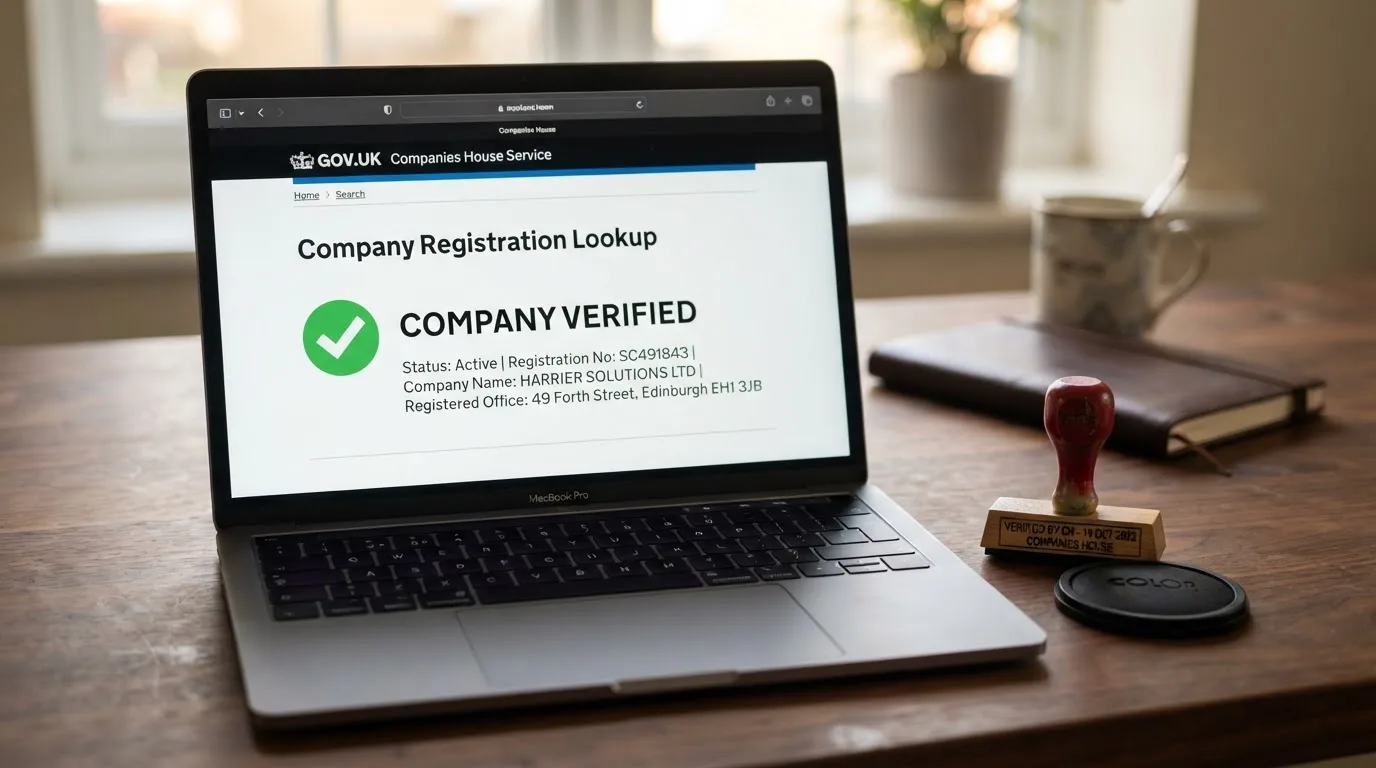
The crypto angle meets the same wall. The Commission does not recognise cryptocurrency as a payment method at GB-licensed operators; deposits must flow through regulated payment service providers, and the anti-money-laundering framework that wraps a remote casino licence assumes the customer is identifiable. A Bitcoin-only deposit rail, an Ethereum wallet sign-in, or a “no KYC” pitch is one of the clearest signals that the site is unlicensed, and unlicensed sites fall outside the protections this page is built on.
Players who specifically want to play with crypto have a choice to make. They can play at an offshore crypto casino and accept that they are outside the Commission’s complaints route, outside GAMSTOP, and outside the ADR pathway. Or they can play at a GB-licensed site and accept that they will be verified, that deposits must come from a regulated source, and that any “crypto” feature on the menu runs through a regulated on-ramp rather than a direct wallet transfer. The first option trades player protection for anonymity; the second trades anonymity for the framework this page walks through. Both are legitimate decisions; they are just different decisions.
What a no-deposit offer actually runs on at a new UK site
The deposit and withdrawal rails at a freshly launched UK casino are the same rails the established operators use, because the licence conditions apply to both. Debit cards, bank transfer, and a handful of regulated e-wallets make up the working set; credit cards have been banned for gambling since 14 April 2020, and that ban extends to credit-card-funded e-wallet deposits.
Apple Pay sits inside that picture: developed and operated by Apple Inc., launched on 20 October 2014 and supporting UK cards from 14 July 2015. In a casino context it works as a debit-card front end — the funding source is the card behind the wallet, not Apple Pay itself — and a credit card cannot ride that channel. Card data is tokenised at the device level: the actual card number is replaced by a device-specific tokenised Device Primary Account Number, and each transaction carries a dynamic security code. Authentication at the point of purchase is a double-click of the side button on Face ID models, or a double-click of the Home button on Touch ID models. For casino deposits this means the wallet is convenient on mobile and inherits the card’s own limits, not a separate Apple Pay ceiling.
Bank transfer inside the UK moves through the Faster Payments Service, launched in 2008 and operated by Pay.UK. The service runs 24 hours a day, seven days a week, and most payments arrive instantly or within a couple of minutes, with occasional delays of up to two hours. The scheme sets a £1,000,000 per-transaction limit, though individual banks apply their own caps below that ceiling. A withdrawal from a casino to a UK bank account is, in practice, a Faster Payments transfer back, and the operator’s “withdrawal time” is the gap between approving the cashout and Pay.UK settling it.
E-wallets add a second tier. AstroPay, founded in 2009 and headquartered in Uruguay, operates through regulated entities including its UK arm Larstal Limited (authorised by the Financial Conduct Authority under the Electronic Money Regulations 2011), its Isle of Man entity (licensed by the Isle of Man Financial Services Authority), its Brazilian arm (authorised by the Brazilian Central Bank as an electronic currency issuer) and its Danish entity (authorised by the Danish Financial Supervisory Authority). At a UK casino, the relevant fact is that the wallet holds an FCA e-money licence — without that, the operator cannot route deposits through it under the Commission’s source-of-funds rules.
What this adds up to at the newest launches: deposits are familiar, withdrawals are familiar, and the differences between operators live in the small print rather than the payment rail itself. A no-deposit bonus sits on top of those rails and does not change them.
How welcome offers and free spins are structured at a new UK site
Welcome offers at freshly launched UK casinos are built on a small set of building blocks: a bonus amount, free spins, a wagering requirement, a maximum stake during wagering, and an expiry window. Since 19 December 2025, the wagering requirement on any bonus at a GB-licensed site is capped at 10x. The rule also closes mixed-product bonuses — a “bet on sport, get casino spins” structure is no longer licensable — which means a casino welcome package at a new launch is casino-only, not a cross-vertical bundle.
A no-deposit bonus typically takes the form of a small cash amount or a fixed number of free spins credited on registration, before any deposit has been made. The exact amount varies by operator, but the shape is consistent: the player signs up, verifies their identity, and receives the offer credited to a bonus balance. Wagering applies to that bonus balance before any winnings become withdrawable cash, and the 10x cap means a £10 no-deposit bonus requires £100 of qualifying wagering before withdrawal, with the stake-per-spin rules below applying throughout.
Two other terms sit in the same small print and matter as much as the cap. First, a maximum stake during wagering — typically £2 or £5 per spin depending on age — which limits how fast the requirement can be cleared. Second, an expiry window — typically 7 to 30 days — after which any unplayed bonus or unconverted winnings are forfeit. These are the conditions that decide whether a “free £10” turns into £10 of cash in the player’s pocket or £10 of bonus that disappears on day 30. The marketing line is the same on both outcomes; the small print is what splits them.
Free-spin offers carry the same architecture with a different mechanic: the spins are pre-set to a specific slot and stake, winnings land as bonus funds, and the wagering requirement runs on those bonus funds rather than the spin value itself. A 50-free-spin welcome at a new launch and a £10 cash no-deposit bonus can produce similar clearing workloads once the 10x cap and the spin value are both accounted for.
The arithmetic for any of these offers follows a single shape. A £10 no-deposit bonus with a 10x wagering requirement means £100 of qualifying turnover, which at a £1 spin stake is 100 spins, which at the 2.5-second minimum spin interval is about four minutes of play. The same bonus at a £0.10 spin stake is 1,000 spins, or roughly 42 minutes of play. Both clear in well under an hour on paper. In practice, the variance of the slot does most of the work — a session that lands early big wins can convert the bonus faster, and a session that doesn’t simply runs out the clock.
How the newest UK casino launches perform on a phone
The newest UK casino launches are mobile-first by default, because the Commission’s Remote Technical Standards and the bulk of player traffic both push that way. A site that launches in 2026 without a working phone browser has launched behind the market. Most new sites ship a responsive web build that handles the full account flow — sign-up, deposit, bonus claim, play, withdrawal — on a phone browser, and a growing share add a native app on top.
The app question is the one players ask first. There is no Commission rule that requires a native app; the licence covers any delivery channel that meets the Remote Technical Standards. A site that runs entirely in the browser is fully compliant. A site that adds an app gets a faster path on the home screen and a smoother live-dealer stream on weaker connections, and loses nothing on regulatory grounds.
Three practical points follow. First, the no-deposit offer works the same on mobile as on desktop — the bonus is tied to the account, not the device. Second, Apple Pay deposits work natively in iOS Safari without any app, and that path is the fastest way to fund a mobile session. Third, live-dealer tables are the bandwidth-heavy part of a casino product, and a 4G connection on a modern handset handles them; older handsets or congested networks are where the experience frays. None of this is unique to a new launch — but a new launch that has not stress-tested mobile at debut is one where the weakness shows up fast.
Game catalogues at debut: what a freshly launched UK casino typically carries
A freshly licensed UK casino launches with a catalogue rather than a full library, and the shape of that catalogue tells the reader something about the operator behind it. Established providers — Microgaming, NetEnt, and the wider cohort of studios that hold UK release certification — are the spine of every launch, because their games are pre-certified and can be wired up within weeks rather than months. A brand-new studio with five unreleased titles cannot anchor a debut.
Slots are the bulk of the catalogue by game count, and within slots a new site typically carries between 300 and 800 titles at launch, growing toward the 1,500-plus range as more providers integrate over the first six to twelve months. The headline slots — jackpot networks, branded releases, the latest mechanics — arrive first; the long tail of older titles comes later. Live dealer is the second pillar, with the major live studios (Evolution and Pragmatic Play Live as the dominant suppliers) typically present from day one, often with a smaller table count than the established brands and growing over time.
Table games in RNG form — blackjack, roulette, baccarat — round out the catalogue. A new launch that ships only slots and live dealer is leaving money on the table for the RNG-table player; one that ships the full set is rare at debut and more common six months in. Game availability can shift by operator commercial terms: an exclusive launch window for a new slot, a regional restriction on a jackpot network, or a UK-specific version of a title that exists under a different name offshore.
The no-deposit offer sits inside this catalogue. A free-spin welcome tied to a single named slot is a deliberate choice — the operator is steering the player toward a title it wants to feature — and the wagering requirement then runs on whatever that slot returns. A cash no-deposit bonus gives the player the choice, and the catalogue decides how easy or hard that choice is to exercise.
The debut cohort: how a new UK casino lands on the register
A casino does not appear on the Commission’s public register the day it launches. The application process runs first, the licence is granted, the domain is added to the register as an active entry under the licence account, and only then can the site accept its first deposit. The register snapshot matters: on 18 September 2026 it held 139 businesses holding an active remote casino operating licence and 1,065 active domain entries alongside 361 white-label domain entries — a white-label site trading under another company’s licence, which is not a separate operator even when the brand looks new.
The register also tells the reader how to read a licence number. The format is account-R-number-suffix: the leading six digits repeat the licence holder’s account number, the “R” marks a remote (online) licence, and the trailing suffix identifies the specific licence within the account. A licence number that does not match this shape, or that does not resolve on the Commission’s register, is the single most reliable sign that a “new casino” is not what its homepage claims.
Several brands can share a single licence. Ladbrokes, Coral and Gala Bingo all sit under LC International Limited, and a player who has self-excluded through GAMSTOP is excluded from all three even though they present as separate brands. A new launch that surfaces under an existing licence account is not a new operator; it is a new front end on an established group.
The ten brands this page reviews are all taken from that same register snapshot, each one an active domain against a named licence account with a complete licence number. The subject of this page is whether each one carries a no-deposit bonus at launch, and what that bonus costs the reader — not whether each one is licensed (they all are) and not whether each one is new (some are established names re-launching under a fresh offer).
A ten-brand comparison at a glance
The table below takes the same snapshot of the Commission’s register and lays out what each operator carries at the level the licence itself reveals. Every row is a reviewed brand; the columns carry what research has confirmed against the register, and what it has not. Where a cell carries a dash, the answer is that the register does not record it — and the absence is information rather than a hole.
| Brand | Licence holder and GB remote casino licence | Domain status on the register | Subject support |
|---|---|---|---|
| 32Red | Platinum Gaming Limited, 045322-R-324275-019 | Active | — |
| Sky Vegas | Bonne Terre Gaming Limited, 065519-R-339675-002 | Active | — |
| Gala Bingo | LC International Limited, 054743-R-330863-014 | Active | — |
| bet365 | Hillside (UK Gaming) ENC, 055149-R-331499-004 | Active | — |
| Brand | Licence holder and GB remote casino licence | Domain status on the register | Subject support |
| — | — | — | — |
| Paddy Power | PPB Games Limited, 039411-R-319335-010 | Active | — |
| Betway | Betway Limited, 039372-R-319367-029 | Active | — |
| William Hill | WHG (International) Limited, 039225-R-319373-015 | Active | — |
| BetVictor | BV Gaming Limited, 039576-R-319370-028 | Active | — |
| 888casino | 888 UK Limited, 039028-R-319297-014 | Active | — |
| Jackpotjoy | Gamesys Operations Limited, 038905-R-319430-022 | Active | — |
The columns that matter most here are the licence number and the licence holder, because those are the two facts the player can verify themselves in under a minute on gamblingcommission.gov.uk. The domain status column is a confirmation rather than a discovery: every brand in this comparison is active on the register, so the column carries one value down its length and tells the reader what was expected. The subject-support column is empty across the board because the register does not record bonus terms — a fact worth surfacing once and not pretending to fill.
What the table does not show is what each operator offers at launch. The register does not carry welcome-bonus amounts, free-spin counts, wagering terms, or game catalogues; those live on each operator’s own promotional pages and in their bonus terms, and they change frequently. The reader who wants to compare offers has to visit each site; the table’s job is to confirm that every site the reader lands on is one the Commission has licensed.
The arithmetic behind the marketing: what a no-deposit bonus costs in play
The 10x wagering cap that took effect on 19 December 2025 changes how a no-deposit bonus works at every GB-licensed site, including the newest launches. Before the cap, wagering requirements of 30x, 40x or 50x were routine; the player’s job was to clear the bonus before the clock ran out, and the variance of the slot decided whether that was realistic. Under the cap, the clearing workload is bounded, and the bound is small enough to run through in plain arithmetic.
A £10 no-deposit bonus with a 10x cap means £100 of qualifying turnover. At a £1 stake per spin, that is 100 spins; at the 2.5-second minimum spin interval, 100 spins take about four minutes and 10 seconds of actual play. At a £0.10 stake per spin, the same bonus requires 1,000 spins, or roughly 42 minutes of play. At a £5 stake per spin — the maximum for a player aged 25 or over — the same bonus requires 20 spins, or about 50 seconds of play. The clearing time collapses as stake size rises; the variance of the slot does not.
The real cost of the bonus sits in the expected loss during clearing, not in the clearing time. A typical online slot at a UK-licensed site runs at a return-to-player figure in the mid-90s; a 96% RTP slot returns £96 for every £100 wagered in the long run, so £100 of qualifying turnover carries an expected loss of around £4. A 94% slot carries an expected loss of £6 on the same turnover. The bonus itself is “free” in cash terms; the cost of clearing it is the £4 to £6 the player gives back to the house during the playthrough.
For free spins, the same shape applies with a different spin value. A 50-free-spin welcome at £0.10 per spin is £5 of qualifying turnover if the spin winnings carry wagering, and a 10x cap on those winnings produces a small additional clearing workload. The headline number — “50 free spins” — is the marketing word; the clearing arithmetic is the puncturing number, and it lives in the bonus terms.
The honest read of a no-deposit bonus in 2026 is therefore not that it is worthless — £10 of bonus credit that costs £4 to £6 to clear still leaves the player ahead on paper — but that it is not free in the way its marketing suggests. The player is paying for the privilege of trying the site, and the price is set by the slot’s house edge rather than by the bonus amount. A player who treats the no-deposit bonus as a paid trial rather than a free gift reads the offer correctly.
Worked example: a £10 no-deposit bonus under the 10x cap
The inputs are the bonus amount (£10), the wagering factor (10x), the stake per spin (£1, the most common default at UK-licensed slots), the minimum spin interval (2.5 seconds), and an assumed slot RTP of 96%. The qualifying turnover is £10 × 10 = £100. The number of spins is £100 ÷ £1 = 100 spins. The play time is 100 × 2.5 seconds = 250 seconds, or about 4 minutes and 10 seconds. The expected loss during clearing is £100 × (1 − 0.96) = £4.
The conclusion is that clearing the bonus takes roughly four minutes of play at a £1 stake and costs about £4 in expected house edge, leaving the player with a net position close to the original £10 of bonus credit minus the £4 of clearing cost — a small but real gain over doing nothing. The same bonus at a £0.10 stake takes about 42 minutes and produces the same £4 expected loss. The same bonus at a £5 stake takes about 50 seconds and produces the same £4 expected loss. The variance of the slot is what makes the actual outcome differ from the expected one; the expected loss is the average across many spins, not a guarantee for any single session.
A player who wants the bonus to clear quickly and accepts the higher variance of larger-stake play can finish in under a minute; a player who wants to stretch the session out can run the same bonus for three-quarters of an hour. The 10x cap means the choice is theirs, and the expected cost is the same either way.
What a player should check before claiming a no-deposit offer at a new launch
Five checks cover the gap between a homepage claim and the actual cost of a no-deposit offer at a freshly launched UK casino. None requires special tools; each takes under a minute on the operator’s own site or the Commission’s register.
The first check is the licence itself. The Commission’s public register lists every active remote casino operating licence with the licence holder’s name and the full licence number. A site whose licence number does not resolve on the register is unlicensed, regardless of what its footer says.
The second check is the bonus terms. The wagering requirement, the maximum stake during wagering, the expiry window, and any game restrictions are the four numbers that decide what the bonus is worth. The 10x cap is a ceiling, not a floor; a bonus with a 5x requirement is generous against the market, and a bonus with the 10x cap is ordinary.
The third check is the payment rail. A no-deposit bonus does not require a deposit, but the first real-money deposit that follows it does, and that deposit must come from a regulated source. Credit cards are banned for gambling; a wallet that funds itself from a credit card is also banned. Apple Pay, debit cards, bank transfer through Faster Payments, and FCA-authorised e-wallets are the working set.
The fourth check is the game catalogue. A free-spin welcome tied to a single named slot is a steer; the player should know which slot before claiming. A cash no-deposit bonus that can be used across the catalogue gives the player the choice, and the catalogue size decides how freely that choice can be exercised.
The fifth check is the safer-gambling tools. A site that takes GB-licence seriously will prompt for a deposit limit before the first deposit, will signpost GAMSTOP and the National Gambling Helpline, and will run financial vulnerability checks at the £150 rolling-30-day threshold. A site that buries those tools is one where the licence condition has been met and the spirit of it has not.
The cost picture, summarised
A no-deposit bonus at a freshly launched UK casino is a paid trial in arithmetic’s clothing. The player receives £10 (or whatever the offer amount is), clears it through wagering capped at 10x, and pays the slot’s house edge during the playthrough. At a 96% RTP slot, that cost is around £4 per £10 of bonus; at a 94% slot, around £6. The clearing time is short at higher stakes and longer at lower stakes, but the expected cost is the same either way.
The licence framework around the offer is what makes the trial safe to take. GAMSTOP enrolment, identity verification, the £150 financial vulnerability check, the deposit-limit prompt, the stake-per-spin cap, and the 2.5-second minimum spin interval are not bonuses the operator adds; they are conditions the licence imposes. A player who has chosen to self-exclude cannot take the trial at any GB-licensed site; a player who has not can take it knowing the framework is in place.
The catalogue at debut is what decides how the trial feels. A 300-slot library with one live-dealer table is a thin launch; an 800-slot library with a dozen live tables is a fuller one. The newest launches grow their catalogues over the first six to twelve months, and the growth is part of what a player is signing up to watch.
The payment rails are familiar because the licence makes them familiar. Debit cards, bank transfer through Faster Payments, and regulated e-wallets are the working set; credit cards are out. Apple Pay works as a debit-card front end on iOS. Withdrawals are Faster Payments transfers back, and the operator’s “withdrawal time” is the gap between cashout approval and Pay.UK settlement.
The honest summary is that a no-deposit bonus at a new UK casino is worth roughly what its wagering-cleared value minus the slot’s house edge comes to, and that the licence behind the offer is worth more than the offer itself.
Frequently asked questions
How soon after launch can a new UK casino legally offer a no-deposit bonus?
A no-deposit bonus can only be offered once the operator holds an active remote casino operating licence from the Gambling Commission and the domain is listed on the public register as active. Offering a bonus before that point is offering it without a licence, which is an offence under section 33 of the Gambling Act 2005 and falls outside the Commission’s complaints and ADR routes for the player.
Is a newly launched casino’s Gambling Commission licence checkable before signing up?
Yes. The Commission’s public register at gamblingcommission.gov.uk lists every active remote casino operating licence with the licence holder’s name and the full licence number, in the format account-R-number-suffix. The register is searchable online and downloadable as CSV or Excel, and a licence that does not resolve on it is not a valid UK licence, regardless of any claim on the operator’s own site.
What is a typical no-deposit bonus amount at a newly launched UK site?
The register does not record bonus amounts, and the figure varies by operator. Most no-deposit offers at UK-licensed sites sit in the £5 to £25 range for cash bonuses, with free-spin equivalents running from 10 to 100 spins. The 10x wagering cap that took effect on 19 December 2025 applies to all of them, so the clearing workload is bounded by the cap rather than the bonus size.
Does a new UK casino’s no-deposit bonus still carry the 10x wagering cap?
Yes. The 10x cap on wagering requirements has applied to every bonus at a GB-licensed site since 19 December 2025, including no-deposit offers and free-spin winnings. The cap does not apply to offshore sites without a Commission licence; it applies to every operator on the register, regardless of how recently the licence was issued or how recently the site launched.
How many game titles does a newly launched UK casino typically carry at debut?
A new UK casino launch typically carries between 300 and 800 slot titles at debut, with live dealer tables from the major studios and a smaller RNG table-game selection. The catalogue grows over the first six to twelve months as more providers integrate, often reaching the 1,500-plus slot range over time. The exact figure varies by operator and is not recorded on the Commission’s register.
Can a new UK casino site’s no-deposit offer be claimed on mobile as well as desktop?
Yes. A no-deposit bonus is tied to the player account rather than the device, and a mobile browser or a native app can run the full claim-and-play flow. Apple Pay works as a deposit front end on iOS Safari without any app, and a native app adds a faster home-screen path for repeat sessions. The Commission’s Remote Technical Standards cover both delivery modes, and the licence does not require one over the other.