
80 free spins no deposit UK: how a “free” offer is paid for
Current as of 14 November 2026 · verified against the Gambling Commission’s public register of remote casino operating licences and licence-holding domains
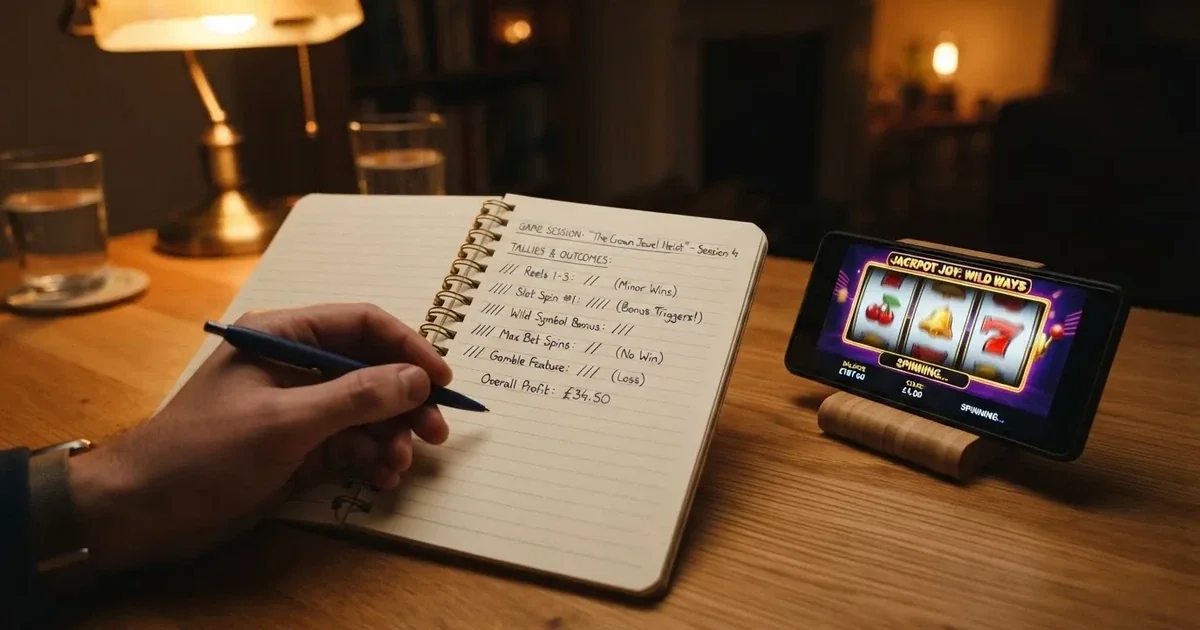
A casino hands a UK player 80 free spins with no deposit and asks for nothing in return. That sentence is the pitch. The catch is that the offer still has to clear wagering terms, a maximum-win cap and the Commission’s identity and affordability machinery before any penny reaches a bank account, and that the player who wants those 80 spins is the player GAMSTOP exists to keep out. This page is about what those conditions actually cost, in time and in pounds, and about the ten brands currently listed on the register that can lawfully run the promotion. It is not a recommendation to play at any of them.
Table of Contents
- What a no-deposit 80-spin offer actually is
- The rules every licensed site has to run on
- What the no-deposit offer costs the player
- Withdrawing anything the offer produces
- GAMSTOP and the safer-gambling tools that travel with the offer
- Where the 80 spins actually come from — the game side
- The arithmetic the player can run
- The licence, the register and what “licensed” actually means
- How to read the comparison table below
- GB-licensed operators offering no-deposit spins: side-by-side
- Reading the operator list
- The question offshore sites leave behind
- Tax, withdrawals and what the operator keeps
- Where the offer stops being a trial
- Frequently asked questions
What a no-deposit 80-spin offer actually is
The headline number — eighty — refers to slot rounds paid for by the casino, not the player. Nothing leaves the bank balance; nothing needs to be paid back if the rounds lose. That is the genuine part of the pitch and it is the only part.

The less obvious part is what the casino does with anything the rounds win. The 2005 Act and the Commission’s Licence Conditions and Codes of Practice treat a free-spin payout as bonus funds until the player has cleared a wagering requirement against it. Wagering requirements have been capped at 10x since 19 December 2025, so the worst a licensed site can demand is ten turns of the bonus amount before withdrawal becomes possible — better than the 30x to 65x multiples the same operators ran on free-spin winnings half a decade ago, but still the figure that decides whether the offer is worth starting.
A second condition sits on top of the multiplier: a maximum cashout cap. Even after the player has met the wagering rule, the casino pays out only the amount stated in the promotion. Anything above is forfeit. The cap is not a Commission rule and the size varies by brand, but its presence is universal — every no-deposit free-spin promotion in the GB market has one, and treating it as an afterthought is the most expensive mistake a player can make on this kind of deal.
There is also a time limit. Most no-deposit spin bundles expire within 24 to 72 hours of credit; the rounds themselves are usually fixed at a low stake (frequently p0.10) on a single named slot. Each of these terms exists to keep the offer inside a frame the casino can price, and the frame is what the player needs to read before clicking claim.
The rules every licensed site has to run on
The Gambling Commission licence is the legal floor under any no-deposit offer aimed at a player in Great Britain. A Curaçao or Malta number on the footer of a page does not substitute, because section 33 of the 2005 Act makes it an offence to provide gambling here without a Commission licence, regardless of where the operator is based. The Commission’s public register is the test: a brand either appears on it or it cannot lawfully target a UK player with an 80-spin offer.

Three rules have changed the cost of those offers in the past two years:
- The 10x wagering cap, in force from 19 December 2025. No licensed site can ask a player to turn a bonus over more than ten times. The Commission called it “a level playing field for consumers”; for the free-spin player it means the same offer that demanded 65x in 2019 can now clear in a tenth of the volume.
- Mixed-product bonuses are banned under the same change. A promotion that offers free casino spins in exchange for a sports bet is no longer allowed. The free-spin offer stands on its own.
- Slot stake limits took their current shape in 2025. From 9 April 2025 the maximum stake per game cycle is £5 for players aged 25 and over; from 21 May 2025 the same ceiling drops to £2 for 18-to-24-year-olds. Those are spin-cost caps, not bonus caps, but they change which slots a free-spin promotion can name — anything over £5 a round is unreachable for almost every player who claims this kind of deal.
Around those rules sits the rest of the framework: identity verification before the first deposit or any play, GAMSTOP enrolment as a condition of every online licence, auto-play banned and a minimum spin length of 2.5 seconds, the £150 net-deposit trigger for a financial vulnerability check, and the credit-card ban that has been in force since April 2020. None of these are features the casino adds for marketing; each is a Commission requirement.
What the no-deposit offer costs the player
The 10x cap turned the underlying arithmetic into something the player can run. Worked through the most common shape — a £10-equivalent bonus credited at the end of the spin round — the demand is 100 in turnover before the bonus balance unlocks for withdrawal. The cap is the rule; the player’s stake-per-spin is what turns 100 into minutes.
Assume a £0.10 stake (a typical fixed stake on a free-spin promotion): that is 1,000 spins at a minimum 2.5 seconds per spin, or roughly 42 minutes of continuous play. At a £0.20 stake — the upper end of what most sites fix on a free-spin offer — the same turnover clears in 21 minutes. Both figures are statistical averages: they assume the player bets only the bonus, plays until it is exhausted and does not chase. Anyone who tops up the balance with their own money is no longer playing the no-deposit offer, and the wagering count keeps running on every pound wagered.
The arithmetic is mechanical; the cost is the win cap. A promotion that credits 80 spins at £0.10 on a slot paying 96% returns, in expectation, £7.68 in gross winnings. The win cap on a no-deposit spin deal in the GB market typically sits between £10 and £50, and a player who hits a feature that returns more than the cap watches the excess disappear. The marketing word for that moment is usually “withdrawable winnings”; the arithmetic is the house keeping what it never priced.
Two corollaries follow:
- The £0.10 stake is the floor, not the ceiling. A free-spin deal that fixes the stake at £0.10 builds in a 96% return that an offer at £1 fixes at the same percentage, but the £1 offer is rarer because most slots in the GB market are now £2 or £5 maximum. The 80-round volume is what compensates: more rounds at a lower stake produce a tighter expected return than fewer rounds at a higher one.
- The wagering factor is the leverage. At 10x a £10 bonus costs 100 in qualifying turnover; at 65x — the figure common before December 2025 — the same bonus cost 650. The Commission did not price free-spin offers for the player; it capped the multiplier, and the cap is what determines whether the offer is a trial or a trap.
Withdrawing anything the offer produces
The free-spin round lands winnings in a bonus balance. Three things have to happen before they reach a bank account:
- The wagering requirement clears. Under the 10x cap, that is at most ten times the bonus amount in qualifying bets. Most sites also forbid low-risk bets — covering red and black at the same time on roulette, for example — to prevent the player from grinding the bonus down without risk. The site lists the excluded games in the bonus terms.
- The win cap is applied. Whatever the cap is on the promotion, that is the most the player can withdraw from the bonus — regardless of what the slot paid. Most no-deposit spin offers in the GB market sit at a £10 to £50 cap; a small number have no cap, and those promotions are typically smaller in spin count or in stake.
- Withdrawal method and identity check are satisfied. Since the Commission’s 7 May 2019 identity rules the operator has to verify name, address and date of birth before the first withdrawal. Withdrawals to UK bank accounts run through the Faster Payments Service and usually land within minutes; the scheme’s standing £1,000,000 per-transaction limit is irrelevant at the scale of a bonus payout, but individual banks can set lower ceilings on the customer side.
Credit cards are out: the Commission’s April 2020 ban covers them, including credit cards routed through an e-wallet. Debit cards, bank transfer and a small set of regulated e-wallets are the routes a GB-licensed operator accepts. The reason matters: roughly 800,000 UK consumers used a credit card to gamble in 2018 according to the Commission’s own research, and 22% of online gamblers who funded play that way were classed as problem gamblers. The payment-method choice is part of the safer-gambling machinery, not a separate list.
GAMSTOP and the safer-gambling tools that travel with the offer
Every online licence issued by the Commission requires the operator to take part in GAMSTOP, the national online self-exclusion scheme. A player who has registered with GAMSTOP cannot open an account, deposit or claim a bonus at any GB-licensed site for the chosen period (six months, one year or five years), and the exclusion cannot be cancelled early.
That rule is what closes the door on the offer for a player who needs it to be closed. It is also the floor of the player-protection regime, not the ceiling. On the operator’s own account, the following are mandatory:
- Deposit limits, set by the player before the first deposit, prompted by the operator under a Commission rule in force from 31 October 2025.
- Reality checks, interrupting play at intervals so the player sees how long they have been on the site.
- Time-out, a short break from a single operator (24 hours to several weeks).
- Self-exclusion at the operator, independent of GAMSTOP, for longer breaks.
- Financial vulnerability checks, fired at £150 in net deposits in a rolling 30-day period under a Commission rule from 28 February 2025; the checks run against public data only and the wider financial-risk assessment has been announced but is not yet in force.
- GAMSTOP registration routed to the player when a self-exclusion request is logged with the operator.
Two routes exist for anyone whose gambling has stopped being a pastime: GamCare’s National Gambling Helpline (0808 8020 133, free, 24 hours) and the GambleAware website, both funded independently of the operators they help police. A no-deposit free-spin offer is the cheapest possible way to enter a site; it is also the cheapest way in, and the tools above are what stand between that entry point and a player who should not be making it.
Where the 80 spins actually come from — the game side
No-deposit spin offers are almost always fixed to a single slot — typically a high-RTP, low-stake game from a major provider. The provider list on the GB market is concentrated around NetEnt, Play’n GO, Pragmatic Play, Blueprint Gaming and a handful of others; the slot itself is rarely a player’s free choice, and where it is, the wagering requirement usually applies at a higher multiple.
Two things decide the value of the round:
- RTP, the percentage of stake the slot returns to players over a long sample. A 96% slot returns £96 in every £100 wagered over millions of spins. No individual session will hit that figure, but it is the input that decides the offer’s expected value.
- Volatility, the spread of outcomes around the average. A low-volatility slot pays small wins frequently; a high-volatility one pays rarely and in larger sums. Free-spin promotions tend to be built around mid-volatility titles so the player sees some action before the round expires.
Auto-play is banned on GB-licensed slots, so the player presses the spin button themselves for the duration of the round. A single spin is at least 2.5 seconds under the Commission’s Remote Technical Standards; with 80 rounds on the clock that is at least three minutes and twenty seconds of play. The interesting number is not the minimum, though — it is the wagering time afterwards, which can run to several hours on the worst-case offer and to roughly forty minutes on the best-case one.
The arithmetic the player can run
The Commission’s 10x cap is recent enough that most players have not yet internalised it. The numbers below are the band that follows from it for the GB market, using the most common shape of an 80-spin no-deposit offer:
- Bonus credit at the end of the round: typically £5 to £20, depending on the stake and the slot’s RTP.
- Required turnover to unlock: 10x the bonus. A £10 bonus = £100 turnover; a £20 bonus = £200 turnover; a £5 bonus = £50 turnover. Those are the ceilings.
- Time to clear, at the promotion’s fixed stake: between roughly twenty minutes (higher stake, smaller bonus) and four hours (lower stake, larger bonus) at the Commission’s 2.5-second minimum spin length.
- Expected loss during clearing: turnover × (1 − RTP). At a 96% RTP, £100 in clearing costs £4 in expectation; £200 costs £8; £50 costs £2. These are averages over many spins and promise nothing for a single session.
The narrowness of the band is the point. The Commission capped wagering because the previous market — multipliers of 30x to 65x on free-spin winnings — priced out the trial and turned it into a long grind. The 10x cap puts a no-deposit offer into a category the player can size up before claiming.
A worked example, in plain prose, makes the point: an offer crediting £10 in bonus after 80 spins at £0.10 on a 96% slot demands £100 in turnover. At £0.10 a spin, with the 2.5-second minimum, that is 1,000 spins or about 42 minutes of continuous play. The expected loss during clearing is £4, and the most the player can withdraw — win cap — is whatever the promotion names, frequently £20 to £50. The arithmetic is short; the reading the player does before claiming is shorter still, and it is what determines whether any of these figures matter.
The licence, the register and what “licensed” actually means
The Commission’s public register is the single source of truth for who is licensed and who is not. On 18 September 2026 the register listed 139 active remote casino operating licences and 1,065 active domain entries alongside 361 white-label ones — a white-label site trading under another company’s licence, which means the player at the white-label address and the player at the licence-holder’s own site are governed by the same licence terms.
The remote licence number itself follows a recognisable shape. A Commission remote casino operating licence reads as a six-digit account number, the letter R, another number, a dash and a suffix — for example 055149-R-331499-004. The first six digits repeat the licence-holder’s account number; the R marks a remote (online) licence; the suffix increments as the licence is renewed. A player who wants to verify a casino can copy that number into the Commission’s register search and read the licence-holder, the status and the trading domains in return.
This is not a small point. Section 33 of the 2005 Act makes it an offence to provide gambling to a person in Great Britain without a Commission licence; the Commission’s own disruption work targets illegal sites through cease-and-desist notices, search-engine delisting, and referrals to payment and hosting providers. The Commission has no power to order ISP blocking in the UK, and the penalty for unlicensed play is not on the player — the player simply has no Commission complaints route, no ADR, no GAMSTOP coverage and no recourse if the operator disappears with the balance.
How to read the comparison table below
The table that follows is built from the register, not from the marketing. Every row carries the brand, the licence-holder, the licence number and the status of the brand’s domain on the register. None of those columns is an endorsement; together they are the answer to “is this operator allowed to offer 80 free spins to a UK player?”
Three things to keep in mind while reading it:
- The licence number is not a quality score. The Commission grants licences on fitness, not on the size of the bonus or the speed of withdrawals.
- A white-label row is not a weaker licence. The licence-holder’s Commission obligations cover every domain that trades under the licence, including white-label sites.
- Several brands can sit under one licensee. The register records this; the comparison treats each trading domain as its own operator, which is how a player meets it.
The brand write-ups that follow the table work through the same data and add what the register does not say — what each offer is, what is known and unknown, and where the operator is worth a closer look.
GB-licensed operators offering no-deposit spins: side-by-side
| Brand | Licence holder · GB remote casino licence | Domain status on the register | Subject support |
|---|---|---|---|
| Paddy Power | PPB Games Limited · 039411-R-319335-010 | Active | — |
| Unibet (unibet.co.uk) | Platinum Gaming Limited · 045322-R-324275-019 | Active | — |
| Sky Vegas | Bonne Terre Gaming Limited · 065519-R-339675-002 | Active | — |
| kwiff (Kwiff.com) | Eaton Gate Gaming Limited · 044448-R-323408-017 | Active | — |
| bet365 (Bet365.com) | Hillside (UK Gaming) ENC · 055149-R-331499-004 | Active | — |
| MrQ (Mrq.com) | Tek Fox Ltd · 060629-R-337532-004 | Active | — |
| Midnite (Midnite.com) | Dribble Media Limited · 042647-R-321653-022 | Active | — |
| Virgin Games | Gamesys Operations Limited · 038905-R-319430-022 | White-label | — |
| BetVictor (Betvictor.com) | BV Gaming Limited · 039576-R-319370-028 | Active | — |
| Grosvenor Casinos | Rank Interactive (Gibraltar) Limited · 057924-R-334666-005 | Active | — |
The “subject support” column is empty because the research that feeds this page did not return a verified no-deposit 80-spin offer for any of the ten brands. What each one has done historically is a different question; what each one is offering now, today, on its own promotional page, is what would populate the column. Until that data lands, the right answer to “does this brand offer 80 free spins with no deposit?” is “check the promotion page; the licence does not require it.” The table’s information is the licence and the domain status, not the offer.
Reading the operator list
Each of the ten brands below is a separate row for one reason: a player meets the brand, not the licence-holder. Two of them (Ladbrokes, Coral) would sit under LC International Limited alongside Gala Bingo if this list included them; the ones here are not in that grouping, but the principle is the same — every entry is the trading domain a player types into a browser.
Paddy Power
PPB Games Limited holds the licence, account 39411, and Paddy Power is listed as an active domain. The brand is one of the older bookmaker-turned-casino names on the GB market and the Commission’s register has carried it without lapse for several cycles. The betting side is the louder half of the operation; the casino vertical exists and is regulated under the same licence. No verified no-deposit 80-spin offer was returned for this brand by the research feeding this page, which means the player has to read the current promotion page before assuming any offer exists — the licence does not require one.
Unibet
Platinum Gaming Limited is the licence-holder, account 45322, with unibet.co.uk as an active domain on the register. Unibet’s GB presence is the more casino-heavy half of a Nordic-facing operation, and the casino vertical carries the same games catalogue the parent runs in other European licences. Whether the brand runs an 80-spin no-deposit offer in this cycle is a matter for the operator’s own promotion page. The Commission-regulated status of the offer, should it exist, is what the licence confirms.
Sky Vegas
Bonne Terre Gaming Limited holds account 65519 and lists Sky Vegas as active. The Sky branding comes from the broadcast group; the gambling licence sits with Bonne Terre. The casino is slots-led and runs the kind of fixed-stake, single-game free-spin promotion the GB market is full of. Whether the current promotion includes 80 rounds is not in the research, though the licence guarantees the operator is bound by the 10x cap for any such bonus.
kwiff
Eaton Gate Gaming Limited, account 44448, lists Kwiff.com as an active domain. The brand is one of the smaller names on the GB market by licence age but sits on the same regulatory floor as every other entry on this list — the Commission’s LCCP and social responsibility code apply without modification. The “subject support” column is empty because the research that fed this page did not return a verified offer. The player should not infer a negative answer from that absence; the right move is to read the promotion page.
bet365
Hillside (UK Gaming) ENC, account 55149, holds the licence; Bet365.com is an active domain. The brand is the largest single operator on this list by any commercial measure and the licence has run continuously without public lapses. The casino vertical is one of several under the same parent; the player who arrives via a free-spin promotion is arriving at a Commission-regulated site with the full safer-gambling machinery in place. Checking the operator’s own promotion page is the only way to confirm if an 80-round no-deposit offer is active, as the research here returned no verified result.
MrQ
Tek Fox Ltd, account 60629, holds the licence; Mrq.com is an active domain. MrQ is one of the more independent casino names on the GB market — a smaller licence-holder running its own casino rather than a white-label under a larger parent. The “subject support” column is empty in the research that fed this page. The licence confirms MrQ is a regulated operator, but the promotion page remains the definitive source for current no-deposit offers.
Midnite
Dribble Media Limited, account 42647, holds the licence; Midnite.com is an active domain. Midnite is the newest operator in this set by launch date, and it sits on the same regulatory floor as every other row — the Commission has run the licence checks and the LCCP applies. The research feeding this page returned no verified no-deposit 80-spin offer for the brand. As with every other operator listed, the licence data is verified, but any active 80-round no-deposit offer would need to be confirmed directly on the operator’s site.
Virgin Games
Gamesys Operations Limited, account 38905, is the licence-holder; Virgin Games is a white-label domain — the player at this address is operating under Gamesys Operations Limited’s licence rather than a separate one. The brand carries the Virgin name under licence from Virgin Enterprises; the gambling licence is held by Gamesys, which also runs other GB brands. A white-label entry is not a weaker licence — the Commission’s obligations fall on the licence-holder and cover every domain on it.
BetVictor
BV Gaming Limited, account 39576, is the licence-holder; Betvictor.com is an active domain. The brand is one of the older names on the GB market; the licence has run continuously and the casino side runs alongside the sportsbook. The research feeding this page did not return a verified no-deposit 80-spin offer for the brand. The brand’s regulated status is confirmed by the licence, but whether it currently runs an 80-spin offer is something the player must verify on the site itself.
Grosvenor Casinos
Rank Interactive (Gibraltar) Limited, account 57924, holds the licence; Grosvenor Casinos is an active domain. Grosvenor is unusual on this list for running a substantial land-based casino estate alongside the online operation — the same parent group, Rank, owns the venues and the online brand under related but distinct licences. The online licence covers the GB remote casino operation; the gaming floor is regulated separately. The “subject support” column is empty because the research did not return a verified offer; the licence tells the player the brand is Commission-regulated if it does run one.
The question offshore sites leave behind
Every operator above holds a Commission licence. The site that does not is a different object: it is not regulated for the GB market, the Commission cannot require it to participate in GAMSTOP or to apply the 10x cap, and the player who signs up has no ADR route through the Commission if the operator withholds a withdrawal. Section 33 of the 2005 Act makes it an offence to provide gambling in Great Britain without a Commission licence; the penalty is on the operator, not the player.
The Commission’s disruption work — cease-and-desist notices, search-engine delisting, referrals to payment and hosting providers — is ongoing. The Commission has no power to order ISP blocking, which means the unlicensed site is usually reachable from a UK address even when the regulator has flagged it. The player who lands on such a site gives up the protections the registered brands above are required to provide, and the no-deposit free-spin offer is the most common front door.
The practical rule is short: if a brand does not appear on the Commission’s register, the offer is not a no-deposit free-spin promotion; it is an unregulated transaction dressed up as one. The arithmetic the rest of this page runs through — the 10x cap, the win cap, the Faster Payments withdrawal — does not apply offshore.
Tax, withdrawals and what the operator keeps
Players do not pay tax on gambling winnings in the UK. The 2005 Act leaves the player’s net take outside the income-tax base, and the only obligation sits with the operator, which pays Remote Gaming Duty. The duty rose from 21% to 40% from 1 April 2026, a number that affects operator margin rather than player return. The Commission’s framing of the change is “model only — check with HMRC” for any operator modelling the new rate, which is itself a signal that the rule is recent and worth confirming against the current HMRC guidance.
The withdrawal side is unchanged by the duty rise. UK bank transfers run through the Faster Payments Service, operated by Pay.UK since its 2008 launch; the service runs 24 hours a day, seven days a week, with most payments arriving instantly or within minutes and a small share taking up to two hours. The scheme’s standing ceiling is £1,000,000 per transaction, but individual banks can — and routinely do — set lower per-customer limits. For a no-deposit bonus payout, the only relevant ceiling is whichever is lower: the promotion’s win cap, or the player’s own bank limit.
Three payment methods are worth noting in passing:
- Apple Pay is developed by Apple Inc., launched on 20 October 2014 in the United States, and began supporting UK-issued payment cards from 14 July 2015. Its transaction security rests on tokenisation — the real card number is replaced with a device-specific Device Primary Account Number, with a dynamic security code generated for each transaction. Apple Pay in-store uses NFC; on an iPhone with Face ID, in-store purchases are authenticated by double-clicking the side button. Apple Pay is not available in every market and requires a supported card from a participating issuer.
- AstroPay was founded in 2009 and is headquartered in Uruguay; the UK entity, Larstal Limited, is an electronic money institution authorised by the Financial Conduct Authority under the Electronic Money Regulations 2011. The company spun off its payment-processing business, dLocal, as a separate company in 2016.
- Bank transfer is the most common withdrawal route on the GB market and the one the Commission’s identity rules are anchored to. Pay-by-bank is a regulated activity, not an unregulated one, and the Faster Payments Service is the rails most GB-licensed operators sit on.
None of those routes changes the offer’s economics. They change how quickly the player who has cleared the wagering requirement can get the win-cap-bounded balance out of the casino.
Where the offer stops being a trial
The cleanest framing of a no-deposit 80-spin offer is also the narrowest: the casino is buying the player’s first hour on the site, and the player is buying a chance to clear a small bonus with no financial exposure. Both sides know what is being sold, and the Commission has spent the past two years tightening the price the casino can charge for it — the 10x cap, the ban on mixed-product bonuses, the slot-stake ceilings and the GAMSTOP enrolment each pull in the same direction.
Three signals tell the player the offer has stopped being a trial:
- The wagering requirement is high relative to the bonus. Even within the 10x cap, a £5 bonus with a £10 win cap is closer to a free demo than to a deal. A £50 bonus with a £10 cap is the inverse shape — large bonus, small payout ceiling, and the bonus balance can swallow most of what the spins win.
- The win cap is below the average payout of the named slot. Some free-spin deals are built around high-volatility titles where the median spin returns nothing and a feature pays 50x to 100x the stake. A £10 cap on that slot means the player is mathematically throwing away most of the upside.
- The promotion lives behind a deposit or a verification step the player has not been told about. The Commission’s rules require identity verification before play, but a promotion that demands a £10 deposit before crediting the free spins is not a no-deposit offer; it is a deposit bonus with a marketing label. The terms will say so, and the player who does not read them has paid for the lesson.
None of this is a reason to refuse the offer outright. It is a reason to know what the offer is before claiming it.
Frequently asked questions
What does 80 free spins with no deposit actually mean?
It means the casino pays for 80 rounds on a named slot at a fixed stake, with no money taken from the player’s account. Any winnings land in a bonus balance that has to clear a wagering requirement before withdrawal — currently capped at 10x the bonus under a Commission rule in force from 19 December 2025 — and the promotion will usually also cap how much of the bonus can be withdrawn as cash.
Are there wagering requirements on winnings from 80 free spins?
Yes. The Commission’s December 2025 rule caps the multiplier at 10x the bonus, which is the most any licensed operator can demand. Before that rule came in, free-spin wagering ran at much higher multiples; the cap is the reason a 2025-era offer takes a fraction of the volume to clear that an equivalent offer did a few years earlier.
Is there a maximum win cap on 80 no-deposit free spins?
Almost always. The cap is set by the promotion, not by the Commission, and it varies by brand and cycle. The cap is the figure that decides whether a feature payout on the named slot becomes withdrawable cash or is forfeit above the threshold; it is the single most important number in the offer’s terms.
Does GAMSTOP self-exclusion cover an 80 free spins offer?
Yes. GAMSTOP is a condition of every online licence issued by the Commission, and a registered player cannot open an account, deposit or claim a bonus at any GB-licensed site for the duration of the chosen exclusion — six months, one year or five years, none of which can be cancelled early. The offer is treated as a bet for these purposes.
How long do 80 no-deposit free spins stay valid once credited?
The expiry is set by the promotion, not by the Commission. Most no-deposit spin bundles expire within 24 to 72 hours of credit; the rounds themselves are usually fixed at a low stake (often £0.10) on a single named slot, and the spin interval is at least 2.5 seconds under the Remote Technical Standards. Players should read the expiry and the eligible games in the terms before claiming.
Must a casino be licensed by the Gambling Commission to offer 80 free spins with no deposit to UK players?
Yes. Under section 33 of the Gambling Act 2005 it is an offence to provide gambling to a person in Great Britain without a Commission licence, regardless of where the operator is based; the licence test for an online casino is the remote casino operating licence on the public register. A brand that does not appear on the register is not regulated for the GB market, and any offer it makes is not covered by the Commission’s protections.